Showing posts with label Singers. Show all posts

Sunday, September 20, 2015

Theresa Harris Appreciation (Movies Online)


Below is a list of links to movies (and a television episode) available online that feature our Star of the Month, the late Theresa Harris.


************ 


Theresa Harris played the role of the "Powder Room Attendant" in Merrily We Go to Hell (1932), available on YouTube.
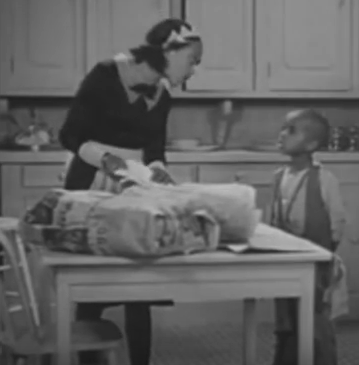

TH with Matthew "Stymie" Beard in Free Wheeling (1932)

TH played the role of the "Maid" on the Our Gang shot, Free Wheeling (1932), available on YouTube.


TH played the role of the "Ladies Room Attendant" in Night After Night (1932), available on YouTube.


With Barbara Stanwyck in Baby Face (1933)

TH played the role of "Chico" in Baby Face (1933), arguably her most notable role. This film is available on YouTube. The ending is cut off, however.


TH played the role of "Joan's Maid" in Broadway Thru a Keyhole (1933), available on YouTube.


Our Star of the Month played the role of the "Sacrificed Girl" in Black Moon (1934), also available on YouTube


Theresa Harris singing "St. Louis Blues" in Banjo On My Knee (1936)


Theresa Harris played the role of the "Black Blues Singer" in Banjo On My Knee (1936). This film is available on both YouTube and Dailymotion.


She played the role of the "Black U.S. Team Member on the Sidelines Rooting for Jesse Owens" (phew!) in Charlie Chan at the Olympics (1937). This film is available on YouTube.


With Melvyn Douglas in Tell No Tales (1939)


TH played the role of "Ruby" in 1939's Tell No Tales, also available on YouTube in parts.
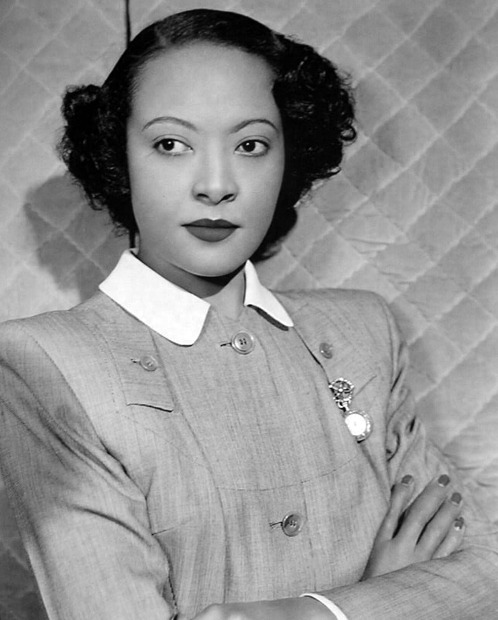


As she appeared in The Velvet Touch (1958) (not listed) - Vintage Black Glamour


TH played the role of the "Maid" in Santa Fe Trail (1940), available on YouTube.


In Strange Illusion (1945), available on both YouTube and Dailymotion. Theresa Harris played the role of (guess) the "Maid". 


In 1945's The Dolly Sisters, Theresa Harris played the role of "Ellabelle". This film is available on Dailymotion in parts.


TH played the role of the "Maid" in Three Little Girls in Blue (1946). This film is also available for viewing on Dailymotion in parts.


On the cover of a Sept. 1952 issue of Jet magazine.
(Very curious about the "Why Men Beat Their Wives" story, though...)


Theresa Harris played the role of "Esther" in The File on Thelma Jordon (1950). This was the third time she'd appeared in a film with Barbara Stanwyck. It's available on YouTube.


In "The Girl at the Station", a 1955 episode of Amos 'n' Andy, Theresa Harris played the role of "Gloretta". You can watch the episode on YouTube.


Theresa Harris on the left in The Gift of Love (1958). She played Scatman Crothers' wife in the film!


Finally, you can watch Theresa Harris in her final screen appearance as "Dora - Sam's Wife" in The Gift of Love (1958). It is available in parts on YouTube.


************


Ms. Harris was uncredited in all but six of these roles--Free Wheeling, Baby Face, The Toy Wife, Tell No Tales, The File on Thelma Jordan, and "The Girl at the Station" episode of Amos 'n' Andy. Of her 90+ screen appearances, she was credited in only about 25 of them.

Friday, July 3, 2015

Racebent Classics - featuring Nina Mae McKinney (#4)


This is the last four slideshows for my race-bent casts of some of my favorite classic movies--all featuring June 2015's Star of the Month, Nina Mae McKinney as a cast member.


Below is a slideshow of a race-bent cast for That Uncertain Feeling (1941), the filming starring April 2015's Star of the Month, Merle Oberon.


Friday, June 19, 2015

Racebent Classics - featuring Nina Mae McKinney (#1)


It isn't hard for me to lament over the roles that "could've been" for Hollywood's first black leading lady, Nina Mae McKinney. I'm constantly watching classic movies and thinking, "Hmm, -person of color- would have played this role..." but I digress...


Below is the first of four slideshows with a race-bent cast for some of my favorite Hollywood classics (all featuring our Star of the Month):


The next slideshow will be posted on Monday, June 22nd! :)

Saturday, June 13, 2015

Happy Birthday, Nina Mae McKinney! (Appreciation Post)


Today marks 103 (or 102, depending on your source) years since the birth of Hollywood's first black leading lady, Nina Mae McKinney.


Nina Mae McKinney was born Nannie Mayme McKinney on June 13, 1912 in Lancaster, South Carolina. Below are links to "everything Nina Mae McKinney" available online:

*Also, some sources list McKinney's birthday as June 12th*

************

Cinema


1. Nina Mae McKinney made her screen debut in King Vidor's 1929 film, Hallelujah!. The role of "Chick" was the first leading role for a black woman in a Hollywood film. You can click here to watch Hallelujah! in its entirety on YouTube. 


2. McKinney received rave reviews for her performance in Hallelujah! but subsequent roles were limited and few. Her next role as a "Singer/Dancer" in the MGM short, Manhattan Serenade (1929). Then, in 1930, McKinney played the uncredited role of a singer in They Learned About Women.

*Manhattan Serenade was long thought to be a "lost film", but was found in 2014 and screened at the Film Forum in New York City on November 9, 2014. If you live in or near New York, you can catch a screening of it at the MoMA.*


3. McKinney's next (and more significant) role came with the 1931 Pre-Code gem, Safe in Hell. I've inserted two YouTube clips of our Star of the Month as "Leonie - the Hotel Manager":

[Clip 1 - Nina Mae McKinney introduces the song "Sleepy Time Down South"]

[Clip 2 - Gilda books a room in Leonie's hotel]


4. Nina Mae McKinney appeared in a couple of shorts in 1932--Passing the Buck and Pie, Pie Blackbird. You can watch Pie, Pie Blackbird below:


5. Like a lot of entertainers of color, Nina Mae McKinney would leave Hollywood to try a hand at success in Europe--and she was successful in her attempt! It was there that she was dubbed "the Black Garbo". Click here to watch a clip of her performing in a London nightclub.


6. McKinney's next major film appearance was alongside Paul Robeson in the London Film Production, Sanders of the River (1935). Watch the full movie on YouTube by clicking here.


7. Get a glimpse of Nina Mae McKinney in the 1935 film, Reckless (starring William Powell and Jean Harlow). The trailer for the film is below:


8. In 1936, McKinney made an uncredited appearance in The Lonely Trail and also appeared in the musical short, The Black Network:


You can find more of Nina Mae McKinney's film credits on IMDb. Below are two additional movie links (both leading to YouTube):


Nina Mae McKinney starred as "Isabelle Walton" in the Sack Amusement Enterprises pictures, The Devil's Daughter (1939).


Nina Mae McKinney played the role of "Rozelia" in Pinky (1949), a 20th Century Fox film.


************

Music

Nina Mae McKinney introduced Irving Berlin's "Swanee Shuffle" in Hallelujah!. Watch her lively performance of the tune below:


In the early 1930s (circa 1932), McKinney recorded a few songs with jazz pianist, Garland Wilson's accompaniment. Among the known recordings are "Rhapsody in Love" and "Minnie the Moocher's Wedding Day".


You can also hear Nina Mae sing "If You Want My Love, You Gotta Do More Than That". This song can also be heard The Big Broadcast, Volume 9.


Books


Nina Mae McKinney: The Black Garbo
 is the first--and currently, the only--biography written about Nina Mae McKinney. It was written by famed biographer Stephen Bourne and published in 2011. Mr. Bourne himself has admitted that The Black Garbo wasn't his best work, but again, the biography is still is the first and only attempt at telling Nina Mae McKinney's life story, so far.


Other Books That Mention Nina Mae McKinney:

by Charlene B. Regester
(I had the pleasure of reading this book in college, it's a great read!)


by Frank Manchel


by Donald Bogle


In the Media


Magazine Articles


"A Jungle Lorelei" (Photoplay - July 1929)
Yep. That's the title. Writer Herbert Howe wrote an article on the 17 year old Nina Mae McKinney for the July 1929 issue of Photoplay magazine (a month before Hallelujah!'s theatrical release). Click with caution--the actual article gets no better than its title.


"Ex-actress Nina Mae McKinney trying to peddle her life story to a book publisher..." (Jet magazine - February 13, 1958)


Nina Mae McKinney to break in a new act on a USO tour of Japan... (Jet magazine - February 4, 1954)


Newspaper Articles


"Nina Mae McKinney Libeled in Nasty Magazine Article"

(The Afro American - March 29, 1930)


"Miss Nina Mae McKinney" 

(A photo of Nina Mae McKinney applying the last touches to her makeup in the July 27, 1935 issue of The Afro American)


"Nina Mae Tires of Playing "Hell-Cat" Roles, Now She's a Lady in Revue"

(The Afro American - September 7, 1935)


"A Talk With Nina Mae McKinney"
(The Age - September 25, 1937)


"Nina Mae McKinney, star of early theatre, buried"

(An obituary in the May 20, 1967 issue of The Afro American)


Interesting Finds


Did you know that Nina Mae McKinney was the leader of an orchestra at one point in her career? Read more about it in Swing City: Newark Nightlife, 1925-1950 by Barbara J. Kukla.


(From I'll Keep You Posted)


From Family Search:

Passenger List from Le Havre, France to New York (March 11, 1931)


As a child, Nina lived with her "Aunt Carrie" while her parents moved to New York. I believe this may be a record of who "Nannie Mayme" lived with as a kid. The woman of the house is listed as "Galie McKinney"--perhaps Carrie's name was accidentally heard as "Galie"?


McKinney was briefly married to trombonist Jimmy Monroe in the 1930s. This may be a record of their marriage.


Based on previously shared news articles, Nina Mae McKinney lived with her parents (specifically noted, her mother) for a long time. When her mother passed away in 1962, she was living with her. Here is a 1940 Census record that may list Nina as the "daughter" of James Maynor and Georgia Crawford. Many online sources state that Nina Mae's father was Hal McKinney, leading me to believe that her mother may have remarried at some point. 


************


I hope you find this appreciation post to be quite an educational one! Please, feel free to share!


Also, please check out Guest Blogger, HepClassic's, birthday tribute to Ms. Nina Mae McKinney: "Nina Mae McKinney: Vivacious Lady".

Monday, June 1, 2015

Saturday, May 9, 2015

"Lena Horne: The Voice of Victory" - a post by HepClassic


Today marks five years since we lost one of entertainment's greatest treasures, Ms. Lena Horne.

Source

In her honor, a fellow classic film lover and blogger, HepClassic, shared a post he'd originally written in 2010, not long after her passing:


"I was twelve and I just watched "Funny Girl" for the first time, and really enjoyed the movie and its stars so much, I wanted to dig deeper and see if there was any other presence of Ziegfeld on film, so I went to the library and picked up "Ziegfeld Follies". It was there in this musical revue similar to the actual theatre experience of a Ziegfeld show that I saw her in her prime, performing a song about the complexity of love. In a sea of performers of equal talent who were also white, she was the only person of color to blaze the screen in a very sensual performance to say the least.
 
I recognized her as the same singer who I saw when I was younger watching “Sesame Street” and she sang with Kermit, Grover, and other Muppets the alphabet and other songs that supplemented my learning. I also recognized her from an episode of “The Cosby Show” where she performed for Cliff Huxtable’s birthday. I grew up with her, which is why paying tribute to her may be very hard for me to do since her passing is still fresh to me. I always thought she’d reach one hundred. But I digress. Fast-foward to 2002, watching the Oscar ceremony, and Halle Berry wins the Oscar for Best Actress and dedicates her win to her, who, though wasn’t nominated for her acting in film, but pioneered the way so that the reality of being a woman of color in Hollywood being recognized by her peers with an honor such as this could happen. This person is Lena Horne..."


You can read the rest of HepClassic's post on his blog, "All About The Classics In Film". 


************

Sunday, December 28, 2014

Sheila Guyse: The Sweetheart of Race Movies


I don't know if anyone else was given that title at some point, but until noted otherwise, I've taken it upon myself to dub our Star of the Month, Sheila Guyse, the Sweetheart of Race Movies.


In an era where most of America typically only got to see Black-Americans as servants, merry Southern-dwellers, and as "specialty acts" in your favorite Hollywood musicals, black filmmakers (and some white as well) were still maintaining the house that Oscar Micheaux built--creating movies specifically for Black-American audiences. A lot of these movies were musical, true, but the majority of them also provided storylines for its characters. These characters had pasts--they had futures. There was romance, drama, and suspense. These low-budget, independent movies gave black performers the kind of roles that Hollywood wouldn't. In the midst of all this emerged a young singing starlet, fresh off the nightclub circuit of Kansas City--that is Ms. Sheila Guyse. 

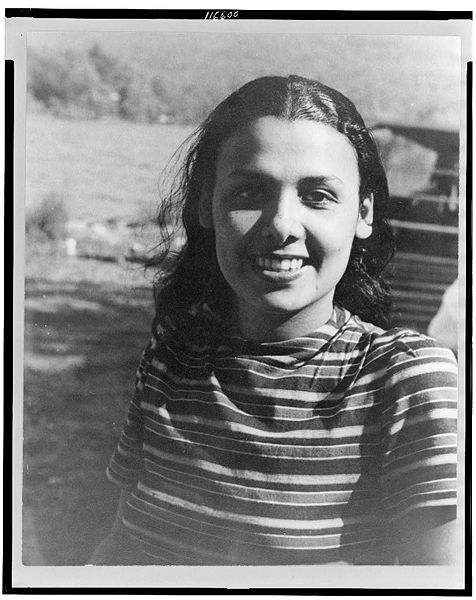
From NY Daily News

Sheila Guyse appeared in four of Herald Pictures' five productions--Boy! What a Girl!, Sepia Cinderella, Miracle in Harlem, and Harlem Follies of 1949. Harlem Follies is the only one of these movies that is still considered "lost", but in the other three, Ms. Guyse flawlessly embodies the "girl-next-door" archetype. 

Now, as a young Black-American woman, let me tell you why Sheila Guyse and the characters she portrayed were/are important.


************


Brown Gal, Sheila Guyse

As you may have noticed by reading a few of my previous posts, colorism is one of many issues that is close to my heart. I despise the mistreatment and disregard of dark-skinned people--especially women--in the media and in society. This disrespect isn't always outright, like a tweet or a song lyric. Sometimes, it's very much..."implied"...by images on a screen. Examples: Observe the treatment of the "Patrice McDowell" character vs. the "Lisa McDowell" character in Coming to America. Also do the same with the "Sylvia Landry" and "Alma Prichard" characters in Oscar Micheaux's Within Our Gates; the "Stella" and "Anna" characters in 1958's Anna Lucasta--even the "Minnie" and "Nettie" characters in Hi-De-Ho (1947). I could go on. 


From last.fm

Sheila Guyse wasn't exactly the hue of Hattie McDaniel or Theresa Harris, but by looking at her, it's clear that she wasn't the sand-colored woman cast to make "white audiences comfortable" or to imply a higher level of education, wealth, and/or "goodness" (an "implication" that was prevalent in a lot of race movies, unfortunately: see The Scar of Shame, Within Our Gates, The Symbol of the Unconquered). Although her film career was short, Ms. Guyse was fortunate to not have to play the "the maid" like fellow brown girls Hattie McDaniel, Theresa Harris, Louise Beavers, Daisy Bufford, or Marguerite Whitten (Bufford and Whitten actually had the opportunities to play "sweetheart" or "girl next door" types in a handful of race movies, but prevalent on their long lists of credits are servant roles). She also didn't play the jealous, conniving relative/friend (the aforementioned "Alma" in Within Our Gates and "Stella" in Anna Lucasta; as well as the character of "Rusty" character in Reet, Petite, and Gone). 

Mind you, this isn't a discredit to the Hatties, and Theresas; Flo Clements ("Alma Prichard") or Rosetta LeNoire ("Stella)" and their work as actresses. I'm not supporting the categorization of "good blacks vs. bad blacks" or "good girls vs. bad girls" either.


Francine, Barbara, & Julie in Love

Race movies provided black audiences with something else Hollywood couldn't/wouldn't provide them with--great love stories! In actresses like Evelyn Preer, Dorothy Van Engle, Izinetta Wilcox, and Sheila Guyse, we had "our" Mabel Normand--"our" Ginger Rogers, Claudette Colbert, and Judy Garland. Of course, there were actresses who could have been models for our love lives in the 1920s, 30s, and 40s (Nina Mae McKinney, Fredi Washington, Ethel Waters, Lena Horne)--but love was rarely a central focus in lives of the characters they played (Possible exceptions: Bessie, Petunia Jackson, Selina Rogers, Ethel Andrews, and Klili Gordon/Isabelle Walton).


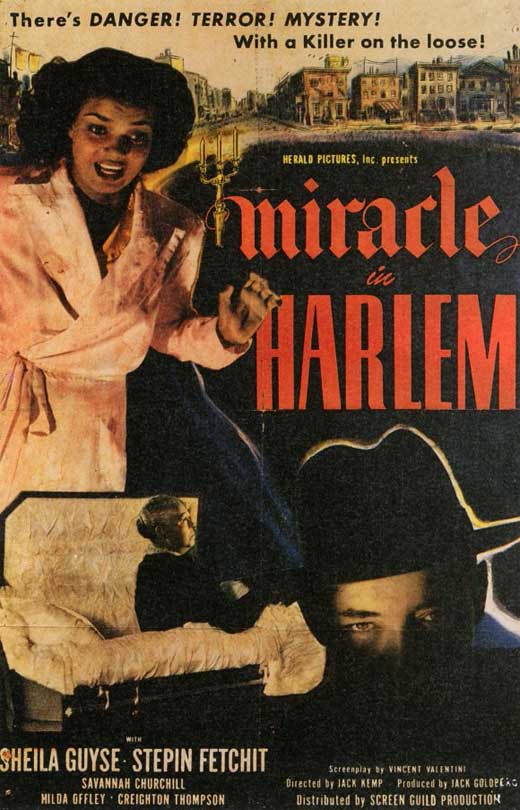
From Movie Poster Shop

What Sheila Guyse brought to mid-1940s cinema was the character of a young black woman who longed for love--and was loved. In her three starring roles, she cried over the loss of love. She fought for love. She defended and protected the men she loved. She found happiness in love. She was motivated by love. Even today, we don't see these black women on the screen often. In fact, love (lack of it or fear/rejection of it) tends to destroy us on the screen ("Chick" in Hallelujah!, "Carmen Jones", "Bess" in Porgy and Bess, "Delilah/Annie" and "Peola/Sarah Jane" in the Imitation of Life movies). Of course this isn't and wasn't always the case, but we saw/see the theme pretty often in Hollywood film and television. 

"Getting the guy/girl" was something we got to see often in race movies, thankfully. However, for the women, again, love wasn't always the central focus for their characters. Their intelligence and bravery (see: Claudia and Eve Mason) often served as the central focus--another topic I'd be ecstatic to leave my typing fingers to tackle later.

Barbara got the guy in Sepia Cinderella. Julie Weston got the guy in Miracle in Harlem. Francine Cummings got a guy in Boy! What a Girl!--and nobody had to die for it to happen, either. With all of the qualities that made Sheila Guyse unique--a certain beauty, grace, and charm--she brought something to these characters that I can't imagine any other actress of the time being able to bring.

************

Make some time to discover Sheila Guyse--the "Sweetheart of Race Movies". Watch her films, listen to her album, This is Sheila (available in digital format on Amazon). Tell everyone you know about this talented woman!


Thursday, December 18, 2014

Stars We Lost in 2014


People of Color in Classic Film acknowledges the performers of color that we lost in 2014 (and in late December 2013). 

I send all of my love, prayers, and positive energy to everyone who has lost a loved one this year. I pray that you are able to find overall comfort and happiness in this holiday season.

(Adrienne)


POCCF - In Memoriam (2014) by Slidely Slideshow


My thoughts and prayers are also with the loved ones of Meshach Taylor, Elizabeth Peña, Misty Upham, Stephanie Moseley, and Simone Battle

Monday, December 15, 2014

Sheila Guyse in the News!


The Google News Archive has practically become a second home for me. You're guaranteed to find many interesting pieces of history in entertainment news' past. You could go on a quest for one piece of information, and end up opening a treasure chest of news stories. This was the case for my Sheila Guyse search.

From 16 Stone Vintage (a MUST visit site!)


I always refer to Ms. Guyse, our 'Star of the Month', as "unsung", falsely (and hastily) assuming that she never got her just due, but the infinite number of articles written about her in The Afro American prove otherwise. Here are links to just a few of these articles:


(Mar. 31, 1945)

According to this small section, Ms. Guyse was discovered in a Kansas City nightclub. As a result, she was signed on to play a lead role in the short-running Broadway play, Memphis Bound!. Click the link above to read about Ms. Guyse's rise and to see a beautiful photo of her. 

Related Articles: ""Memphis Bound" to Open May 17" and ""Memphis Bound," May 23" (two sections down from Katherine Dunham story)


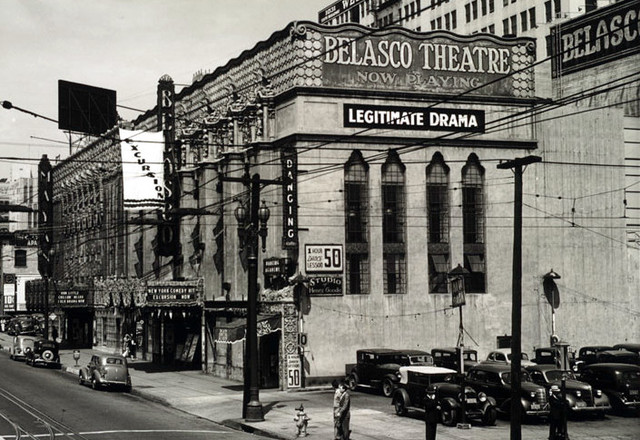
Belasco Theatre (where Memphis Bound! played) [Source]

************

(Jun. 30, 1945)

Ms. Guyse was the subject of a terrible rumor spread by columnist, Walter Winchell, and also by columnists David Quirk, and Earl Wilson. These columnists falsely (or misleadingly) reported that Ms. Guyse was seen "picking cotton in Mississippi". Ms. Guyse, a Mississippi native, told the press that she'd made a visit to the South and only pulled a few bolls out of curiosity. Get more details about this news story in the link.

The notorious Walter Winchell (from Wikipedia)


************

(Oct. 27, 1945)

According to an October 1945 edition of The Afro American, Sheila Guyse, along with many others, staged a grand show for "the boys of the S.A. Club". Read about it in the link above!


************


(Jan. 11, 1947)

Ms. Guyse and Billy Daniels were both lauded for their performances in the Herald Pictures film, Sepia Cinderella. Read all about it in the link!

From Turner Classic Movies

Related Article: "In Herald's New Flicker" (another beautiful photo of Ms. Guyse in this link)


************


(Jun. 1, 1954)

This section of a June 1954 issue of the Washington Afro-American announces Ms. Guyse's impending role in a Broadway musical titled, Black Cotton


************


It appears that Sheila Guyse was welcomed back to the nightclub circuit in 1957 with opened arms! Click the link to read her section in the Star Gazing column.


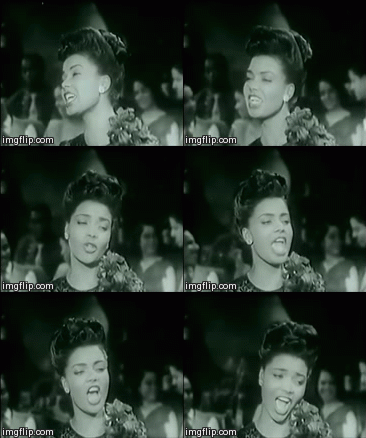
Sheila Guyse in Sepia Cinderella (gif by me; originally shared on Classic Ladies of Color)


Honorable Mention


This Washington Afro-American article populated in Google News Archive search results for Sheila Guyse. It is an article on actress Sheila Anderson, daughter of Sheila Guyse. It was young Sheila, who now goes by S. Crystal Devin, who informed me (and other entertainment/informative outlets) of her mother's illness and passing.

In the 1983 article, Ms. Devin talks about her life as an actress and her life overall--from how she lives and eats to what her aspirations are. Check out the link!

Wednesday, December 3, 2014

Star of the Month: Sheila Guyse - Album Review (from Aige Old Soul)


In June, I reviewed Sheila Guyse's sole album, This is Sheila (1958) on my other blog, The Life of an Aige Old Soul

to read my review!

Monday, May 26, 2014

Rest in Peace, Herb Jeffries


The "Bronze Buckaroo", Mr. Herb Jeffries passed away yesterday (Sunday, May 26th) at the age of 100.


From Jazz Wax

I send all of my love and my condolences to Mr. Jeffries' family and friends.  


The New York Times


*Update*

A fundraiser has been created to finance Mr. Jeffries' funeral. If you have it to give, please donate.


Herb Jeffries Funeral Fundraiser