Showing posts with label Star of the Month. Show all posts

Sunday, September 27, 2015

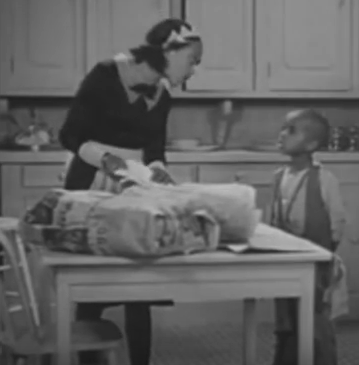
Theresa Harris in "Tell No Tales" (1939)


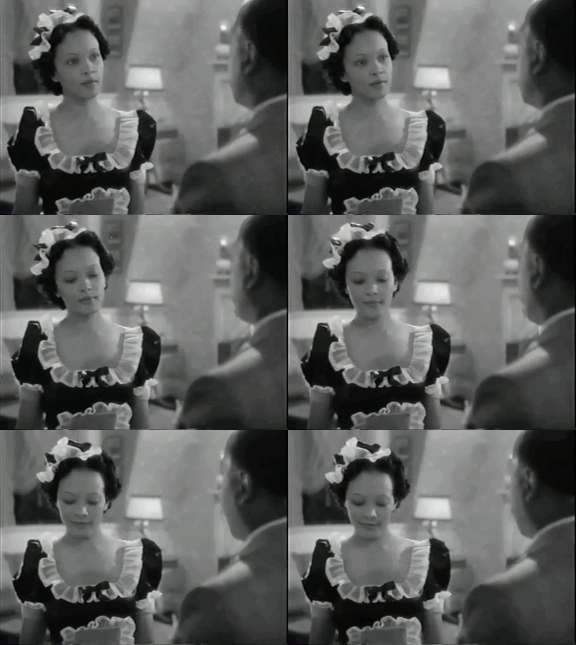
In Tell No Tales, Melvyn Douglas plays the role of 'Michael Cassidy', the managing-editor of The Guardian, a small newspaper that's about to be closed by its owner. When Cassidy gets a hold of one of the one-hundred dollar bills paid in the ransom of a recent kidnapping, he takes it upon himself to trace the dollar bill back to the kidnappers. He traces the bill back to various people, including the widow of a prizefighter named Ruby--played by Theresa Harris.


Tell No Tales is one of the most gripping mysteries I've ever watched. As Michael Cassidy traces the bill back to different people, he uncovers mini-mysteries and dramas throughout--and it was extremely exciting to watch! You should check it out--it is available on YouTube.


************

Theresa Harris' Performance

Although the character of 'Ruby' works as a maid, her work isn't particularly relevant to Theresa Harris' brief appearance in Tell No Tales. As mentioned before, Ruby is the widow of recently killed prizefighter, Jim Alley. Tell No Tales presents to us a rare dramatic performance from Theresa Harris--and if you ask me, it was worthy of all acting awards. 

*GIF Images from the film below*


I urge you to watch Tell No Tales--and if you just want to see Harris' performance, you can watch the second part of the movie's upload and skip to 6:58.

Sunday, September 20, 2015

Theresa Harris Appreciation (Movies Online)


Below is a list of links to movies (and a television episode) available online that feature our Star of the Month, the late Theresa Harris.


************ 


Theresa Harris played the role of the "Powder Room Attendant" in Merrily We Go to Hell (1932), available on YouTube.


TH with Matthew "Stymie" Beard in Free Wheeling (1932)

TH played the role of the "Maid" on the Our Gang shot, Free Wheeling (1932), available on YouTube.


TH played the role of the "Ladies Room Attendant" in Night After Night (1932), available on YouTube.


With Barbara Stanwyck in Baby Face (1933)

TH played the role of "Chico" in Baby Face (1933), arguably her most notable role. This film is available on YouTube. The ending is cut off, however.


TH played the role of "Joan's Maid" in Broadway Thru a Keyhole (1933), available on YouTube.


Our Star of the Month played the role of the "Sacrificed Girl" in Black Moon (1934), also available on YouTube


Theresa Harris singing "St. Louis Blues" in Banjo On My Knee (1936)


Theresa Harris played the role of the "Black Blues Singer" in Banjo On My Knee (1936). This film is available on both YouTube and Dailymotion.


She played the role of the "Black U.S. Team Member on the Sidelines Rooting for Jesse Owens" (phew!) in Charlie Chan at the Olympics (1937). This film is available on YouTube.


With Melvyn Douglas in Tell No Tales (1939)


TH played the role of "Ruby" in 1939's Tell No Tales, also available on YouTube in parts.


As she appeared in The Velvet Touch (1958) (not listed) - Vintage Black Glamour


TH played the role of the "Maid" in Santa Fe Trail (1940), available on YouTube.


In Strange Illusion (1945), available on both YouTube and Dailymotion. Theresa Harris played the role of (guess) the "Maid". 


In 1945's The Dolly Sisters, Theresa Harris played the role of "Ellabelle". This film is available on Dailymotion in parts.


TH played the role of the "Maid" in Three Little Girls in Blue (1946). This film is also available for viewing on Dailymotion in parts.


On the cover of a Sept. 1952 issue of Jet magazine.
(Very curious about the "Why Men Beat Their Wives" story, though...)


Theresa Harris played the role of "Esther" in The File on Thelma Jordon (1950). This was the third time she'd appeared in a film with Barbara Stanwyck. It's available on YouTube.


In "The Girl at the Station", a 1955 episode of Amos 'n' Andy, Theresa Harris played the role of "Gloretta". You can watch the episode on YouTube.


Theresa Harris on the left in The Gift of Love (1958). She played Scatman Crothers' wife in the film!


Finally, you can watch Theresa Harris in her final screen appearance as "Dora - Sam's Wife" in The Gift of Love (1958). It is available in parts on YouTube.


************


Ms. Harris was uncredited in all but six of these roles--Free Wheeling, Baby Face, The Toy Wife, Tell No Tales, The File on Thelma Jordan, and "The Girl at the Station" episode of Amos 'n' Andy. Of her 90+ screen appearances, she was credited in only about 25 of them.

Friday, September 18, 2015

That's OLD News! (#15) - Theresa Harris & Co-Stars


This month's installment of "That's OLD News!" contains historic news articles on our Star of the Month, Theresa Harris and fellow performers of color who appeared in some of the same films as she.


************

"81 Year-Old Gets Film Role"
St. Petersburg Times - Jul 7, 1954


That 81-year old was Nellie Conley, aka Madame Sul-Te-Wan--and the film the short article speaks of may have been Carmen Jones (1954). Madame Sul-Te-Wan made her screen debut in 1915 (at the age of 42). Over the span of about four decades, she appeared in over fifty movies--including the pre-code crime drama, Thunderbolt (1929) with Theresa Harris. This article above provides some additional must-read trivia about Madame Sul-Te-Wan!


*I believe that Madame Sul-Te-Wan might be the bellhop (or hat check girl?) in the beginning of the clip above.


"Blue Blowers on the Air"

Curtis Mosby and his popular jazz and blues band, the Blue Blowers accompanied singer/actors in numerous films through the late 1920s and early 1930s. They accompanied Theresa Harris as she sang "Daddy, Won't You Please Come Home" in Thunderbolt. As indicated in the article above, Curtis Mosby and his Blue Blowers "went on the air" in 1927--when the National Broadcasting Company (NBC) began broadcasting in new cities on the West Coast, the band was selected as their musical headliner.


"Flying - Rochester Learns to Pilot Plane"


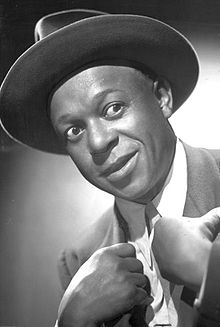
In July of 1940, Eddie "Rochester" Anderson flew into New York from Detroit for an opening at a Paramount Theater. He also performed "My, My" at the opening, the song he sang with Theresa Harris in Buck Benny Rides Again (1940). 


"New Million Dollar Film to Premiere"

Gang Smashers (starring Nina Mae McKinney) was written and produced by the legendary Ralph Cooper, and also distributed by the film company he'd co-founded, Million Dollar Productions. The year before, Ralph Cooper appeared in Gangsters on the Loose with Theresa Harris. He also wrote and produced the film.


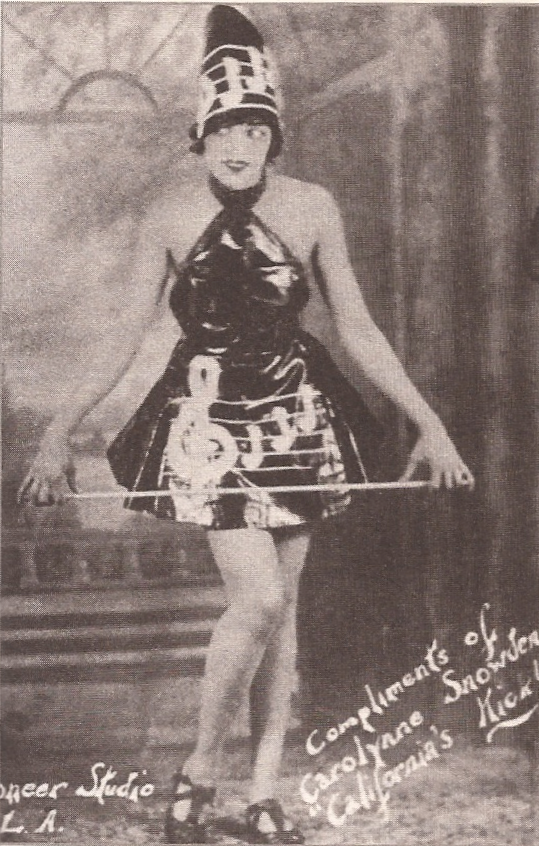
"Universal Signs Carolyn Snowden"


Carolynne Snowden (posted by The Loudest Voice - Tumblr)

Unsung stage and screen performer, Carolynne Snowden (sometimes referred to as Carolyn or Caroline) signed a contract with Universal Pictures in 1926 (for The Marriage Clause). She appeared in movies for many of the other Hollywood studios, including The Green Pastures (1936), a film that, like Snowden, Theresa Harris played an Angel in.

Wednesday, September 9, 2015

Theresa Harris Bio (Star of the Month, Sept. 2015)


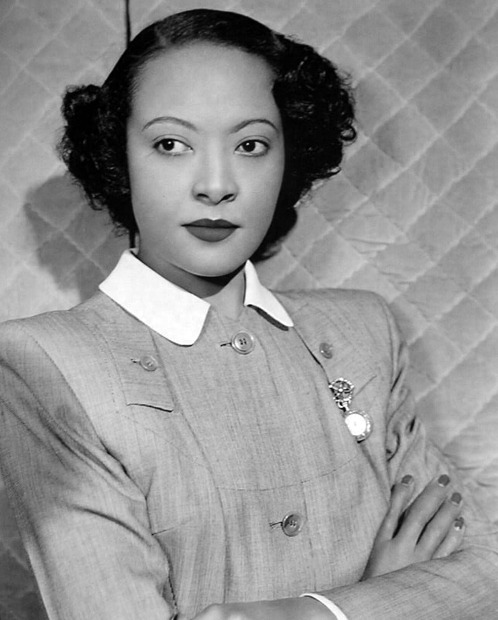
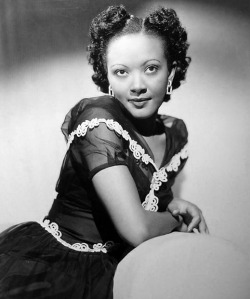
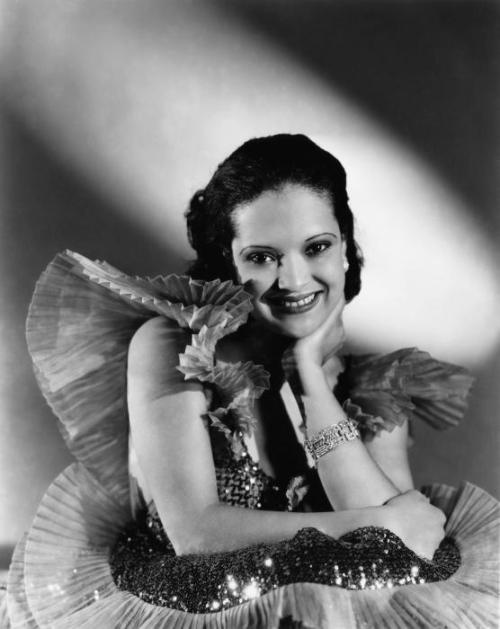
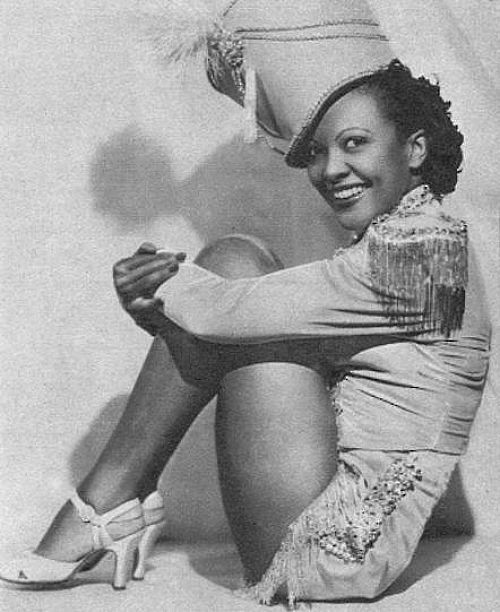
"The Beautiful Maid", "Dainty", "sepia-toned comedienne"--most newspaper and magazine articles always made sure to reference her physical beauty before mentioning her name, Theresa Harris, People of Color in Classic Film's featured star for September 2015.


Theresa Harris was born on December 31, 1906 (some sources say 1909) to sharecroppers Isaiah and Mable in Houston, Texas. The Harris family relocated to California when Theresa was about eleven. After graduating from the infamous Jefferson High School, she attended the UCLA Conservatory of Music and Zoellner's Conservatory of Music to become a music teacher. Theresa had the voice and the talent, and she'd gained the education, but like many others, Hollywood started calling her name in the 1920s.
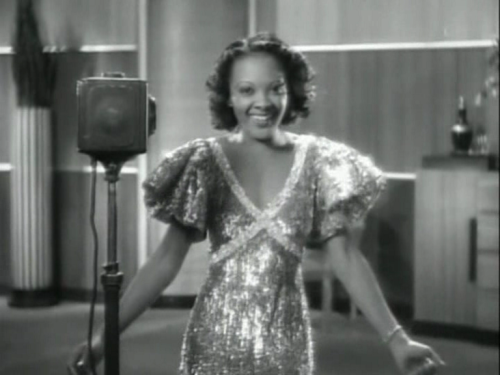


Theresa Harris made her film debut as a singer in the 1929 film, Thunderbolt. Over the next two (almost three) decades, she would play singers, servants, "tribal women", and random background characters in almost one hundred movies. Although she typically played their servants (and many times went uncredited), Theresa Harris is often praised for playing alongside more Hollywood starlets than any other Hollywood actor or actress--from the ladies gone too soon, like Thelma Todd (Horse Feathers), Lupe Vélez (The Half Naked Truth), and Jean Harlow (Hold Your Man); to the women who lived long enough to see their impact, like Barbara Stanwyck (Baby Face, her most notable role, and Banjo on My Knee), Ginger Rogers (Professional Sweetheart), and Bette Davis (Jezebel).

(With Eddie "Rochester" Anderson in Buck Benny Rides Again, 1940)


Most of Harris' credits were from the 1930s and 1940s. As the mid-1950s rolled around, she appeared less in film (more on television) and soon, she retired from show business completely, living comfortably on the money made from her 30-year film career with her husband, Dr. John Robinson. Theresa Harris died of undisclosed causes on October 8, 1985. She was 78 years old.


These days, Theresa Harris is mostly remembered for being a "beautiful maid"--a great actress, singer, and dancer, but Ms. Harris (Robinson) should also be remembered for being a champion of her race. She boldly spoke against discrimination she'd faced in Hollywood and encouraged the Black-American community support black-owned film companies, specifically Million Dollar Productions:

"I never had the chance to rise about the role of maid in Hollywood movies. My color was against me anyway you looked at it. The fact that I was not "hot" stamped me either as uppity or relegated me to the eternal role of stooge or servant. I can sing but so can hundreds of other girls. Hollywood had no parts for me." -- a popular quote by Theresa Harris, repeated in the August 28, 1937 issue of The Afro American.

Perhaps this quote is an indicator that Theresa Harris left Hollywood at one point? Here is another quote from the same article:

"Asked if she thought the company [the black-owned Million Dollar Productions] had a future, Miss Harris said: "It has as much of a future as any other film company, if adverse publicity and an impatient public do not kill it. I believe Mr. Cooper [Ralph Cooper] is sincere in his efforts. He is certainly hard working...We have tolerated so many rotten pictures made in Hollywood by whites, I do not see why our own people cannot be tolerant in the pioneering stages of this company...".


This month, when I view and review some of Theresa Harris' work, I will do so while keeping in mind that Theresa Harris was a force. On camera, she was the maid, the "tribal woman", the spectator--but behind the camera, she was a Paul Robeson, a Fredi Washington, a Clarence Muse, a Hazel Scott--a fighter and a woman of wisdom.


Check in later for a Theresa Harris "appreciation post"!

Sources:

Wikipedia
IMDb
The Afro American (Google News Archive)

Tuesday, September 1, 2015

Star of the Month (September 2015): Theresa Harris


Must-visit photo source


Man, oh man am I beyond excited to announce this month's featured star--Theresa Harris, singer, dancer, and Hollywood actress. 

Friday, July 3, 2015

Racebent Classics - featuring Nina Mae McKinney (#4)


This is the last four slideshows for my race-bent casts of some of my favorite classic movies--all featuring June 2015's Star of the Month, Nina Mae McKinney as a cast member.


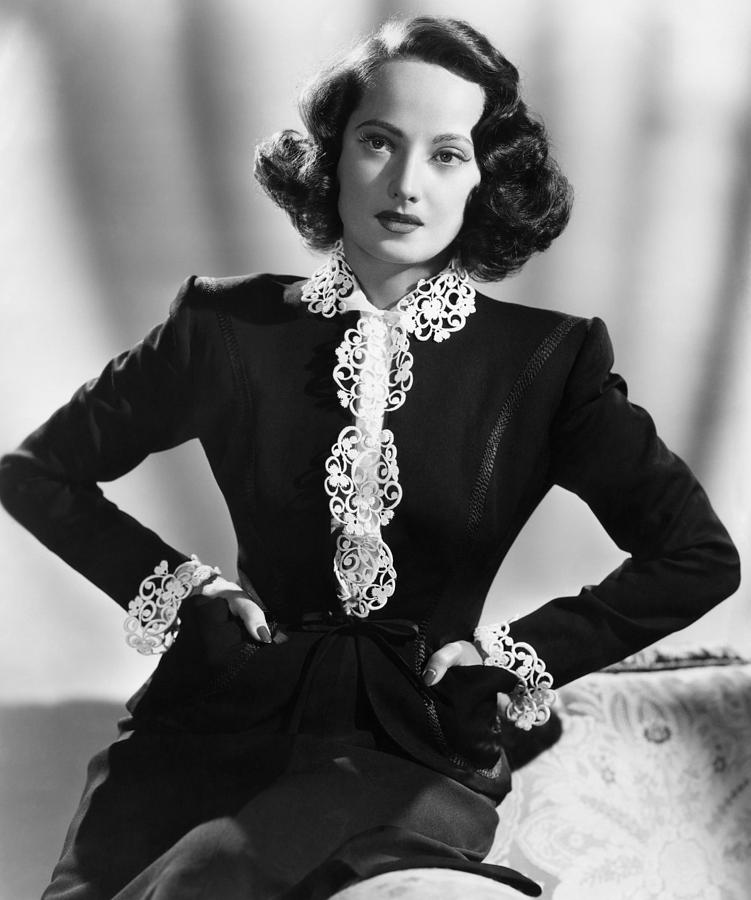
Below is a slideshow of a race-bent cast for That Uncertain Feeling (1941), the filming starring April 2015's Star of the Month, Merle Oberon.


Tuesday, June 30, 2015

Racebent Classics - featuring Nina Mae McKinney (#3)


This is the third of four slideshows for my race-bent casts of some of my favorite classic Hollywood movies--all featuring Nina Mae McKinney as a cast member.

Below is a slideshow of a race-bent cast for Mildred Pierce (1945):


Monday, June 22, 2015

Racebent Classics -- featuring Nina Mae McKinney (#2)


Below is the second of four slideshows with a race-bent cast for some of my favorite Hollywood classics (all featuring our Star of the Month):


The next slideshow will be shared on Wednesday!

Friday, June 19, 2015

Racebent Classics - featuring Nina Mae McKinney (#1)


It isn't hard for me to lament over the roles that "could've been" for Hollywood's first black leading lady, Nina Mae McKinney. I'm constantly watching classic movies and thinking, "Hmm, -person of color- would have played this role..." but I digress...


Below is the first of four slideshows with a race-bent cast for some of my favorite Hollywood classics (all featuring our Star of the Month):


The next slideshow will be posted on Monday, June 22nd! :)

Saturday, June 13, 2015

Happy Birthday, Nina Mae McKinney! (Appreciation Post)


Today marks 103 (or 102, depending on your source) years since the birth of Hollywood's first black leading lady, Nina Mae McKinney.


Nina Mae McKinney was born Nannie Mayme McKinney on June 13, 1912 in Lancaster, South Carolina. Below are links to "everything Nina Mae McKinney" available online:

*Also, some sources list McKinney's birthday as June 12th*

************

Cinema


1. Nina Mae McKinney made her screen debut in King Vidor's 1929 film, Hallelujah!. The role of "Chick" was the first leading role for a black woman in a Hollywood film. You can click here to watch Hallelujah! in its entirety on YouTube. 


2. McKinney received rave reviews for her performance in Hallelujah! but subsequent roles were limited and few. Her next role as a "Singer/Dancer" in the MGM short, Manhattan Serenade (1929). Then, in 1930, McKinney played the uncredited role of a singer in They Learned About Women.

*Manhattan Serenade was long thought to be a "lost film", but was found in 2014 and screened at the Film Forum in New York City on November 9, 2014. If you live in or near New York, you can catch a screening of it at the MoMA.*


3. McKinney's next (and more significant) role came with the 1931 Pre-Code gem, Safe in Hell. I've inserted two YouTube clips of our Star of the Month as "Leonie - the Hotel Manager":

[Clip 1 - Nina Mae McKinney introduces the song "Sleepy Time Down South"]

[Clip 2 - Gilda books a room in Leonie's hotel]


4. Nina Mae McKinney appeared in a couple of shorts in 1932--Passing the Buck and Pie, Pie Blackbird. You can watch Pie, Pie Blackbird below:


5. Like a lot of entertainers of color, Nina Mae McKinney would leave Hollywood to try a hand at success in Europe--and she was successful in her attempt! It was there that she was dubbed "the Black Garbo". Click here to watch a clip of her performing in a London nightclub.


6. McKinney's next major film appearance was alongside Paul Robeson in the London Film Production, Sanders of the River (1935). Watch the full movie on YouTube by clicking here.


7. Get a glimpse of Nina Mae McKinney in the 1935 film, Reckless (starring William Powell and Jean Harlow). The trailer for the film is below:


8. In 1936, McKinney made an uncredited appearance in The Lonely Trail and also appeared in the musical short, The Black Network:


You can find more of Nina Mae McKinney's film credits on IMDb. Below are two additional movie links (both leading to YouTube):


Nina Mae McKinney starred as "Isabelle Walton" in the Sack Amusement Enterprises pictures, The Devil's Daughter (1939).


Nina Mae McKinney played the role of "Rozelia" in Pinky (1949), a 20th Century Fox film.


************

Music

Nina Mae McKinney introduced Irving Berlin's "Swanee Shuffle" in Hallelujah!. Watch her lively performance of the tune below:


In the early 1930s (circa 1932), McKinney recorded a few songs with jazz pianist, Garland Wilson's accompaniment. Among the known recordings are "Rhapsody in Love" and "Minnie the Moocher's Wedding Day".


You can also hear Nina Mae sing "If You Want My Love, You Gotta Do More Than That". This song can also be heard The Big Broadcast, Volume 9.


Books


Nina Mae McKinney: The Black Garbo
 is the first--and currently, the only--biography written about Nina Mae McKinney. It was written by famed biographer Stephen Bourne and published in 2011. Mr. Bourne himself has admitted that The Black Garbo wasn't his best work, but again, the biography is still is the first and only attempt at telling Nina Mae McKinney's life story, so far.


Other Books That Mention Nina Mae McKinney:

by Charlene B. Regester
(I had the pleasure of reading this book in college, it's a great read!)


by Frank Manchel


by Donald Bogle


In the Media


Magazine Articles


"A Jungle Lorelei" (Photoplay - July 1929)
Yep. That's the title. Writer Herbert Howe wrote an article on the 17 year old Nina Mae McKinney for the July 1929 issue of Photoplay magazine (a month before Hallelujah!'s theatrical release). Click with caution--the actual article gets no better than its title.


"Ex-actress Nina Mae McKinney trying to peddle her life story to a book publisher..." (Jet magazine - February 13, 1958)


Nina Mae McKinney to break in a new act on a USO tour of Japan... (Jet magazine - February 4, 1954)


Newspaper Articles


"Nina Mae McKinney Libeled in Nasty Magazine Article"

(The Afro American - March 29, 1930)


"Miss Nina Mae McKinney" 

(A photo of Nina Mae McKinney applying the last touches to her makeup in the July 27, 1935 issue of The Afro American)


"Nina Mae Tires of Playing "Hell-Cat" Roles, Now She's a Lady in Revue"

(The Afro American - September 7, 1935)


"A Talk With Nina Mae McKinney"
(The Age - September 25, 1937)


"Nina Mae McKinney, star of early theatre, buried"

(An obituary in the May 20, 1967 issue of The Afro American)


Interesting Finds


Did you know that Nina Mae McKinney was the leader of an orchestra at one point in her career? Read more about it in Swing City: Newark Nightlife, 1925-1950 by Barbara J. Kukla.


(From I'll Keep You Posted)


From Family Search:

Passenger List from Le Havre, France to New York (March 11, 1931)


As a child, Nina lived with her "Aunt Carrie" while her parents moved to New York. I believe this may be a record of who "Nannie Mayme" lived with as a kid. The woman of the house is listed as "Galie McKinney"--perhaps Carrie's name was accidentally heard as "Galie"?


McKinney was briefly married to trombonist Jimmy Monroe in the 1930s. This may be a record of their marriage.


Based on previously shared news articles, Nina Mae McKinney lived with her parents (specifically noted, her mother) for a long time. When her mother passed away in 1962, she was living with her. Here is a 1940 Census record that may list Nina as the "daughter" of James Maynor and Georgia Crawford. Many online sources state that Nina Mae's father was Hal McKinney, leading me to believe that her mother may have remarried at some point. 


************


I hope you find this appreciation post to be quite an educational one! Please, feel free to share!


Also, please check out Guest Blogger, HepClassic's, birthday tribute to Ms. Nina Mae McKinney: "Nina Mae McKinney: Vivacious Lady".

Monday, June 1, 2015

Tuesday, May 5, 2015

Merle Oberon stands alone...


This weekend, I had the pleasure of watching April 2015's featured star, Merle Oberon, in The Dark Angel. Oberon received the 'Best Actress' nomination for her performance in this movie and eight decades later, she is still the only woman of Asian descent to be nominated in the category. I will get to that later.


Source

"Kitty Vane (Merle Oberon), Alan Trent (Fredric March), and Gerald Shannon (Herbert Marshall) have been inseparable friends since childhood. Kitty has always known she would marry one of them, but has waited until the beginning of World War I before finally choosing Alan. Gerald graciously gives them his blessing. Then, Gerald and Alan go to war. Angered over a misunderstanding involving Alan and Kitty, Gerald sends Alan on a dangerous mission that will change all their lives forever." [IMDb Summary]

*************

Overall Thoughts

1935's The Dark Angel is the second film adaptation of Guy Bolton's play of the same name (the first movie was released in 1925, the same year the play premiered on Broadway). I'd previously been unfamiliar with the play, but if it's anything like the 1935 movie (not altered too much for the screen), then I will say that The Dark Angel is one of the 20th century's most beautifully written works. The 1935 movie is the kind of movie that manages to be both familiar and refreshingly unique at the same time.

Guy Bolton, writer of The Dark Angel

It's a love story--we're familiar with that. Boy meets girl, boy loses girl, boy gets girl back, that kind of thing--but as is needed for all movies with familiar plots, there are complications thrown in to make it stand out--and this movie had all of that and more! It's very unfortunate that it wasn't nominated for Best Picture (or "Outstanding Production", rather).

The Dark Angel will make you chuckle--it will also frustrate you--and as any good romance/drama does, it will make you cry. The characters are written so beautifully: my favorite thing about them is that they were so in-sync with each other's emotions--they all knew when something was wrong with each other. They rarely expressed their feelings vocally and they rarely reacted vocally to each other's feelings, either. That my friend, is the stuff that makes screenwriting (and writers) great. 

Lillian Hellman, one of two screenwriters for The Dark Angel (1935). The other was Mordaunt Shairp.


It's also unfortunate that Fredric March didn't receive a Best Actor nomination (the 'Best Supporting' categories weren't awarded until a year later). He too, gave a fine performance. 


************

Merle Oberon standing alone...


Source

Merle Oberon was the first person of Asian descent to be nominated for an Academy Award--and since her nomination in 1935/1936 (the awards ceremony was held in 1936), no other woman of Asian descent has been nominated for 'Best Actress in a Leading Role'. Eight decades. Eight years

Over the last few years, I've had to wonder: "Should people of color strive for Oscars and other "mainstream" awards?" "Should these awards really be an end-goal for filmmakers and performers of color?" There are two (and probably more) ways to look at this: 

First, it isn't wise to work for awards. If you love what you do, you typically won't care too much about the awards you do or don't receive. However, imagine what it's like to work in the same office for years and never be recognized for your work! Imagine how daunting it is when you constantly meet the criteria for an assignment (or an award) and you're constantly overlooked (see white actors being cast as Asian characters; see Ava DuVernay being snubbed for the 'Best Director' Oscar-nomination for Selma; see Fruitvale Station's star and director (Michael B. Jordan and Ryan Coogler) being invited to "major" awards shows but receiving no nominations for said major awards). 

With all of that said, while it is important for us to recognize the Asian/Asian-American artists who don't make it in Hollywood--because they are also important and their work is still worthy--I think that it is just as important to recognize the ones who are there. As long as people of color live and work in Hollywood, there is absolutely no reason why the majority of them should still be fighting for elbow room. It's like owning a boardinghouse, taking rent from ten boarders, but only cooking dinner for five of them--and telling the other five have to go out every night and find their own meals.

Source

Eighty years later, Merle Oberon should not be the only actress of Asian descent to be nominated for the 'Best Actress' Oscar. Eighty years later, she should not still be the only Asian actress who obtained a role deemed Oscar-worthy.

Do you want to know what's even scarier? If the "secret" of Merle Oberon's background hadn't been revealed after her death, NO woman of (known) Asian descent will have been nominated for 'Best Actress' in the 87 years of the Academy Awards' existence.


************

With all of that said, I do recommend that you all watch The Dark Angel (1935). Revel in Merle Oberon's talent and beauty.