Showing posts with label Reviews. Show all posts

Sunday, September 27, 2015

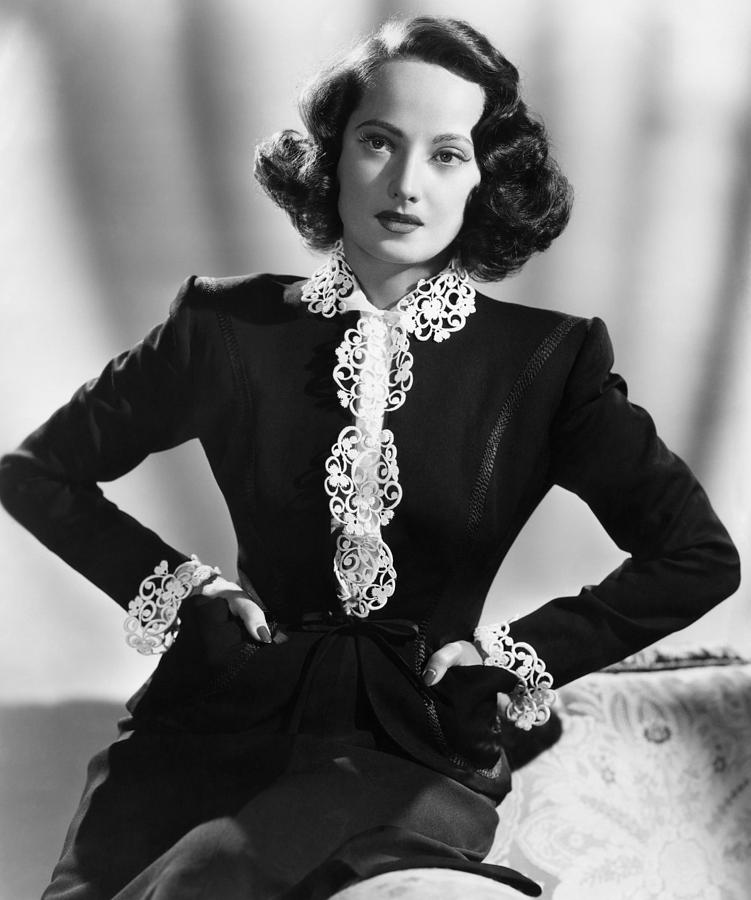
Theresa Harris in "Tell No Tales" (1939)


In Tell No Tales, Melvyn Douglas plays the role of 'Michael Cassidy', the managing-editor of The Guardian, a small newspaper that's about to be closed by its owner. When Cassidy gets a hold of one of the one-hundred dollar bills paid in the ransom of a recent kidnapping, he takes it upon himself to trace the dollar bill back to the kidnappers. He traces the bill back to various people, including the widow of a prizefighter named Ruby--played by Theresa Harris.


Tell No Tales is one of the most gripping mysteries I've ever watched. As Michael Cassidy traces the bill back to different people, he uncovers mini-mysteries and dramas throughout--and it was extremely exciting to watch! You should check it out--it is available on YouTube.


************

Theresa Harris' Performance

Although the character of 'Ruby' works as a maid, her work isn't particularly relevant to Theresa Harris' brief appearance in Tell No Tales. As mentioned before, Ruby is the widow of recently killed prizefighter, Jim Alley. Tell No Tales presents to us a rare dramatic performance from Theresa Harris--and if you ask me, it was worthy of all acting awards. 

*GIF Images from the film below*


I urge you to watch Tell No Tales--and if you just want to see Harris' performance, you can watch the second part of the movie's upload and skip to 6:58.

Tuesday, May 5, 2015

Merle Oberon stands alone...


This weekend, I had the pleasure of watching April 2015's featured star, Merle Oberon, in The Dark Angel. Oberon received the 'Best Actress' nomination for her performance in this movie and eight decades later, she is still the only woman of Asian descent to be nominated in the category. I will get to that later.


Source

"Kitty Vane (Merle Oberon), Alan Trent (Fredric March), and Gerald Shannon (Herbert Marshall) have been inseparable friends since childhood. Kitty has always known she would marry one of them, but has waited until the beginning of World War I before finally choosing Alan. Gerald graciously gives them his blessing. Then, Gerald and Alan go to war. Angered over a misunderstanding involving Alan and Kitty, Gerald sends Alan on a dangerous mission that will change all their lives forever." [IMDb Summary]

*************

Overall Thoughts

1935's The Dark Angel is the second film adaptation of Guy Bolton's play of the same name (the first movie was released in 1925, the same year the play premiered on Broadway). I'd previously been unfamiliar with the play, but if it's anything like the 1935 movie (not altered too much for the screen), then I will say that The Dark Angel is one of the 20th century's most beautifully written works. The 1935 movie is the kind of movie that manages to be both familiar and refreshingly unique at the same time.

Guy Bolton, writer of The Dark Angel

It's a love story--we're familiar with that. Boy meets girl, boy loses girl, boy gets girl back, that kind of thing--but as is needed for all movies with familiar plots, there are complications thrown in to make it stand out--and this movie had all of that and more! It's very unfortunate that it wasn't nominated for Best Picture (or "Outstanding Production", rather).

The Dark Angel will make you chuckle--it will also frustrate you--and as any good romance/drama does, it will make you cry. The characters are written so beautifully: my favorite thing about them is that they were so in-sync with each other's emotions--they all knew when something was wrong with each other. They rarely expressed their feelings vocally and they rarely reacted vocally to each other's feelings, either. That my friend, is the stuff that makes screenwriting (and writers) great. 

Lillian Hellman, one of two screenwriters for The Dark Angel (1935). The other was Mordaunt Shairp.


It's also unfortunate that Fredric March didn't receive a Best Actor nomination (the 'Best Supporting' categories weren't awarded until a year later). He too, gave a fine performance. 


************

Merle Oberon standing alone...


Source

Merle Oberon was the first person of Asian descent to be nominated for an Academy Award--and since her nomination in 1935/1936 (the awards ceremony was held in 1936), no other woman of Asian descent has been nominated for 'Best Actress in a Leading Role'. Eight decades. Eight years. 

Over the last few years, I've had to wonder: "Should people of color strive for Oscars and other "mainstream" awards?" "Should these awards really be an end-goal for filmmakers and performers of color?" There are two (and probably more) ways to look at this: 

First, it isn't wise to work for awards. If you love what you do, you typically won't care too much about the awards you do or don't receive. However, imagine what it's like to work in the same office for years and never be recognized for your work! Imagine how daunting it is when you constantly meet the criteria for an assignment (or an award) and you're constantly overlooked (see white actors being cast as Asian characters; see Ava DuVernay being snubbed for the 'Best Director' Oscar-nomination for Selma; see Fruitvale Station's star and director (Michael B. Jordan and Ryan Coogler) being invited to "major" awards shows but receiving no nominations for said major awards). 

With all of that said, while it is important for us to recognize the Asian/Asian-American artists who don't make it in Hollywood--because they are also important and their work is still worthy--I think that it is just as important to recognize the ones who are there. As long as people of color live and work in Hollywood, there is absolutely no reason why the majority of them should still be fighting for elbow room. It's like owning a boardinghouse, taking rent from ten boarders, but only cooking dinner for five of them--and telling the other five have to go out every night and find their own meals.

Source

Eighty years later, Merle Oberon should not be the only actress of Asian descent to be nominated for the 'Best Actress' Oscar. Eighty years later, she should not still be the only Asian actress who obtained a role deemed Oscar-worthy.

Do you want to know what's even scarier? If the "secret" of Merle Oberon's background hadn't been revealed after her death, NO woman of (known) Asian descent will have been nominated for 'Best Actress' in the 87 years of the Academy Awards' existence.


************

With all of that said, I do recommend that you all watch The Dark Angel (1935). Revel in Merle Oberon's talent and beauty.


Sunday, April 19, 2015

Merle Oberon in Comedies (Star of the Month - April 2015)


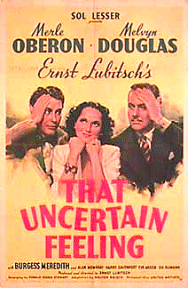
I had the pleasure of watching our Star of the Month, Merle Oberon in two classic comedies: The Divorce of Lady X (1938) and That Uncertain Feeling (1941).

*This post includes GIF images*


(Based on the 1880 play, Divorçons, by Victorien Sardou and Émile de Najac)


"Against her better judgement, happily married Jill Baker (Merle Oberon) is persuaded to see a popular psychoanalyst about her psychosomatic hiccups. Soon, she's disillusioned about husband Larry (Melvyn Douglas); and one day in the doctor's waiting room she meets pianist Alexander Sebastian (Burgess Meredith), who's even more confused than she is. Can this marriage be saved? Larry has a plan that is pure [Ernst] Lubitsch..."


Overall Thoughts

I first watched That Uncertain Feeling when I was a teenager. Because this movie is now in the Public Domain, we (meaning my mom) were able to purchase it out of the one-dollar DVD bin of a store. I remember enjoying the film then for its comedy and its glamorous look (fashion, set design, etc.), but I really enjoyed it in my most recent viewing. I guess age has allowed me to understand and relate to the story more I did before.

Melvyn Douglas co-starred as 'Larry', Jill's husband

There isn't much I can say about this movie. It's your quintessential screwball comedy featuring beautiful people with quirky traits and mannerisms. While you always know what to expect when it comes to a screwball comedy (again, quirkiness, battles-of-the-sexes, an injury or two), each of them still managed to be extremely unique in its storyline. That Uncertain Feeling was no different.


Funny Moment from the Film:


Fact: Merle Oberon turned 30 years old in 1941. The character of 'Jill', however is 25--later in the film, she tells a psychologist that she married 'Larry' when she was 19 and that they'd been married for six years.


************


(The second film adaptation of Gilbert Wakefield's play, Counsel's Opinion)
IMDb Summary


"Divorce lawyer Everard Logan (Laurence Olivier) thinks the woman who spent the night in his hotel room (Merle Oberon) is the erring wife of his new client (Ralph Richardson)."


Overall Thoughts


It took awhile for me to get into this movie. Typical of a screwball comedy, Merle appears as a "Lady X", a (seemingly) flighty woman and Sir Laurence Olivier plays the role of a stuffy young lawyer named Everard Logan. It starts out pretty annoying--Lady X is a pest and Logan is stiff to the point of being insulting and insensitive (particularly to women). However, as the movie unfolds, the lead characters' layers unfold right along with it, leading us into a sweet and enjoyable film. If you're like me, you'll find yourself scoffing and gasping in the first half, and grinning to yourself in the second.


Funny Moment from the Film:


Everard makes his exit...


Merle Oberon, the Comedic Actress?

Source

I wouldn't call Merle Oberon a "comedic actress". She was simply an actress who worked well in whatever genre was popular in a certain period (think Joan Crawford's ability to evolve through the "flapper" films, the romantic dramas, film noirs, and later, the thrillers). If anything, while she did make me laugh in both of these movies, her dramatic moments always tended to outshine her comedic. With that said, I look forward to watching her dramatic pictures next!

Tuesday, March 24, 2015

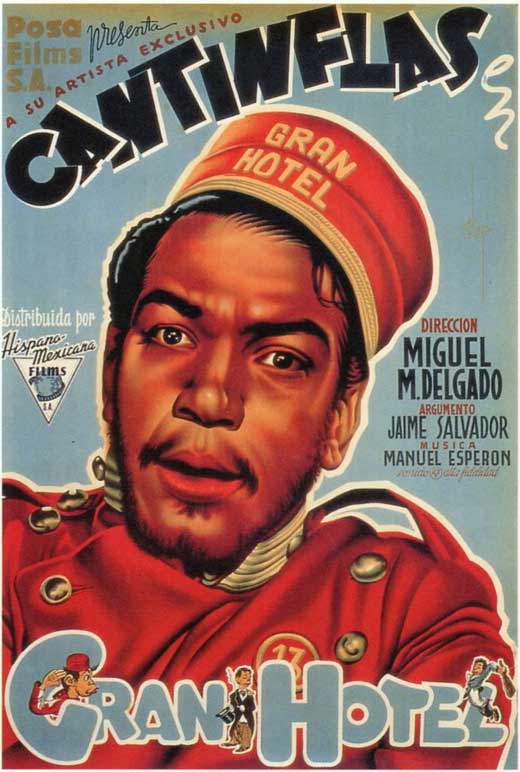
Cantinflas gets physical in 'Gran Hotel'...too physical.


The films of Cantinflas pretty much have the same formula--his tramp-ish character doesn't fit in anywhere, particularly among "higher-ups". Then, he manages to step into sticky situations, but of course, he manages to bumble his way out of these situations. With that said, you'd think that Cantinflas vehicles would get pretty redundant--but they don't. At least, that hasn't been an issue for myself.

This weekend I watched Gran Hotel (1944)--and of course, Cantinflas played his trademark "peladito" character. He's a man who stirs up trouble in his community (his work place to be more specific) and moves to a place where he's 10x more likely to stir up more trouble. Here is the IMDb summary:

"After failing as a waiter, Cantinflas gets a job as a bellboy in a fancy hotel, by recommendation of his girlfriend. He has to deal with posh people and even with the nobility. One day, an expensive and rare collar, property of a noblewoman, disappear, and Cantinflas is the only one who knows where it is. But Cantinflas gets amnesia caused by a big bunch in his head. Will he tell us the real location of the relic?"

When it comes to "reviewing" Cantinflas' films (or any non-English films), I tend to stray away from actually "reviewing" them, because a good review obviously requires one to fully understand the film's dialogue. Instead, I will simply share my 'Positive Comments', 'Negative Comments', and my 'Overall Thoughts'. 


************


Positive Comments

As previously stated, most Cantinflas vehicles stuck to a certain formula, but they all managed to stand out in their own ways. Gran Hotel was no different. When comparing it to the movies I have seen (1952's El bombero atómico and 1964's El padrecito), I noticed that Gran Hotel was more aggressive in its criticism of the upper/middle class. The main character freely (and physically) expresses his indignation toward people who could be considered "better" or higher up than him (the elite, employers). In the movies I've previously viewed, the character of Cantinflas is carefree, cheerful, and silly. In Gran Hotel, he was a bit darker--he was still silly, but purposely silly--mischievous, I should say--and he was a bit hostile. This led me to wonder if the Cantinflas image "cooled down" as the years went by, or if it was by chance that I chose the one movie where he plays a more testy character. It also made me want to watch his movies through a more historical, political, and cultural lens.

Oh, movies that make you think!


Negative Comments

There were a few moments where Cantinflas' character was a bit...too aggressive. I found one scene in the film to be especially horrifying--as he was dancing with a woman (after knocking out her real dance partner), he tossed her around, threw her to the floor, grabbed her by her hair, and even kicked her a few times. I may have missed something in terms of dialogue or context clues prior to the scene, but not only was it freakishly violent, but it was also completely out of left field.


Overall Thoughts

I'll be honest, the dancing scene put a huge damper on my interest in the rest of the movie. It was still a pretty fun film to watch--a typical classic comedy--but again, after that scene, I immediately felt indifferent toward it. I personally wouldn't recommend this movie to anyone, but if you're able to overlook a woman being thrown around by her hair, by all means, go for it!


Click here to watch Gran Hotel (1944)


Sunday, February 22, 2015

Go Down, Death! (1944) - (Review)


Once again, Spencer Williams tackles the theme of "good vs. evil" in 1944's Go Down, Death!, made three years and three projects after the previously reviewed, The Blood of Jesus. Is Go Down, Death! just as good as Williams' directoral debut or better? Unfortunately, it falls very short.


As a result of The Blood of Jesus' critical and commercial success, Spencer Williams went on to write and direct several more pictures for Sack Amusement Enterprises. Of course, clout like that gives filmmakers the opportunity to really show off their craft. You want to create bigger and better. Go Down, Death! has more characters and more drama, but no one really "brought it" in this film.

Monday, February 9, 2015

The Blood of Jesus (1941) - Review


*WARNING: Use of GIF images*


Movie poster from Wikipedia


IMDb Summary

In the rural south of the United States, a godly young woman ("Martha Ann Jackson" played by Cathryn Caviness) is accidently wounded by her unchurched husband (Spencer Williams). She succumbs to the injuries, whereupon a good angel (played by Rogenia Goldthwaite) bids her to journey with him to the Crossroads of Life. Before she can travel far, the devil (Jas B. Jones) lures her with the temptations of juke joints and the city. Can she regain the straight and narrow before it's too late? And what is to become of those she left behind? 


Our Star of the Month, Spencer Williams made his directoral debut with The Blood of Jesus (1941). He also wrote and produced this film. Here are my thoughts:


Portrayal of the "Black Church"


Real-life preacher, Reverend R.L. Robertson & the Heavenly Choir


Religious themes (particularly "prodigal son" stories) were prevalent in most movies featuring all-Black casts. Hallelujah! (1929), Cabin in the Sky (originally a play), and Miracle in Harlem (1948) are just a few examples. In fact, The Blood of Jesus is very much like Cabin in the Sky. However, The Blood of Jesus still manages to stand out from the others.


************


For most African-Americans (especially during the years of slavery and well into...I'll say into the 1960s or 70s), Christianity and the Church were especially central in communities and individual lives. The church served as the soup kitchen, the schoolhouse, the dance hall (Rated G dancing, of course), the city hall, etc. It was versatile place that was always opened to guests. Even if you were a blues singer at the juke joint up the street, it was likely that you first started singing in church.


R.L. Robertson leads his congregation with "Sister Ellerby" (left) and "Sister Jenkins" by his sides.


Spencer Williams allowed that unique culture to shine in his script without making caricatures of African-American churchgoers. The cast members' prayer and worship didn't come off as an energetic screen performance. Even though actresses Juanita Riley and Reather Hardeman (as "Sister Jenkins" and "Sister Ellerby") played comedic roles, they too seemed honest in their praise to God. Speaking from a personal perspective, this showed the African-American church in a most natural light. 


*Further reading: Check out this link (scroll down a bit) to see how King Vidor (director of Hallelujah!) made the "connection" between African-Americans' sexual expression and religious expression. Although I still enjoy watching this movie, Vidor's observation of the "Black church" is a strange one--and it is apparent in Hallelujah!'s church scenes.


Writing

Race movie storylines were usually pretty simple. For the tight budgets didn't allow writers the opportunity to write scenes that would have required, say for instance, enough time for two brothers to tap, flip, and jump about in a large space. Instead, you'd get a familiar script with two or three musical acts thrown in to "spice it up". Not to mention that these acts were liable to perform at a tiny nightclub or at somebody's fictional rent party. Like the others, Spencer Williams stuck to a simple script for The Blood of Jesus and it did call for a "heavenly choir" and "jazz performers", but unlike the others, none of the musical performances seemed to be fillers.


Satan (Jas B. Jones) spots an angel (Rogenia Goldthwaite)


The Blood of Jesus makes a clear cut distinction between what gets you into Heaven and what sends you to hell: fast city life, fun outside of church, and wanting quick gratification=hell; waiting patiently for finer things/being thankful for what you have, seeking comfort in God, and friendship within the church=Heaven. Again, pretty simple. Some (myself included) may find the "black-and-whiteness" of such a storyline to be off-putting, but the film is grounded in some of the Bible's most often-cited teachings, after all. Even so, this didn't seem like a movie with a plan to convert people or get people to "get their house in order". It seemed to be Spencer Williams' way of making people relate to or understand the Bible in 1941.


Characters & Acting


There wasn't a bad performance in this film but there wasn't an exceptional performance, either. But again, simplicity was the key in this film. There was no need for anyone to chew the scenery. However, I think Spencer Williams (as "Raz"), Juanita Riley, and Reather Hardeman gave the more memorable performances.


Sister Martha Ann Jackson (Cathryn Caviness) having a good time


To fling synonyms of "honesty" around once again, I must applaud Spencer Williams for a genuine (or better yet, multi-dimensional) depiction of the African-American church congregation. While there was that distinction between what was "good" and what was "evil", Williams made certain that the characters weren't this precise. For example, his own character, "Razz", wasn't religious--and a character element such as that might tempt one to make Razz mean and nasty for the sake of being mean and nasty, but thankfully, Williams strayed far from this stereotype. The same could be said about other characters, including the lead character, Martha Ann. While Martha Ann strays away from the "straight and narrow" path for a bit, she doesn't go completely (and unbelievably) out of control. 


Sister Jenkins (Juanita Riley) catches Razz Jackson (Spencer Williams) in a lie. 


Overall Thoughts

Overall, I loved this movie. It's just under an hour long, but it didn't feel too short. As stated numerous times before, this a short, sweet, and refreshingly simple production--from the story to the cinematography and even down to the sound. Of all the Spencer Williams movies I've seen, I think this was his best. It's entertaining and it's also educational. Plus, if you ever spent time in "the church" or just in some rural areas in the United States' Southern region, this movie just may stir up some memories and nostalgia for you. It did that for me.


The Blood of Jesus (1941) on YouTube

Tuesday, April 1, 2014

Movie of the Week: Black and Tan (1929) Video Review


Check out my video review of the 1929 short musical drama, Black and Tan (also known as Black and Tan Fantasy)!


Movie poster available on Movie Poster Shop 


Sunday, January 26, 2014

Movie of the Week: "Amos 'n' Andy" Episodes (Review)


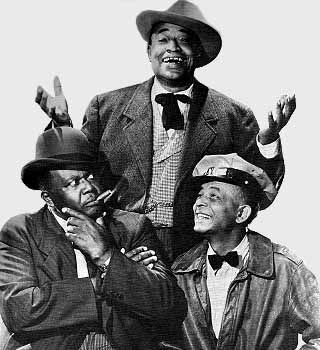
From EpGuides, Tim Moore (top), Spencer Williams, Jr. (bottom left), and Alvin Childress as Kingfish, Andy, and Amos (respectively).

This week, I watched two episodes of the short-lived television series, Amos 'n' Andy, starring Alvin Childress, Spencer Williams, Jr., and Tim Moore. 

************

I watched the first episode of the series, titled Kingfish Gets Drafted. 

In this episode, George "Kingfish" Stevens is wrongfully drafted into the Army. Of course, upon receiving the notice, he knows a mistake has been made, but Army officials assure him that he is the George Stevens they're looking for. Kingfish, fearful and upset, goes to tell his wife, Sapphire (played by Ernestine Wade) the bad news, but surprisingly, she is happy for him--she assumes that he actually enlisted and refers to him as "her hero". The entire neighborhood hears the news and celebrates, leaving Kingfish no choice but to pretend that he really is going away. Of course, comedy ensues.


I literally "laughed-out-loud" while watching this episode. You may be turned off a bit (like I was) by what seems like fake and forced laughter from the audience, but it won't take long before the laughter goes unnoticed. The episode was cleverly written, the comedic timing was seamless, and all performances were great. There really isn't much more I can say about the episode--I absolutely loved it.


************

Next, I watched Kingfish's Secretary. I'm not sure if this was the second episode of the series or not. Some sites, like IMDb, have it listed as the second episode, while others do not. 

In this episode, the lodge (that Amos, Andy, and Kingfish are members of, by the way) makes some renovations and even hires a secretary named Daphne (to my surprise and joy, played by the multi-talented Jeni Le Gon). Upon learning about the new secretary, Sapphie Stevens' claws come out and she lets Kingfish (and later, the unknowing Daphne) have it. 

Jeni Le Gon (American Vaudeville Museum)


Also, in this episode, a lodge member comes in requesting that Daphne take dictation for a letter to a mail-order bride he has his eyes on. Now, before this, Kingfish asked Daphne to take dictation for a letter to a cleaning service to hire a cleaning woman. When Daphne is out, Lightnin' (played by Nick Stewart) comes in to pay the lodge a visit. Kingfish, while lounging in his office, asks Lightnin' to bring him the letter for the cleaning service for him to sign. Lightnin' accidentally knocks the cleaning service letter in the trash and Kingfish signs the mail-order bridge letter!


Ruby Dandridge (Copper Colored Gal)


Next thing you know, Henrietta Smith (played by Ruby Dandridge) comes barging into the lodge to claim her man, Mr. George Stevens. Again, comedy ensues.


Like the previous episode, I don't have much to say about this one. I literally "laughed out loud". The comedic timing of these actors is worthy of endless praise.

************

Overall Thoughts

Again, I enjoyed these episodes--so much so that I plan to either purchase the series on DVD or watch all of them online. The show was criticized for its negative portrayals (lazy Kingfish, jealous Sapphire) of Black-Americans, but the only thing that differentiates these characters from other characters in television and movies at the time was the color of their skin. However, here is the problem:


When Amos 'n' Andy aired on television, the only other show that featured a black cast (or a central black character, rather) was Beulah. Beulah was--what else?--a maid. When you have less than a handful of shows "representing" your race, of course you're going to be very critical of what you see. This is still going on today, actually (see varying opinions within the black community on shows like Scandal, Being Mary Jane, and Tyler Perry's shows). It's a shame that the show was cancelled so soon, because again, it was hilarious, but I'm not going to be "that person" who thinks that all of the controversy and complaints were unreasonable. 
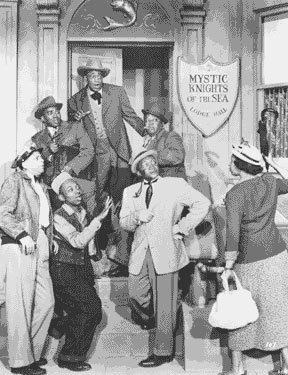
From TV Party--the lodge men taking cover against the wrath of Sapphire.


The only problem I had with the show (the two episodes that I actually watched), was the way in which the black female characters were written. In these two episodes, there were only four women--Sapphire Stevens, Sapphire's mom (played by Amanda Randolph), Daphne, the secretary, and Henrietta Smith. You would expect to see a wide range of personality among these four women, but nope--three of these four women were all domineering, rambunctious women quick to throw a punch and/or tear a man down. Now, to be clear, I don't think there's anything wrong with being a domineering and rambunctious woman, but when three out of four black, female characters in two episodes of a show alone are seemingly mean and unpleasant, I have to ask, "Just what did the writers think about black women?"

Ernestine Wade (Find-A-Grave)

Also, again, jealous, domineering women were not new to television, movies, or radio by this time and they were played by actresses of different races, shapes, sizes, and ages (see Lucy is Jealous of Girl Singer), but like I said, it's easy to be very critical of what you see of yourself on television when the choices are limited.


However, I highly recommend that you check out episodes of Amos 'n' Andy. Below are links to the episodes I watched this week.


[Youtube]


[Matinee Classics]


************

I will be back later this week with a video review of No Way Out (1950).


Sunday, November 10, 2013

Movie of the Week: "Porgy and Bess" (Review)


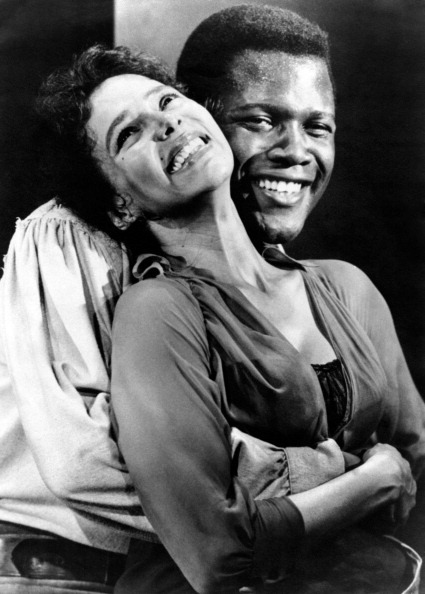
This week--in honor of what would have been Dorothy Dandridge's 91st Birthday, I watched the controversial 1959 film adaptation of Porgy and Bess, starring Sidney Poitier, Ms. Dottie D, Sammy Davis, Jr., Pearl Bailey, Brock Peters, and a host of other legendary entertainers. 

From Wikipedia

"In this legendary Gershwin opera set among the black residents of a fishing village (Catfish Row) in 1912 South Carolina, Bess (Dorothy Dandridge)--a woman with a disreputable history --tries to break free from her brutish lover Crown (Brock Peters) after he becomes wanted for murder. The only person willing to overlook her past and offer her shelter is the crippled Porgy (Sidney Poitier). Their relationship is threatened by the disapproval of the townspeople, the presence of her old drug supplier Sportin' Life (Sammy Davis, Jr.) - and the threatened return of Crown." [IMDb]


Before I get into the review, allow me to give you a little background information on this film:

  • Porgy and Bess was originally bought as a film property by Columbia Pictures in 1942 to star an all-white cast in blackface: Al Jolson as Porgy, Rita Hayworth as Bess, and Fred Astaire as Sportin' Life.


  • Sidney Poitier had adamantly refused to take the role of Porgy when offered it by Samuel Goldwyn, because he felt it perpetuated stereotypes of Blacks of a bygone era. However, he was convinced to accept the project by friends and colleagues because a refusal of a Samuel Goldwyn offer would probably have ended his career in the movies.

  • Dorothy Dandridge and Pearl Bailey were also reluctant to be in the film, until they heard that Poitier and Sammy Davis, Jr. were going to be in it. Sammy Davis, Jr. was the only one of the four leads who was actually eager to play his role in the movie.

[All info from IMDb]


************

Now, some months ago when I watched this movie for the first time, I tweeted "Why are they singing so much?!" Of course, I knew that Porgy and Bess was originally an opera, but so was Carmen Jones--and I think I watched the movie with "Carmen Jones" expectations (more dialog than singing to drive the narrative). This time around, I popped the movie in with a more clear mind and this time, I enjoyed both the movie and its music. 


From Dorothy Dandridge Forever 


Still, this is one of those cases in which most of the time, I was thinking "I should definitely read the play" or "I should watch a performance of this play", because throughout, I began to question a lot of things that either made no sense and/or seemed downright unbelievable. For example, in the middle of the film, a big storm hits the town and the residents of Catfish Row gather in one house (the home of Serena, played flawlessly by Ruth Attaway). Now, one of the residents--a woman who is extremely worried about her husband who is at sea--walks out of the house in a panic to find him.


Now, may I mention again that ALL of the residents of Catfish Row were gathered in that house? Therefore, ALL of the residents watched this character walk right out the door and into a hurricane. Not only did they watch her, but they CLOSED THE DOOR BEHIND HER. There is no gif available to express the look on my face when this happened, but the thing is, so many (too many!) situations like this occurred: avoidable situations unrealistically took place. There was no build-up for dramatic moments and the setups for them were super obvious. This explains my desire to read or watch a performance of the play: "Was this scene written like this in the play???"


I guess you could say that the script wasn't as well written as it could have been; and also, as the original director, Rouben Mamoulian adamantly insisted (before he was fired), I do believe the film would have looked better if filmed on location. This movie really had some potential, but behind-the-scenes drama (and some egos) really sort of killed it before it even hit the screens.

Porgy and Bess is only saved by its performances.

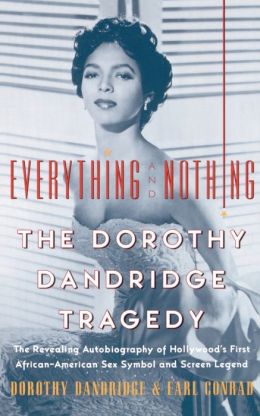
From Barnes and Noble


Here are some words from Dorothy Dandridge herself, from her autobiography, Everything and Nothing: The Dorothy Dandridge Tragedy (this autobiography was titled and published posthumously):

"When pressure is brought against an actress, a picture, a book, anything creative, you are apt to get a vitiated, neutralized product which comes out weak, mediocre, and not believable.

What happened was an attempt to clean up Catfish Row! An actual attempt to make life on Catfish Row look not so bad. Everyone connected with the movie embarked on a program to take the terror, fright, and oppression out of ghetto living. You can't do a picture about the black lower depths and then wash up the street and wash the dogs that cross into the scene.

That was the kind of cleanup operation that was done in the film version of Porgy and Bess. That is what happens when people who are not artists, directors, actors, or writers make their influence felt on an art production. They come in with their fears and their great self-belief and their little button-pushing neighborhood political power, and they tell the actor how to act, the writer how to write, the singer how to sing and what to sing. The influence of this pressure permeated Porgy and Bess and wrecked it both as an entertainment vehicle and as a vehicle of instruction."


...and there it is.


You can check out Porgy and Bess on Youtube by clicking here.


************


The images above were used for entertainment and informational purposes only. If the rightful owner(s) of any of these images wishes to have them removed, please contact me and I will do so immediately.--Adrienne


************

Also, please check out the video I made in honor of Dorothy Dandridge's birthday!