Welcome to People of Color in Classic Film--a blog dedicated to People of Color who made contributions to (particularly, but not exclusively) American film and television between the Silent Era and 1980.
"When I start on a film I always have a number of ideas about my project. Then one of them begins to germinate, to sprout, and it is this which I take and work with. My films come from my need to say a particular thing at a particular time. The beginning of any film for me is this need to express something. It is to make it nurture and grow that I write my script- it is directing it that makes my tree blossom and bear fruit."
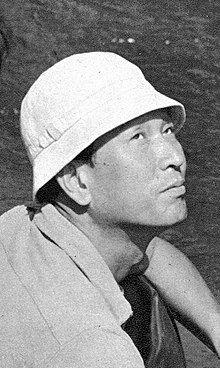
That was a lovely quote by the late, great filmmaker Akira Kurosawa--the kind of person who doesn't need anything more than his name in a blog post title.
The most well-known of all Japanese directors, the great irony about Akira Kurosawa's career is that he is far more popular outside of Japan than he is in Japan. The son of an army officer, Kurosawa studied art before gravitating to film as a means of supporting himself. He served seven years as an assistant to director Kajiro Yamamoto before he began his own directorial career with Sanshiro Sugata (1943), a film about the 19th-century struggle for supremacy between adherents of judo and ju-jitsu that so impressed the military government, he was prevailed upon to make a sequel (Sanshiro Sugata Part II).
Following the end of World War II, Kurosawa's career gathered speed with a series of films that cut across all genres, from crime thrillers to period dramas -- among the latter, his Rashomon (1951) became the first postwar Japanese film to find wide favor with Western audiences, and simultaneously introduced leading man Toshiro Mifune to Western viewers. It was Kurosawa's The Seven Samurai (1954), however, that made the largest impact of any of his movies outside of Japan. Although heavily cut on its original release, this three-hour-plus medieval action drama, shot with painstaking attention to both dramatic and period detail, became one of the most popular of Japanese films of all time in the West, and every subsequent Kurosawa film has been released in the U.S. in some form, even if many -- most notably The Hidden Fortress (1958) -- were cut down in length. At the same time, American and European filmmakers began taking a serious look at Kurosawa's movies as a source of plot material for their own work -- Rashomon was remade as The Outrage, in a western setting, while Yojimbo was remade by Sergio Leone as A Fistful of Dollars (1964). The Seven Samurai (1954) fared best of all, serving as the basis for John Sturges' The Magnificent Seven (which had been the original title of Kurosawa's movie), in 1960; the remake actually did better business in Japan than the original film did. In the early 1980s, an unfilmed screenplay of Kurosawa's also served as the basis for Runaway Train (1985), a popular action thriller.
Kurosawa's movies subsequent to his period thriller Sanjuro (1962) abandoned the action format in favor of more esoteric and serious drama, including his epic length medical melodrama Red Beard (1965). In recent years, despite ill-health and the problems getting financing for his more ambitious films, Kurosawa has remained the most prominent of Japanese filmmakers. With his Westernized style, Kurosawa has always found a wider audience and more financing opportunities in Europe and America than he has in his own country. A sensitive romantic at heart, with a sentimental streak that occasionally rises forcefully to the surface of his movies, his work probably resembles that of John Ford more closely than it does any of his fellow Japanese filmmakers.
--Bruce Eder, All Movie Guide
**** Check out this clip of Akira Kurosawa being presented with an Honorary Academy Award in 1990:
Steven Spielberg and George Lucas are two of the many filmmakers who've been greatly influenced by Mr. Kurosawa's work. ****
Mr. Kurosawa has a great number of credits in numerous departments of Film--Writing, Directing, Producing, Editing--everything that his hands touched turned into timeless works of art.
Theatrical release poster for Yojimbo (1961)
In 2009, "AK 100: 25 Films by Akira Kurosawa" was released as a part of The Criterion Collection--I'm assuming the title is in honor of what would have been Mr. Kurosawa's 100th birthday the next year. The set is now unavailable on the Criterion Collection site, but is available on Amazon and possibly Ebay.
Of course, you can also purchase individual DVDs online. Some of his more popular films are: Rashomon(1950), Ikiru(1952), Seven Samurai(1954), Yojimbo (1961), and Ran (1985). ************ All of the images above were obtained from Wikipedia and were used for informational purposes only. If the rightful owner(s) of any of these photos wishes to have them removed, please contact me (Adrienne), and I will do so immediately.
There's a lot of conflicting information about who was the first African-American to sign a Hollywood contract, who was the first to sign a long-term contract, etc.--but based on my own little research, I've come to the conclusion that the following people were more than likely the true first "signers" of certain Hollywood contracts.
In 1915, the Biograph Company gave entertainer Bert Williams the power to produce, write, direct, and star in two films for them--A Natural Born Gambler (1916) and Fish (1916).
I couldn't find information specifically stating that Williams had signed any contract with Biograph, but nonetheless, Williams being granted that kind of power in early twentieth-century Hollywood is a distinguishing feat alone.
I feel certain that somepaperwork had to have been been made out between Mr. Williams and Biograph. ************
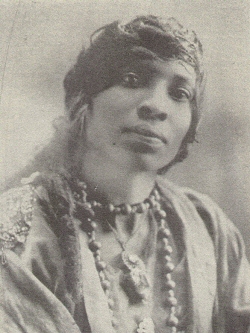
Born Nellie Crawford in Louisville, Kentucky, Madame Sul-Te-Wan is recognized as the first African-American performer to sign a contract in Hollywood and be a featured performer (meaning, she actually had some dialogue) as well.
Her first role was as a hotel cook in the 1915 short The Cause of It All. Her second (and most acknowledged) role was as "Dr. Cameron's Taunter" in the controversial D.W. Griffith film, The Birth of a Nation.
Madame Sul-Te-Wan worked in over 50 Hollywood films.
************
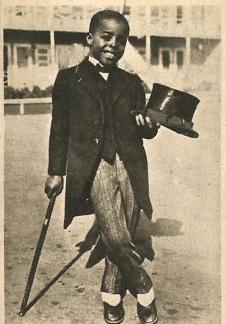
When Ernie "Sunshine Sammy" Morrison signed with comedy producer Hal Roach in 1919, he became the first African-American to sign a long-term contract in Hollywood--and get this: He was only six years old.
"Sunshine Sammy" would become most popular as one of the original Our Gang kids and as the only black member of the East Side Kids.
************
After rave reviews for her debut in 1929's Hallelujah!, Nina Mae McKinney signed a five-year contract with MGM, making her the first African-American woman to sign a long-term contract in Hollywood.
Sadly, like a lot of black actresses of the time, even a long-term contract couldn't secure the roles that Nina Mae wanted. She would find sweeter success in parts of Europe as a cabaret entertainer.
************
A Natural Born Gambler (1916)
Starring Bert Williams
(Warning: Offensive racial stereotypes and use of blackface)
******
Madame Sul-Te-Wan as "Tituba" in Maid of Salem (1937)
******
The Dippy Dentist (1920)
Starring Snub Pollard and "Sunshine Sammy" Morrison
(Go to 2:28 to see "Sunshine Sammy")
******
Pie, Pie Blackbird (1932)
(Musical Short)
Starring Nina Mae McKinney,
Eubie Blake & His Orchestra, & The Nicholas Brothers
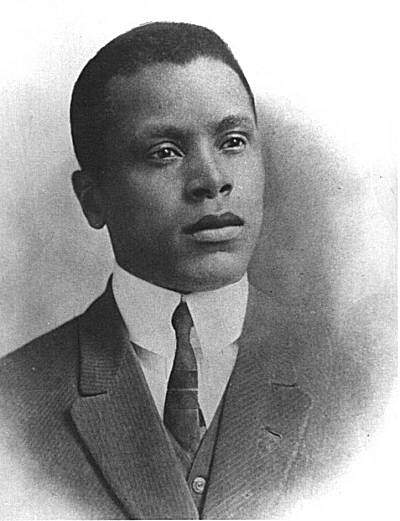
January 2nd marked the 129th anniversary of Oscar Micheaux's birth in Metropolis, Illinois.
Micheaux was the most successful black-American filmmaker of the early half of the twentieth century. While other black filmmakers of the time were unable to produce as many films as they would have liked to, Oscar Micheaux produced 38 and/or directed 42--his second film went on to become his most popular to date.
This week, in honor of Mr. Micheaux, I will be watching some of his movies and posting reviews.
I will also be posting reviews on the IMDb website, because I believe some of the reviewers of Micheaux movies weren't as informed and as they could have/should have been and therefore came off very biased and unfairly critical.
In the meantime, Click Here to watch a short, informative video about Mr. Micheaux.