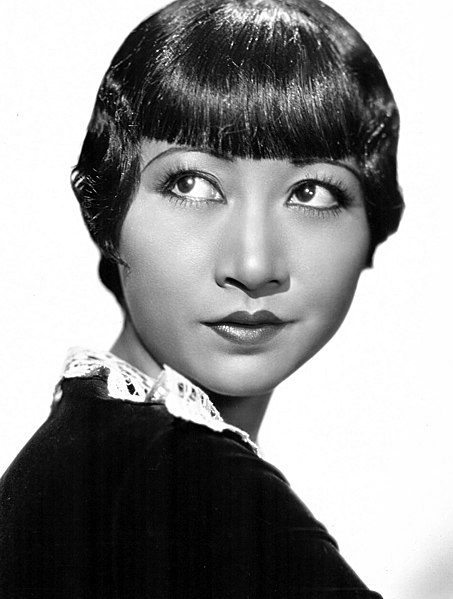
Welcome to People of Color in Classic Film--a blog dedicated to People of Color who made contributions to (particularly, but not exclusively) American film and television between the Silent Era and 1980.
This is the last four slideshows for my race-bent casts of some of my favorite classic movies--all featuring June 2015's Star of the Month, Nina Mae McKinney as a cast member. Below is a slideshow of a race-bent cast for That Uncertain Feeling (1941), the filming starring April 2015's Star of the Month, Merle Oberon.
This is the third of four slideshows for my race-bent casts of some of my favorite classic Hollywood movies--all featuring Nina Mae McKinney as a cast member.
Below is a slideshow of a race-bent cast for Mildred Pierce (1945):
It isn't hard for me to lament over the roles that "could've been" for Hollywood's first black leading lady, Nina Mae McKinney. I'm constantly watching classic movies and thinking, "Hmm, -person of color- would have played this role..." but I digress...
Below is the first of four slideshows with a race-bent cast for some of my favorite Hollywood classics (all featuring our Star of the Month):
The next slideshow will be posted on Monday, June 22nd! :)
Today marks 103 (or 102, depending on your source) years since the birth of Hollywood's first black leading lady, Nina Mae McKinney.
Nina Mae McKinney was born Nannie Mayme McKinney on June 13, 1912 in Lancaster, South Carolina. Below are links to "everything Nina Mae McKinney" available online: *Also, some sources list McKinney's birthday as June 12th*
************
Cinema
1. Nina Mae McKinney made her screen debut in King Vidor's 1929 film, Hallelujah!. The role of "Chick" was the first leading role for a black woman in a Hollywood film. You can click here to watch Hallelujah! in its entirety on YouTube.
2. McKinney received rave reviews for her performance in Hallelujah! but subsequent roles were limited and few. Her next role as a "Singer/Dancer" in the MGM short, Manhattan Serenade (1929). Then, in 1930, McKinney played the uncredited role of a singer in They Learned About Women.
*Manhattan Serenade was long thought to be a "lost film", but was found in 2014 and screened at the Film Forum in New York City on November 9, 2014. If you live in or near New York, you can catch a screening of it at the MoMA.*
3. McKinney's next (and more significant) role came with the 1931 Pre-Code gem, Safe in Hell. I've inserted two YouTube clips of our Star of the Month as "Leonie - the Hotel Manager":
[Clip 1 - Nina Mae McKinney introduces the song "Sleepy Time Down South"]
4. Nina Mae McKinney appeared in a couple of shorts in 1932--Passing the Buck and Pie, Pie Blackbird. You can watch Pie, Pie Blackbird below:
5. Like a lot of entertainers of color, Nina Mae McKinney would leave Hollywood to try a hand at success in Europe--and she was successful in her attempt! It was there that she was dubbed "the Black Garbo". Click here to watch a clip of her performing in a London nightclub.
6. McKinney's next major film appearance was alongside Paul Robeson in the London Film Production, Sanders of the River (1935). Watch the full movie on YouTube by clicking here.
7. Get a glimpse of Nina Mae McKinney in the 1935 film, Reckless(starring William Powell and Jean Harlow). The trailer for the film is below:
8. In 1936, McKinney made an uncredited appearance in The Lonely Trail and also appeared in the musical short, The Black Network:
You can find more of Nina Mae McKinney's film credits on IMDb. Below are two additional movie links (both leading to YouTube):
Nina Mae McKinney starred as "Isabelle Walton" in the Sack Amusement Enterprises pictures, The Devil's Daughter (1939).
Nina Mae McKinney played the role of "Rozelia" in Pinky (1949), a 20th Century Fox film.
************
Music
Nina Mae McKinney introduced Irving Berlin's "Swanee Shuffle" in Hallelujah!. Watch her lively performance of the tune below:
In the early 1930s (circa 1932), McKinney recorded a few songs with jazz pianist, Garland Wilson's accompaniment. Among the known recordings are "Rhapsody in Love" and "Minnie the Moocher's Wedding Day".
Nina Mae McKinney: The Black Garbo is the first--and currently, the only--biography written about Nina Mae McKinney. It was written by famed biographer Stephen Bourne and published in 2011. Mr. Bourne himself has admitted that The Black Garbo wasn't his best work, but again, the biography is still is the first and only attempt at telling Nina Mae McKinney's life story, so far.
"A Jungle Lorelei" (Photoplay- July 1929) Yep. That's the title. Writer Herbert Howe wrote an article on the 17 year old Nina Mae McKinney for the July 1929 issue of Photoplay magazine (a month before Hallelujah!'s theatrical release). Click with caution--the actual article gets no better than its title.
As a child, Nina lived with her "Aunt Carrie" while her parents moved to New York. I believe this may be a record of who "Nannie Mayme" lived with as a kid. The woman of the house is listed as "Galie McKinney"--perhaps Carrie's name was accidentally heard as "Galie"? McKinney was briefly married to trombonist Jimmy Monroe in the 1930s. This may be a record of their marriage. Based on previously shared news articles, Nina Mae McKinney lived with her parents (specifically noted, her mother) for a long time. When her mother passed away in 1962, she was living with her. Here is a 1940 Census record that may list Nina as the "daughter" of James Maynor and Georgia Crawford. Many online sources state that Nina Mae's father was Hal McKinney, leading me to believe that her mother may have remarried at some point. ************ I hope you find this appreciation post to be quite an educational one! Please, feel free to share!
I am more than excited to announce Nina Mae McKinney as June 2015's "Star of the Month".
One of my favorite actresses! I've written quite a few posts about her or including her, but I'm very excited to dedicate an entire month (her birth month) to her and her work. Posts "Happy Birthday, Nina Mae McKinney! (Appreciation Post)"
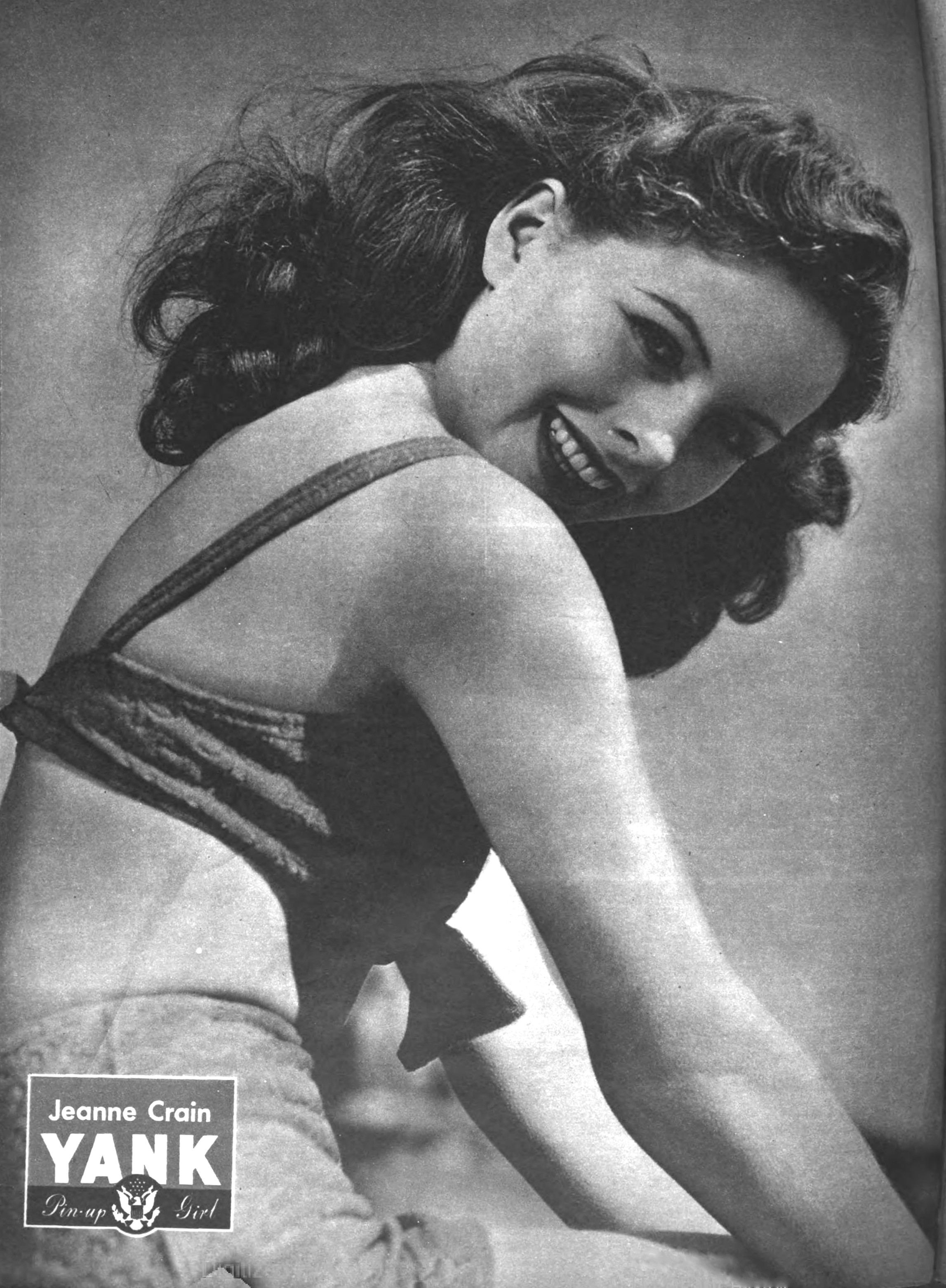
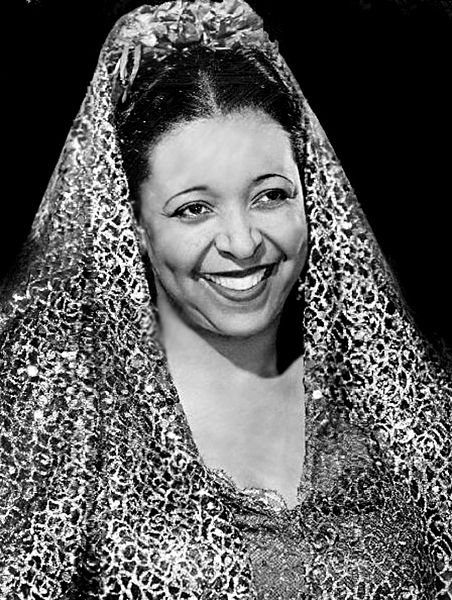
Pinky, a light skinned black woman (played by Jeanne Crain), returns to her grandmother's house (Dicey Johnson, played by Ethel Waters) in the South after graduating from a Northern nursing school. Pinky tells her grandmother that she has been "passing" for white while at school in the North. In addition, Pinky has fallen in love with a young white doctor, Dr. Thomas Adams (William Lundigan), who knows nothing about her black heritage. Pinky says that she will return to the North, but Granny Johnson convinces her to stay and treat an ailing white woman, Miss Em (Ethel Barrymore). Meanwhile, Dr. Canady (Kenny Washington), a black physician from another part of the state, visits Pinky and asks her to train some African American students, but she declines. Pinky nurses Miss Em but is resentful because she seems to feel that she is doing the same thing her grandmother did. Pinky and Miss Em slowly develop a mutual respect for one another. Mrs. Em leaves Pinky her property when she dies, but relatives of the deceased woman contest the new will in court. [IMDb Plot Summary - remainder contains spoilers]
************
I was going to do a video review for Pinky, but I know I would be better at getting my irritations and frustrations out in writing.
************
Story/Writing *Warning: Mention of Rape/Attempted Rape & Harassment*
To be honest, there were a few moments in this film that I found to be unrealistic (like Pinky's white boyfriend holding her close in a courtroom full of racist white people without as much as a "gasp" from them), but overall, this was a really good story and I was not expecting it to be as good as it was. It stirred so many emotions for me--sadness, anger, pity, rage. Pinky goes places that I did not expect a 1949 film to go--in the same way that I didn't expect No Way Out to go to some of the places it went.
My only problem with the writing is the erasure of Pinky's blackness (or her history as a black woman). To me, it seemed as though the writers of this film made the assumption that mixed race black people (or fair enough to "pass" black people) were incapable of relating to or understanding the (Southern) black experience. It would have been one thing if Pinky had grown up passing for white her entire life, or if she'd gone her entire life not knowing that she was black. Not the case! Pinky was born and raised by her grandmother, Dicey (played by Ethel Waters) in a shack on what I believe used to be a plantation, but for some reason, when she returned from nursing school, she was completely out of the loop about how the "Colored section" of the community lived. The character wasn't defiant or rebellious, but she was unwittingly doing and saying things that would have immediately lead to imminent danger for a darker person:
For example, early in the film, a stressed Pinky thought it would be a good idea for her to "take a walk" along the road of a racist town by herself--at night. She would soon be harassed by two white men in a car--because she was a woman. When she informed the men that she was black, they turned up the hostility--chasing her in their car and almost raping her. This goes to show that if Pinky were a dark or brown-skinned black woman, (she probably wouldn't have been walking along the road by herself at night, for starters), chances are, these men would have assaulted her immediately. Light or not, a black woman would not have been walking up a dark country road by herself in Mean White People Town unless she was a "bad mother--shutyomouf!". Pinky was nowhere near it.
************
Characters/Acting
Jeanne Crain
I can't say that I was able to "overlook" Luise Rainer as "O-Lan" in The Good Earth or Susan Kohner as "Sarah Jane" in Imitation of Life (1959), but I can say that I their performances were good enough for me to "tolerate" them. For me, Jeanne Crain's performance wasn't good enough for me to "tolerate" her as 'Pinky'. Whenever she mentioned being "colored" or "Negro" I couldn't restrain myself from rolling my eyes. She didn't make me (almost) believe her. Don't get me wrong, her performance was good, but it wasn't standout (and certainly not worth an Oscar nomination, in my opinion).
The majority of supporting cast, however, gave very memorable performances--a rare occurrence in my previous viewings and reviews.
************
Jake and Rozelia
First of all, I was a bit saddened to witness Hollywood's first black Leading Lady playing such a small role twenty years after her big debut (in fact, Nina Mae McKinney's second Hollywood role--only a year after her debut--was uncredited). I was also irritated that Jake Walters and Rozelia--the only other black characters (besides Pinky, Dicey, and Dr. Canady, who we only see in two scenes) were two of the movie's most despicable characters. Nonetheless, Ms. McKinney and Frederick O'Neal (as Jake, a man whose actual profession I'm still clueless on--he owed (and stole) a lot of people's money, that's all I know) played their roles well enough to stay embedded on the audience's brain. At least mine.
Frederick O'Neal (photographed by Carl Van Vechten)
************
Judge Shoreham
This character (played by Raymond Greenleaf) really didn't become significant until near the film's end. In fact, his "shining" moment (more like Mr. Greenleaf's) was his last moment on the screen--and I will tell you, what he says and does will cut you like the sharpest of knives. ************ Melba Wooley This character annoyed and frustrated me to no end--and you know what I always say: If a character makes you mad, then the actor did their job. Evelyn Varden did an amazing job as "Melba Wooley"--Miss Em's greedy and trouble-making cousin. You will not forget this character or the actress! ************ Dicey & Miss Em
Ethel Waters
Ethel Waters and Ethel Barrymore both received the Oscar-nomination for 'Best Supporting Actress' for their work in this film, and the nominations were well deserved. Of course, the character of "Dicey" is your typical "mammy" stereotype--she does domestic work for Miss Em and is painfully devoted to the woman. Nonetheless, like most of the actresses who played these kinds of characters, Ethel Waters played Dicey Johnson seamlessly.
Ethel Barrymore (photographed by Carl Van Vechten)
Miss Em is an ailing, no-nonsense woman who's actually beloved for her sharp tongue. This was the first time I'd seen a film with Ethel Barrymore in it, so as a first time observer of her work, I thought to myself: "Either Ethel Barrymore was as strict as Miss Em in real life, or she was extremely good at what she did..." I'm going to assume that the latter is the answer, especially since she was a member of acting dynasty known as "the Barrymore Family". ************ Overall Thoughts Overall, I thought Pinky was a well-written story. There were some moments that made me yell "Oh, come on, really, Pinky?!", but then, there were a lot of moments that were absolutely real and realistic--moments that filled me with anger and sadness because I knew that something like that, whatever it was, happened often in Southern communities of the time (and sometimes, still happens today). Of course, it was especially disappointing to not see a black actress playing this part. Black Hollywood's "it girl", Lena Horne campaigned for the role, as did the blossoming starlet, Dorothy Dandridge, but of course, neither actresses would win the role. Fredi Washington, Hollywood's go-to actress for "passing" roles had long left Hollywood for good, plus, she was 46 years old at the time of the film's release. Even the movie's own Nina Mae McKinney could have been a good candidate, but I guess that 37 would have been a bit too old for a recent college grad, as well. The studio could have gone for a big name like Lena or unknown, but to avoid controversy and violating miscegenation laws, Fox Studios decided that it would be "best" to cast a white actress, and that they did (the film still met some "miscegenation violation" trouble, anyway). The majority of Jeanne Crain's lukewarm performance (that even director Elia Kazan commented on) pained me to watch and the whole time, all I could think was "Lena Horne...Lena Horne...Lena Horne...". However, what's done is done. I do recommend that people watch this movie for both historical and entertainment purposes. *Watch Pinky on Youtube*
************ All photos used in this post were obtained from Wikipedia. They are being used for informational purposes only. If the rightful owner(s) of any of these photos wishes to have them removed, please contact me, and I will do so immediately. (Adrienne)
I was delighted and excited to open a message from someone with some extremely important Nina Mae McKinney news.
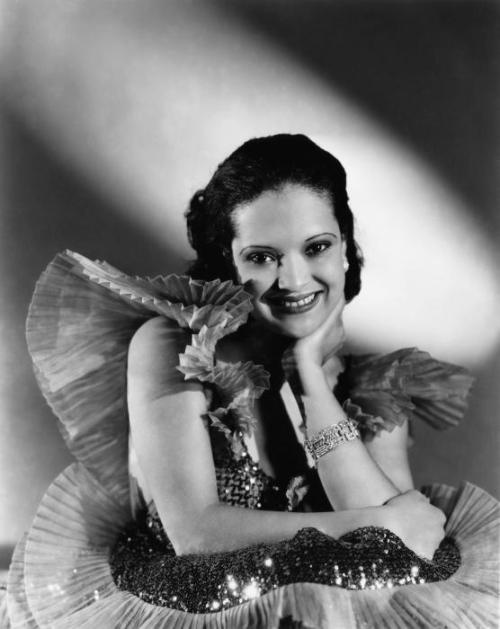
Ms. McKinney in character as "Chick" (Hallelujah!)
The sender of this message informed me that he is selling precious items once held in the hands of the late actress and a friend of hers on Ebay. Here is the description:
"Have a vintage cigarette case made of leather, brass, and 10k gold with the name 'Don' on it. It was given to him by Nina Mae McKinney. Also have some letters of Nina Mae McKinney along with the box the cigarette case came in from Syracuse, NY. I have been communicating with an individual that collects and is into Nina Mae McKinney's history. They believe this is her signature on the letters and the place the letters are from seem correct, but there is little known about her in the 50's. Either way I'm selling a really nice vintage cigarette case and could be a very important part of history! Will send one of the letters with case. Any questions feel free to ask.
Thank you for dropping by to read the first post of People of Color in Classic Film's newest segment, "That's Old News!". Below is a collection of five news stories from past Septembers.
************ "Bill (Bojangles) Robinson Dances in "Brown Buddies" at Ford This Week" (The Baltimore Afro-American--September 27, 1930)
By Carl Van Vechten
With his 30 years of experience, Mr. Bojangles outshines his co-stars in the musical-comedy stage show, Brown Buddies. Read more... ************ "Anna May Wong's Start Wasn't Very Auspicious"
(The Milwaukee Journal--Thursday, September 24, 1931)
Piccadilly star, Anna May Wong recounts her journey to and through Hollywood with The Milwaukee Journal. She also shares a beauty secret of hers! Read more here... ************ "A Talk with Nina Mae McKinney"
(The Age--Saturday, September 25, 1937)
Bright-eyed beauty, Nina Mae McKinney talks stage fright, Hollywood, and the late Jean Harlow in this article from the Australian newspaper, The Age. Click here to read the article. ************
"Story of Clarence Muse: From stage and first talkies to television"
(The Washington Afro-American--Tuesday, September 1, 1953)
Clarence Muse recounts his entertainment career with The Washington Afro-American and also gives some advice to the up-and-coming Black actors. Read about it here... ************ *Warning: The following article is a report on death*
************
"Dorothy Dandridge Found Dead in Her Apartment"
(The Palm Beach Post--Thursday, September 9, 1965)
The Palm Beach Post sadly reports the news that actress and singer Dorothy Dandridge passed away in her Sunset Strip home at the age of 41*. Read more about it here.
(*Dorothy Dandridge was 42 when she passed, not 41) ************ Links to these newspaper articles were used for educational purposes only.
Unless stated otherwise, all of the above photos were obtained from Wikipedia. If the rightful owner(s) of any of these images wish to have them removed, please contact me and I will do so immediately.
I've been interested in learning how to make animated gifs for a long time and I think I've finally got the hang of it. I made my first ones during the week.
From the trailer for the 1935 film, Reckless (my actual FIRST gif)
From the beginning credits for the 1940 film adaptation of The Green Hornet.
I've also shared these gifs on my Tumblr blogs: Classic Ladies/Men of Color and the Tumblr for People of Color in Classic Film.
Also, check out the gifset I made of Theresa Harris & the Hall Johnson Choir in Banjo on My Knee:
Ethel [Waters] could have had her first starring role in MGM's Hallelujah!, which was released on August 20, 1929. She was the first choice of the film's director, King Vidor, but lost the part to a sixteen year old chorus girl named Nina Mae McKinney when "the talent man King Vidor went East to wave gold bags at me was stalled on the job by the colored theatrical people unfriendly, to me." Consequently, it was Nina, not Ethel, who was given the chance to be the first black actress to play a leading role in a Hollywood film. [From Ethel Waters: Stormy Weather, Stephen Bourne (2007)]
While Hollywood was casting dark-skinned black women in all of their "happy-to-be-serving" supporting (or uncredited) roles, they were also laying foundations for their (few) black Leading Ladies. Nina Mae McKinney would arguably (see page 181 for criticism of Oscar Micheaux's casting) set the blueprint for Hollywood's future black Leading ladies (Lena Horne, Dorothy Dandridge, etc.)--and the character of "Chick" would lay the foundation for the "tragic" roles that these women were often offered (characters that would eventually fade away by the late 50's/early 60's, though).
However, I don't want to get into the intricacies of color-coded casting--that's another subject for another day. Instead, I would like to pose a question with the hope of encouraging a lot of discussion in the 'Comments' section. Before I ask this question, keep the following things in mind: The "look" of Chick (and Nina Mae McKinney) is believed to have set the standard for Hollywood's next black Leading Ladies, but while the black community has revered these women--Nina Mae, Lena Horne, Dorothy Dandridge, etc.--there has also been criticism of the roles that they've played (tragic mulattoes, "harlots"). With that in mind, I now pose this question:
In your opinion, how would the casting of Ethel Waters in Hallelujah! have changed the course of American history for black women (of all shades and complexions) in Film, Television, Music, and perhaps society in general?
There's a lot of conflicting information about who was the first African-American to sign a Hollywood contract, who was the first to sign a long-term contract, etc.--but based on my own little research, I've come to the conclusion that the following people were more than likely the true first "signers" of certain Hollywood contracts.
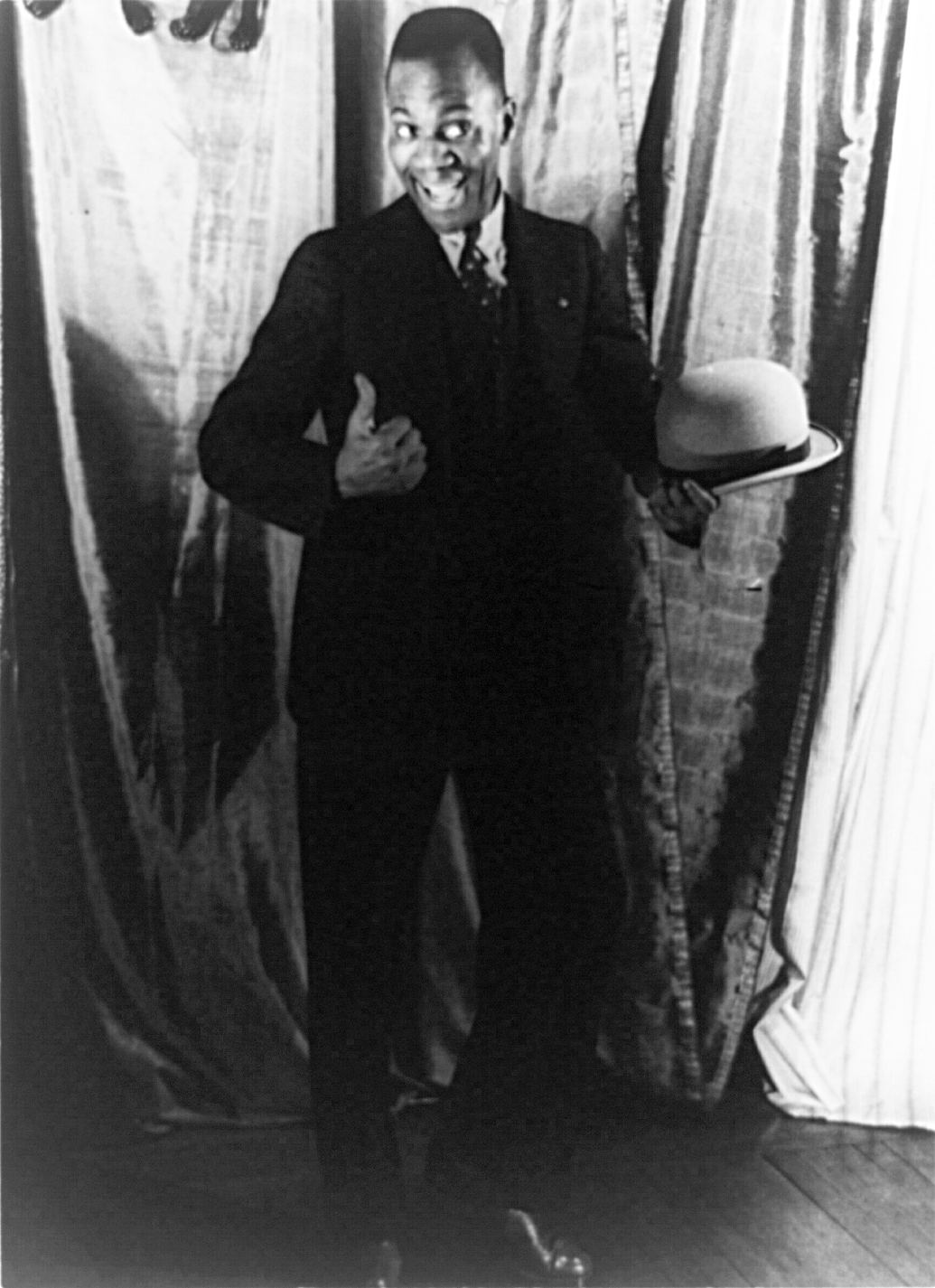
In 1915, the Biograph Company gave entertainer Bert Williams the power to produce, write, direct, and star in two films for them--A Natural Born Gambler (1916) and Fish (1916).
I couldn't find information specifically stating that Williams had signed any contract with Biograph, but nonetheless, Williams being granted that kind of power in early twentieth-century Hollywood is a distinguishing feat alone.
I feel certain that somepaperwork had to have been been made out between Mr. Williams and Biograph. ************
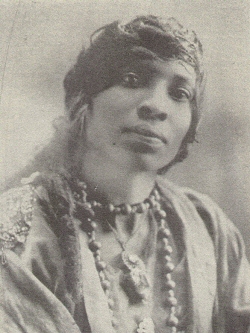
Born Nellie Crawford in Louisville, Kentucky, Madame Sul-Te-Wan is recognized as the first African-American performer to sign a contract in Hollywood and be a featured performer (meaning, she actually had some dialogue) as well.
Her first role was as a hotel cook in the 1915 short The Cause of It All. Her second (and most acknowledged) role was as "Dr. Cameron's Taunter" in the controversial D.W. Griffith film, The Birth of a Nation.
Madame Sul-Te-Wan worked in over 50 Hollywood films.
************
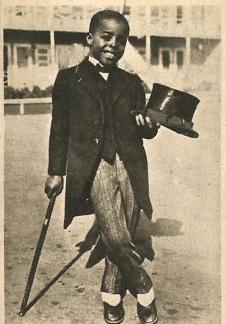
When Ernie "Sunshine Sammy" Morrison signed with comedy producer Hal Roach in 1919, he became the first African-American to sign a long-term contract in Hollywood--and get this: He was only six years old.
"Sunshine Sammy" would become most popular as one of the original Our Gang kids and as the only black member of the East Side Kids.
************
After rave reviews for her debut in 1929's Hallelujah!, Nina Mae McKinney signed a five-year contract with MGM, making her the first African-American woman to sign a long-term contract in Hollywood.
Sadly, like a lot of black actresses of the time, even a long-term contract couldn't secure the roles that Nina Mae wanted. She would find sweeter success in parts of Europe as a cabaret entertainer.
************
A Natural Born Gambler (1916)
Starring Bert Williams
(Warning: Offensive racial stereotypes and use of blackface)
******
Madame Sul-Te-Wan as "Tituba" in Maid of Salem (1937)
******
The Dippy Dentist (1920)
Starring Snub Pollard and "Sunshine Sammy" Morrison
(Go to 2:28 to see "Sunshine Sammy")
******
Pie, Pie Blackbird (1932)
(Musical Short)
Starring Nina Mae McKinney,
Eubie Blake & His Orchestra, & The Nicholas Brothers