Showing posts with label Movie of the Week. Show all posts

Wednesday, June 11, 2014

Movie of the Week: "Salón México" (1949) - Review


Salón México (1949) was the featured film for the week of June 2nd-9th.

*Epilepsy Warning: Use of animated GIF images in this post*

From filmsnoir.net


"Mercedes (Marga Lopez) dances for money with the clients of Salon Mexico, a famous cabaret in Mexico City. Her younger sister Beatriz (Silvia Derbez) studies in an expensive private school, paid by Mercedes. Obviously, young Beatriz doesn't know about her sister's job. Troubles begin when Mercedes wins a danzon contest with Paco (Rodolfo Acosta), her pimp. Paco refuses to share the prize with Mercedes, so she steals the money when he's sleeping." [IMDb]

************

Story/Writing

Man, oh man, do I love a good Film Noir--crime, darkness, dreariness. If you ask me, some of the best classic films written are Hollywood Pre-Code and 1940's Film Noir. Salón México is a Spanish-language film, so of course, (as is always the case when I watch Spanish-language movies), I didn't understand the dialogue, but for the most part, I was able to keep up with the story.


Mercedes (Marga López) and Paco (Rodolfo Acosta) in a dance contest.

Like most Film Noir, Salón México was a very "human" film--dark, sad, emotional. This isn't to say that life is always dark, sad, and emotional, but movies like this tend to be more risqué, yet honest, than others of the era. Even though the conservatism of the time left certain things unsaid (like Mercedes being a "dancer"...with a pimp...I guess it happens...), you could watch these movies knowing that things like this were and are happening in real life. You don't get this feeling from an MGM musical or a screwball comedy. At least, I don't get the feeling from them.


************

Acting/Characters

There weren't any bad performances in this film, but to be honest, no one actor really seemed to "stand out"--not to me, anyway. Nonetheless, performances were natural, believable, and solid--and not every film has to have a star or a breakout performance to be good.


************

Production/Direction

If you've seen the style of one Film Noir, you've seen the style of them all. However, it is important to mention that the cinematography was done by the great Gabriel Figueroa, so while there's the typical stark contrast between darkness and light and use of shadows, Figueroa and director, Emilio Fernandez, also take advantage of the environment in which they're filming. For example, they create a sense of intimacy when they close in on tight circles of dancers and in that same tightness, they create an almost claustrophobic feeling in moments of not so intimate moments. It really is a beautiful film to look at--and even the slightest shots or camera movements can evoke certain vibes and feelings in each of your senses. Beautiful people and beautiful location, beautifully shot.


Sympathetic policeman, Lupe López (Miguel Inclán) and Paco - note the conspicuous use of light.

************

Overall Thoughts

I think it's way past time for me to invest in Rosetta Stone! I want to push through the language barrier by using context clues, but every movie review deserves thoroughness, so maybe during my "hiatus", I can start learning some Spanish! But back to the topic at hand, I would highly recommend that you all watch Salón México. I certainly can see myself watching it on several Saturday and Sunday nights!


*Watch Salón México (1949) on YouTube*
(Animated GIF Images were created from this video link)

Friday, June 6, 2014

Movie of the Week: St. Louis Blues (1958) (Review)

St. Louis Blues (1958) was the featured film for the week of May 26th-June 2nd.


From Wikipedia

St. Louis Blues is a musical-drama based on the early life and career of legendary composer and musician, William Christopher Handy--known to us as W.C. Handy, of course. The late, great Nat "King" Cole leads the super-talented and all-star cast that includes Eartha Kitt, Pearl Bailey, Juano Hernandez, Ruby Dee, and more!


************

Story/Writing

I'm only familiar with a few of Mr. Handy's compositions and could tell you few facts about his life, so I am in no position to assess the accuracy of St. Louis Blues. However, I can say that the screenplay was solid, as was the dialogue. The only problem I had with the story is what happened in the end of the film, sort of the "message" that the audience is left with. I'll explain this in my 'Overall Thoughts'.


Acting/Characters

Man, oh man--if I could somehow give everyone in this movie an acting award for their roles, I would. There wasn't a single bad performance in this film. Before I get into it, allow me to list the actors/characters:

"W.C. Handy" was played by Nat "King" Cole

Cabaret singer, "Gogo Germaine" was played by Eartha Kitt

William's Aunt Hagar was played by Pearl Bailey

Reverend Charles Handy, William's father, was played by Juano Hernandez

Ruby Dee played the role of Elizabeth, William's fiancee

Cab Calloway played "Blade", a conniving nightclub owner

Ella Fitzgerald made a cameo as a nightclub singer

Mahalia Jackson plays church member, Bessie May

A young Billy Preston plays the role of "Will Handy as a boy"


******


Nat "King" Cole (by William Gottlieb)

Nat "King" Cole did a pretty good job in his role. However, his work wasn't as memorable as his co-stars'. Someone mentioned in commentary (I forget where) that he appeared very shy on camera, and I agree.


Eartha Kitt (by Carl Van Vechten)

Eartha Kitt could have just paced the floor the entire movie and I would have loved it.


Pearl Bailey in 1946

In the few movies I've seen Pearl Bailey in (Carmen Jones and Porgy and Bess), she's always played the "Mother Hen" type--the best friend who doesn't sugarcoat things and gives sound advice. "Aunt Hagar" is that same kind of character, but something about her makes her different from the others. She was a bit for rounded than Carmen's "Frankie" and Porgy's "Maria". Aunt Hagar was a woman who lived with her brother, Charles, and therefore, lived by "his" rules. She's very protective of her nephew, Will and while she protects him, she also reprimands him, but only out of fear of and obedience to Charles. 


Pearl Bailey (circa 1960)

Over time, we see this character evolve probably more than any other character. She goes from hiding Will's "sins" from his preaching father to secretly joining in on Will's sinning (this "sinning" is merely Will playing secular music). Finally, she reaches a point where she completely defies Charles and tells him he's wrong.


Juano Hernandez in Intruder in the Dust

What do I always say? "If you hate a character, that means the actor is amazing." I hate to say this, but every time "Charles Handy" appeared on the screen, in my mind, I asked myself, "Does this man die?" Juano Hernandez, ladies and gentlemen. He should have been nominated for countless awards for this performance.


Billy Preston (in 1971)

Young Billy Preston played the role of "Will Handy as a boy" and although he's in the movie for only about ten (maybe fifteen) minutes, he leaves an indelible mark with his performance--especially with his musical performances.


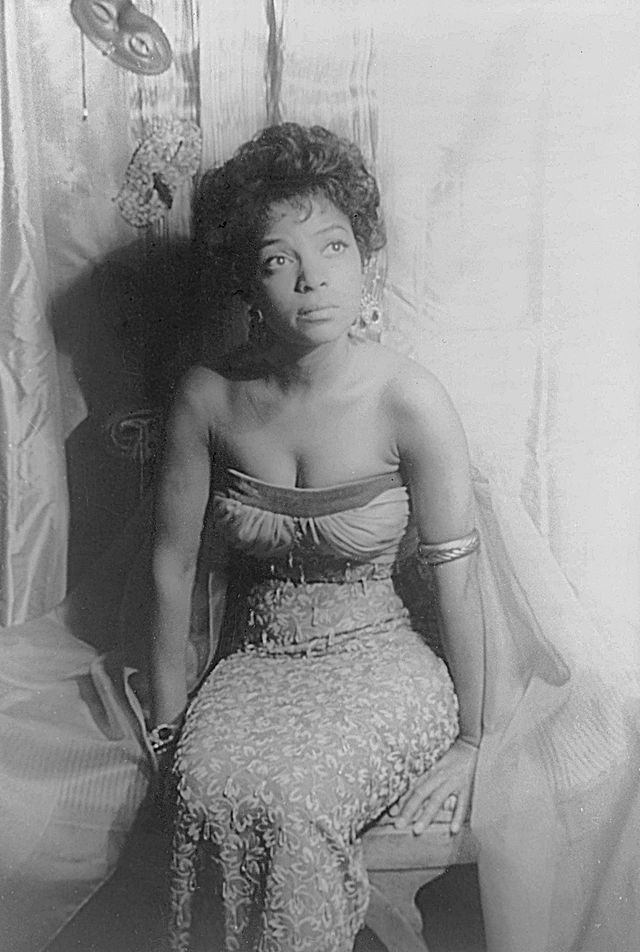
Ruby Dee (by Carl Van Vechten)

The character "Elizabeth" probably irritated me just as much as Will Handy's father, and of course, Ruby Dee and "bad performance" never goes in the same sentence. Never. Nothing more to say.


Others

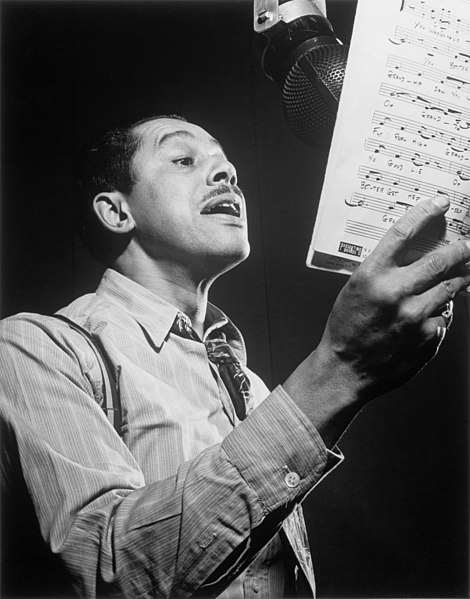
I don't think most people think "actor" when they think of Cab Calloway, but you know what? They should. We should. I've seen Mr. Calloway in Stormy Weather, Hi-De-Ho, and now, St. Louis Blues and he has given great and memorable performances in each of those roles. His character, "Blade", was also quite insufferable, but it was fun watching him play this role.

Cab Calloway (by William Gottlieb)

I wasn't expecting to see Mahalia Jackson in so many scenes, and I enjoyed seeing her as "Bessie May"--another annoying character with her nose in the air and in other people's business. I've grown up seeing Mahalia Jackson do nothing but sing (I don't think I've ever seen her being interviewed before, now that I think of it), so it was a joy to see her exercise some acting chops--and just to even hear her talk.


Mahalia Jackson (by Carl Van Vechten)


Ella Fitzgerald only made a brief cameo in this film, singing W.C. Handy's composition, "Beale Street Blues".


************


Direction/Production

Why was Eartha Kitt the only character wearing 1950s clothing in this late 1800s-set film? As far as I know, W.C. Handy wasn't known to be a singer, so why was his character giving a solo vocal performance with a symphony orchestra? I had questions, but few, thankfully. 

Other than the faux pas in styling/hair and the dire (and understandable) need to have Nat "King" Cole sing multiple times, St. Louis Blues was beautifully filmed--and it gave us the most conspicuous shots of Eartha Kitt's legs.


************

Overall Thoughts

I'd actually started watching this movie many, many years ago when it came on Turner Classic Movies (I must have been about nine or ten), but wasn't able to finish it. I'm glad to have gotten the chance to complete it, and I really did enjoy it. Remember that "moral of the story" or message I mentioned earlier? Here it goes--and with a SPOILER ALERT.

************


Charles Handy finally makes peace with his son and his style of music when he attends a symphony orchestra concert in New York with Elizabeth and Aunt Hagar. He is blown away by the fact that Will's music is loved, that a big name orchestra found it good enough to play in New York--and that the orchestra leader loved it so much that he played in Europe. 

When the trio arrives to New York and Charles (who believed that the orchestra would be playing hymns that Will composed) finds out that the orchestra would be playing Will's blues music. Elizabeth says something along the lines of "If a big, sophisticated orchestra thinks Will's music is good, then it can't be devil's music!" Charles reluctantly goes to see the orchestra and eventually agrees with Elizabeth's statement by accepting his son.

I'm sorry, but with this, the only thing I could hear in my mind was "If da good white folks like it, then it's good! Cuz everything we do is bad lessen white folks like it!" However, you can't change the lines in a 56-year old movie, so as I like to say "Whatevs."


************

I would still recommend St. Louis Blues (1958) to anyone for viewing and I wouldn't mind watching it again for myself, either.


*St. Louis Blues (1958) on YouTube*


************

The images used in this post were all obtained from Wikipedia and they are being used for informational purposes only. If the rightful owner(s) of any of these images wishes to have them removed, please contact me, and I will do so immediately.

--Adrienne


Saturday, May 31, 2014

Movie of the Week: Broken Strings (1940) - Review


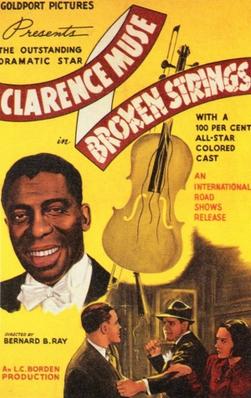
Broken Strings (1940) was the featured film for the week of May 19th-26th.

************

*Epilepsy Warning
Use of animated GIF images near bottom*

************


"After noted violinist Arthur Williams (Clarence Muse) suffers a hand injury which ends his playing career, his hopes are transferred to his son (Johnny, played by William Washington), who prefers swing music to classical." [IMDb]


************

Oh, the many race movies I've watched and thought "all it needed was a bigger budget..." This was the case with Broken Strings. The story wasn't new: classic/classical music lover hates the more popular music of the time; child wants to play that popular music. But different elements, such as, the instrument used (violin), secondary stories, and I'll say it--an all-black cast--gives the movie a special spin.


************

Story/Writing

Again, the storyline was simple, not exactly something fresh and new to the screen (a film with a similar storyline I can remember off the bat is 1938's Everybody Sing). However, the secondary storylines are what really "make" this movie--especially the ones that formulate after Arthur's hand injury. There's stubbornness, disobedience, jealousy, framing, deceitfulness, and even with all of this, the movie manages to not turn into something you'd see in a Murder-Mystery Dinner show. 

Nobody gets murdered, by the way.


Of course, all of those elements and additional storylines would require more time--and Broken Strings didn't have that, which serves as a negative for the film. Everything is rushed and jam-packed to this 60 minute movie, leaving very little time to let things cook before they're uncovered! Very unfortunate.


Characters/Acting

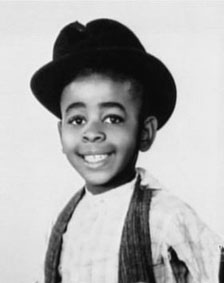
There wasn't one character that this film could have done without. Every major character had a purpose. As far as the acting goes, I'm going to come right on out and say that the only good actors in this movie were the more trained and seasoned ones--Clarence Muse, Matthew "Stymie" Beard (as Dickie Morley, a young, aspiring, but pompous violinist), and Edward Thompson (who is barely even in the movie). 


Young "Stymie" Beard

Everyone else...William Washington, Sybil Lewis (as Arthur's daughter, Gracie), Tommie Moore (as young pianist, Mary)...they all needed a little work. 


************

Honorary Mentions

It's always a treat to see Ms. Ruby Dandridge, who plays a small, but memorable role. Ironically, when Ms. Dandridge first came to Hollywood with her daughters in the early 1930s, she sought counsel from Mr. Muse on getting her daughters (Vivian and Dorothy) into movies. 

************

If you look very closely in one of the nightclub scenes (in fact, you don't even have to look closely, her face is unmistakable), you'll see the late Juanita Moore sitting down from a dance.

************

The Stevens Sisters

These talented little ones appear near the end of the film. I made animated GIF photos of them!


(Left to right): Charmaine, Cecile, Leonetti

The girls are singing a song called "Kentucky Babe"

Charmaine and Leonetti tap dancing

Little Cecile tap dancing


*I wonder where The Stevens Sisters are today?*


************

Directing/Cinematography

For the most part, Broken Strings was simply shot, but there were some cool effects added to keep the audience's interest--some Busby Berkeley-like kaleidoscope effects, tilted camera movements, faded images in the background--all things used to give the movie a "fantasy" feel. They also helped to create the sense that time was flying by (as if the movie needed any more of that). They didn't go overboard with these effects, either.


************

Overall Thoughts

I highly recommend that you watch Broken Strings. Bad acting aside, it is very entertaining. In fact, it ranks pretty high on my list of great race movies.


*Broken Strings (1940) on YouTube*
(Animated GIF images created from ^this^ link)

Sunday, May 25, 2014

Movie of the Week: The Scar of Shame (1927) (Review)


The Scar of Shame was the featured film for the week of May 12th-19th.

*Epilepsy Warning: 
Use of animated GIF images*

************

From Wikipedia


An educated, upscale young black musician (named Alvin Hillyard - played by Harry Henderson) marries a woman (Louise Howard - played by Lucia Lynn Moses) from a lower socioeconomic class to get her out of the clutches of her stepfather ("Spike" Howard - William E. Pettus), who beats and abuses her. However, once he "saves" her, he won't let his new wife meet his mother, as he knows she will be angry and disappointed with him for marrying someone "below his station". [IMDb]

Oh, there's so much more to this film than that IMDb summary, but going any further would require some spoiler alerts. 


************ 

Story/Writing
Screenplay by David Starkman (also the producer)


Alvin (Harry Henderson) consoles Louise (Lucia Lynn Moses)

There really isn't much I have to say about The Scar of Shame's writing. As far as the plot goes, it nicely written and played out very well. The few problems I did have--problems having to do with social issues--will be discussed in my 'Overall Thoughts'.

************

Characters/Acting

Like the storyline, this movie's characters were very well written. They were multi-dimensional, they were genuine, and they were human. Of course, you had your protagonists and antagonists, but no one was "all good" and no one was "all bad". There's one character who isn't mentioned in the summary--a very important character, actually. His name is Eddie Blake (played by Norman Johnstone) and he's a friend of Louise's father who devises a scheme to break up Louise and Alvin's marriage.


Eddie Blake (Norman Johnstone) wants to "talk" to Louise)

This particular character is more of an antagonist than the abusive father, but at one point (a very small point), we see a little inkling of guilt in his face. I liked that--he was a bad guy with a conscience, but not so much of a conscience that he would unrealistically do a "180" to make amends. At least, not at the drop of a hat. This is pretty much how the majority of the characters were written.


Direction/Cinematography

Both director (Frank Peregini) and cinematographer (Al Liguori) paid great attention to detail for The Scar of Shame--and it's very obvious. They made great use of the motifs and the editing was seamless. Like the writing, this is another aspect of the film I really don't need to go on and on about--it was all good. Throw up my "OK" sign, good. 


One of the symbol's of the film's recurring theme.

I might also add that the director and producer--both white--probably had better budgets and backing than the Oscar Micheauxs of early American Cinema.


************

Overall Thoughts

Obviously, I enjoyed watching this movie. I would definitely watch it again. In fact, I can see myself watching it very often. However, I must point out the things that bother me--and I will try to do so without spoiling anything:

The character, Louise, is abused, misused, and disrespected throughout this film. When she starts lashing out at those who mistreat her, she is made out to be the "wrong" one. As I'm writing this, I still feel a little irritated. Louise deserved nothing but great things and (*cue my accent*) it was some bull that she didn't git 'em, eitha.


The point in which Louise stopped caring--or at least pretended to.

Also, the film seems to serve as a commentary on class, particularly the separation of class within the black race. It acknowledges negative attitudes and personalities that dwell in both upper class society and lower class society. However, the problems with classism--and the bad ways in which people from different backgrounds interact--are placed solely on members of the lower class in The Scar of Shame. Of course, Louise's father and Eddie Blake bring Louise physically and emotional harm, but Alvin's failure to correct his mother's snobby attitude (and the snobby attitude itself) plays a big part in the unraveling of Louise's life and sanity, as well--and neither Alvin nor snobby thinking were held accountable in the screenplay. 

******

To reiterate, despite the aforementioned flaws, I still enjoyed this movie, and would definitely watch it again and again.

 I recommend that you watch it as well!

*The Scar of Shame on Youtube*

(All gifs used in this post were created using ^this^ video link)


************

The images used in this post are being used for informational purposes only. If the rightful owner(s) of any of these images wishes to have them removed, please contact me, and I will do so immediately. 

--Adrienne


Thursday, May 8, 2014

Movie of the Week: STORMY WEATHER (Review)


Stormy Weather (1943) was the featured film for the week of May 5-12th. Check out my video review of the 20th Century-Fox musical!


Movie of the Week: PINKY (Review)


Pinky was the featured film for the week of April 28-May 5.

From Wikipedia

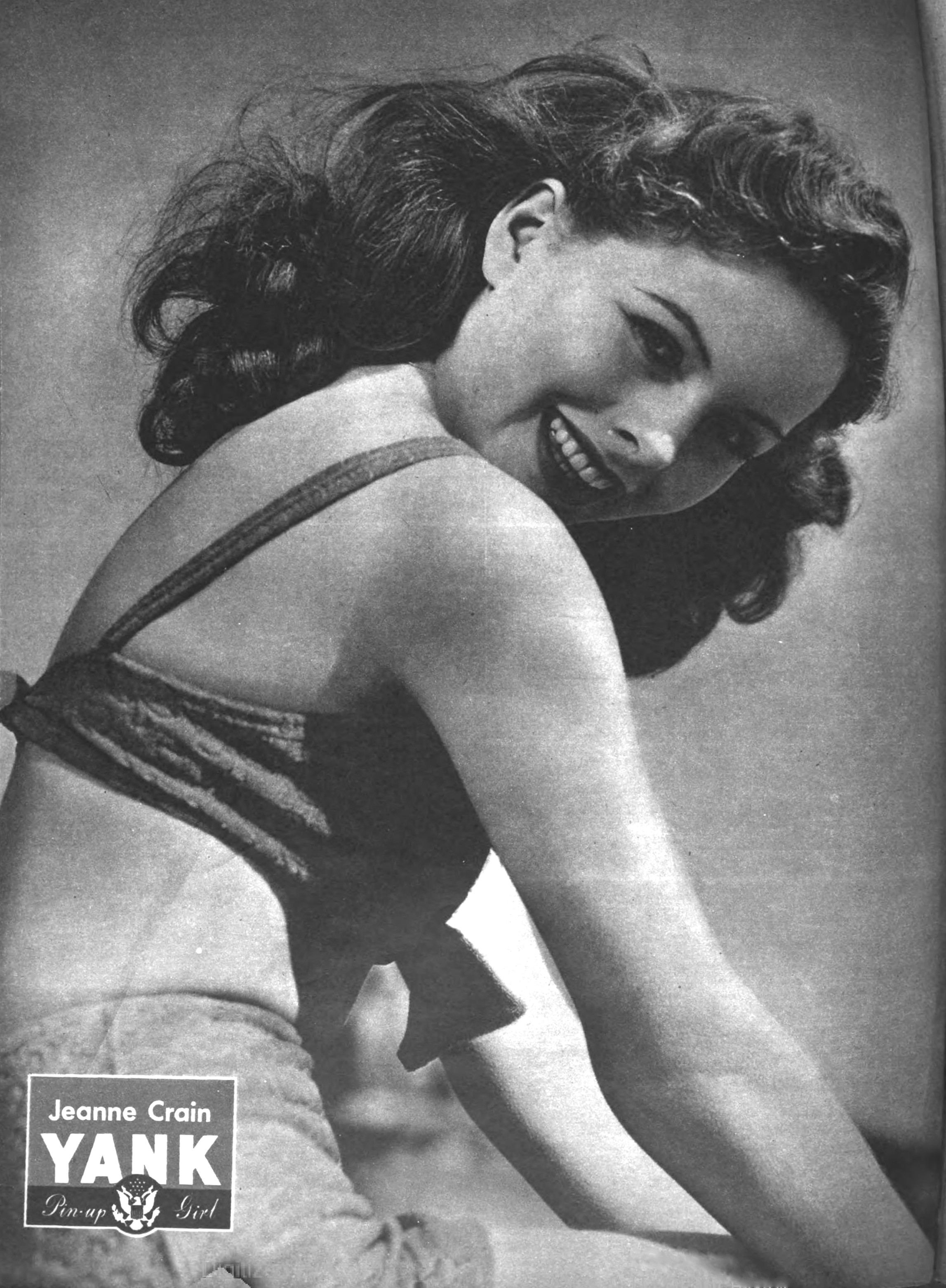
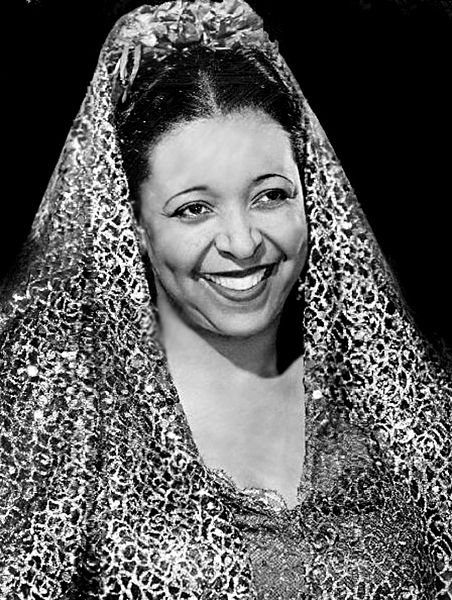
Pinky, a light skinned black woman (played by Jeanne Crain), returns to her grandmother's house (Dicey Johnson, played by Ethel Waters) in the South after graduating from a Northern nursing school. Pinky tells her grandmother that she has been "passing" for white while at school in the North. In addition, Pinky has fallen in love with a young white doctor, Dr. Thomas Adams (William Lundigan), who knows nothing about her black heritage. Pinky says that she will return to the North, but Granny Johnson convinces her to stay and treat an ailing white woman, Miss Em (Ethel Barrymore). Meanwhile, Dr. Canady (Kenny Washington), a black physician from another part of the state, visits Pinky and asks her to train some African American students, but she declines. Pinky nurses Miss Em but is resentful because she seems to feel that she is doing the same thing her grandmother did. Pinky and Miss Em slowly develop a mutual respect for one another. Mrs. Em leaves Pinky her property when she dies, but relatives of the deceased woman contest the new will in court. [IMDb Plot Summary - remainder contains spoilers]

************

I was going to do a video review for Pinky, but I know I would be better at getting my irritations and frustrations out in writing.


************

Story/Writing

*Warning: Mention of Rape/Attempted Rape & Harassment* 

To be honest, there were a few moments in this film that I found to be unrealistic (like Pinky's white boyfriend holding her close in a courtroom full of racist white people without as much as a "gasp" from them), but overall, this was a really good story and I was not expecting it to be as good as it was. It stirred so many emotions for me--sadness, anger, pity, rage. Pinky goes places that I did not expect a 1949 film to go--in the same way that I didn't expect No Way Out to go to some of the places it went. 

My only problem with the writing is the erasure of Pinky's blackness (or her history as a black woman). To me, it seemed as though the writers of this film made the assumption that mixed race black people (or fair enough to "pass" black people) were incapable of relating to or understanding the (Southern) black experience. It would have been one thing if Pinky had grown up passing for white her entire life, or if she'd gone her entire life not knowing that she was black. Not the case! Pinky was born and raised by her grandmother, Dicey (played by Ethel Waters) in a shack on what I believe used to be a plantation, but for some reason, when she returned from nursing school, she was completely out of the loop about how the "Colored section" of the community lived. The character wasn't defiant or rebellious, but she was unwittingly doing and saying things that would have immediately lead to imminent danger for a darker person:

For example, early in the film, a stressed Pinky thought it would be a good idea for her to "take a walk" along the road of a racist town by herself--at night. She would soon be harassed by two white men in a car--because she was a woman. When she informed the men that she was black, they turned up the hostility--chasing her in their car and almost raping her. This goes to show that if Pinky were a dark or brown-skinned black woman, (she probably wouldn't have been walking along the road by herself at night, for starters), chances are, these men would have assaulted her immediately. Light or not, a black woman would not have been walking up a dark country road by herself in Mean White People Town unless she was a "bad mother--shutyomouf!". Pinky was nowhere near it. 


************

Characters/Acting


Jeanne Crain

I can't say that I was able to "overlook" Luise Rainer as "O-Lan" in The Good Earth or Susan Kohner as "Sarah Jane" in Imitation of Life (1959), but I can say that I their performances were good enough for me to "tolerate" them. For me, Jeanne Crain's performance wasn't good enough for me to "tolerate" her as 'Pinky'. Whenever she mentioned being "colored" or "Negro" I couldn't restrain myself from rolling my eyes. She didn't make me (almost) believe her. Don't get me wrong, her performance was good, but it wasn't standout (and certainly not worth an Oscar nomination, in my opinion). 

The majority of supporting cast, however, gave very memorable performances--a rare occurrence in my previous viewings and reviews. 

************

Jake and Rozelia

First of all, I was a bit saddened to witness Hollywood's first black Leading Lady playing such a small role twenty years after her big debut (in fact, Nina Mae McKinney's second Hollywood role--only a year after her debut--was uncredited). I was also irritated that Jake Walters and Rozelia--the only other black characters (besides Pinky, Dicey, and Dr. Canady, who we only see in two scenes) were two of the movie's most despicable characters. Nonetheless, Ms. McKinney and Frederick O'Neal (as Jake, a man whose actual profession I'm still clueless on--he owed (and stole) a lot of people's money, that's all I know) played their roles well enough to stay embedded on the audience's brain. At least mine.


Frederick O'Neal (photographed by Carl Van Vechten)

************

Judge Shoreham

This character (played by Raymond Greenleaf) really didn't become significant until near the film's end. In fact, his "shining" moment (more like Mr. Greenleaf's) was his last moment on the screen--and I will tell you, what he says and does will cut you like the sharpest of knives.


************

Melba Wooley

This character annoyed and frustrated me to no end--and you know what I always say: If a character makes you mad, then the actor did their job. Evelyn Varden did an amazing job as "Melba Wooley"--Miss Em's greedy and trouble-making cousin. You will not forget this character or the actress!

************

Dicey & Miss Em


Ethel Waters

Ethel Waters and Ethel Barrymore both received the Oscar-nomination for 'Best Supporting Actress' for their work in this film, and the nominations were well deserved. Of course, the character of "Dicey" is your typical "mammy" stereotype--she does domestic work for Miss Em and is painfully devoted to the woman. Nonetheless, like most of the actresses who played these kinds of characters, Ethel Waters played Dicey Johnson seamlessly. 


Ethel Barrymore (photographed by Carl Van Vechten)

Miss Em is an ailing, no-nonsense woman who's actually beloved for her sharp tongue. This was the first time I'd seen a film with Ethel Barrymore in it, so as a first time observer of her work, I thought to myself: "Either Ethel Barrymore was as strict as Miss Em in real life, or she was extremely good at what she did..." I'm going to assume that the latter is the answer, especially since she was a member of acting dynasty known as "the Barrymore Family".


************


Overall Thoughts

Overall, I thought Pinky was a well-written story. There were some moments that made me yell "Oh, come on, really, Pinky?!", but then, there were a lot of moments that were absolutely real and realistic--moments that filled me with anger and sadness because I knew that something like that, whatever it was, happened often in Southern communities of the time (and sometimes, still happens today). 

Of course, it was especially disappointing to not see a black actress playing this part. Black Hollywood's "it girl", Lena Horne campaigned for the role, as did the blossoming starlet, Dorothy Dandridge, but of course, neither actresses would win the role. Fredi Washington, Hollywood's go-to actress for "passing" roles had long left Hollywood for good, plus, she was 46 years old at the time of the film's release. Even the movie's own Nina Mae McKinney could have been a good candidate, but I guess that 37 would have been a bit too old for a recent college grad, as well. The studio could have gone for a big name like Lena or unknown, but to avoid controversy and violating miscegenation laws, Fox Studios decided that it would be "best" to cast a white actress, and that they did (the film still met some "miscegenation violation" trouble, anyway). The majority of Jeanne Crain's lukewarm performance (that even director Elia Kazan commented on) pained me to watch and the whole time, all I could think was "Lena Horne...Lena Horne...Lena Horne...".


However, what's done is done. I do recommend that people watch this movie for both historical and entertainment purposes.


*Watch Pinky on Youtube*


************

All photos used in this post were obtained from Wikipedia. They are being used for informational purposes only. If the rightful owner(s) of any of these photos wishes to have them removed, please contact me, and I will do so immediately. (Adrienne)


Sunday, April 27, 2014

Upcoming "Movies of the Week" (May - July)


I always post the featured movies of the week in the 'Movie of the Week' as sort of an "unveiling", but Finals Week is coming up and I will soon begin summer classes after. I will try to keep the tab updated, but just in case I get a little behind, please refer to this list. A link to it will be in the 'Movie of the Week' tab as well.


Before I get into the list, to all of the students (college, high school, whatever you're in) who follow or subscribe to People of Color in Classic Film: good luck with your finals, exams, tests, quizzes and whatever else will come along for you during this time of year. I highly recommend a free, downloadable program called "Focal Filter" for your computer to help you study. With this program, you add certain sites to a block list and you get to block them for a set period of time--however much time you like. I've gotten many a papers done without distraction because of this program! Now, the list...


Upcoming Movies of the Week(s)

Pinky [April 28 – May 5]

Stormy Weather [May 5 – 12]

Scar of Shame [May 12 - 19]

Broken Strings [May 19 – 26]

St. Louis Blues (1958) [May 26 – June 2]

Salón México [June 2 – 9]

The Cheat [ June 9 - 16]

Toll of the Sea [June 16 – 23]

Anna Lucasta (1958) [June 23 – 30]
(Available on Netflix)

Sanders of the River [June 30 – July 7]

Big Fella [July 7 - 14]

Movie of the Week: New Women (1935) (Review)


New Women ("Xin nü xing") was the featured film for the week of April 14th-21st

*In this post, the "first" names of performers are actually their surnames. I'm not certain of other cultures, but most residents of China write their names as "surname | first name"*


************

There are just some movies that leave you feeling really bummed out--for me, New Women was one of them.


************


Film Title (Screenshot from Youtube)


Summary


"After being abandoned by the husband she eloped with, Wei Ming (Ruan Lingyu) seeks new life in Shanghai. She becomes a music teacher in a private school and aspires to become a writer. With the heRlp of her friend Yu Haichou (Zheng Junli), her first book is going to be published. The publisher, however, gets interested in publishing it only after her true identity as a beautiful woman is revealed. The trustee of the school, Dr. Wang (Wang Naidong), although a married man, keeps proposing to Wei Ming and secretly has her expelled after being rejected by her. Being unemployed, and having to save her child, who falls seriously ill shortly after their reunion, Wei Ming relents to a one-night sexual encounter in order to collect money, but only finds herself being disgraced by her face client--Dr. Wang." [Source] (Contains spoilers)


Saying any more about this monumental film would only spoil it, so I will continue on to my opinions on the movie and its performances.


************

Story/Writing

New Women is a Chinese-language (Mandarin, according to IMDb) silent film. The language barrier didn't make it difficult or "impossible" for me to keep up with, but I did refer to a few online summaries to clue me in on a few things. I don't have too much to say about the story and/or the writing, but hopefully the upcoming statement will sum up what I thought about the movie overall. Are you ready?


Ruan Lingyu (from Wikipedia)

New Women is a movie that should be screened in every Women's Studies class, every Women's History class, and every Journalism class. For many reasons, it is a monumental film in Chinese Cinema history and for the same reasons, it should be monumental in Cinema everywhere. If you read about the movie's reception and unfortunate events that took place after the film's release, then you'll understand why I say this.

 *To really put things into perspective, I provide more information on this at the very bottom of this post*


************

Acting/Performances

There were no bad performances in this movie. In fact, everyone was great. I can't quite put my finger on it, but I want to say that everyone's performance was genuine. Every performer "got" (understood) their characters and the characters' purposes and again, played them with such honesty and (for lack of a better word) subtly. The cast worked so well together, too--as though they were all very good friends off set. Again, every performance was so genuine--especially the performance of the movie's star, Ruan Lingyu (westernized: Lingyu Ruan). Everyone was just perfect for their role. 


Wei Ming's sister (Tang Tianxiu) and her (Wei Ming's) daughter (Chen Sujuan) on a train


************

Cinematography/Direction

There are quite a few flashbacks in this film--each one important to the plot--however, I don't know if this had to do with the film's age or what, but the flashbacks could have been a bit more clean and precise. They sort of creep up on you, but it's not so much that you'll feel completely thrown off. It just may take you awhile to realize that you're watching a flashback. At least, that was a problem for me.


Dr. Wang (Wang Naidong) consoles Mrs. Wang (played by Wang Moqiu)


Overall, I liked the visuals in this movie--even the use of flashbacks and split screens. There were some things (both subtle and obvious) that were just visually appealing--things that any cinematographer/director worth his or her salt may try to "borrow" at some point in their careers. Everything from the camera to the effects and transitions to the props gave "performances" and it was just really cool to watch.


************

Overall Thoughts


Wei Ming (Ruan Lingyu) urges her publisher friend, Yu, (played by Zheng Junli) to stay.

The movie starts off a little slow, but once you get an understanding of what's going on (if you're a non-Mandarin speaker like myself, you may need some assistance through the movie's Wikipedia page--I don't recommend reading the entire synopsis all at once--just bits and pieces as you go along into the movie), you'll be drawn in. It's one of those movies that makes you think, or reflect, rather. I highly recommend that everyone check it out.


*Watch New Women (1935) on Youtube*


************

Additional Information/Spoiler Alert


The life of Wei Ming in New Women is based on the life of an actress named Ai Xia, who committed suicide in 1934. As mentioned in the movie's summary, Wei Ling hits many bumps in the road until one big bump leads her to commit suicide. As she lay on her death bed, she learns that she's been slandered in a local newspaper and vows to get revenge, however, she dies before she gets her vengeance. One month and a few days after this film's theatrical release, it's star, Ruan Lingyu, whose private life had been frequently ravaged by tabloids, committed suicide at the age of 24. The similarity in the deaths of Wei Ming, Ai Xia, and Ruan Lingyu are quite eerie.