Showing posts with label Lena Horne. Show all posts

Saturday, May 9, 2015

"Lena Horne: The Voice of Victory" - a post by HepClassic


Today marks five years since we lost one of entertainment's greatest treasures, Ms. Lena Horne.

Source

In her honor, a fellow classic film lover and blogger, HepClassic, shared a post he'd originally written in 2010, not long after her passing:


"I was twelve and I just watched "Funny Girl" for the first time, and really enjoyed the movie and its stars so much, I wanted to dig deeper and see if there was any other presence of Ziegfeld on film, so I went to the library and picked up "Ziegfeld Follies". It was there in this musical revue similar to the actual theatre experience of a Ziegfeld show that I saw her in her prime, performing a song about the complexity of love. In a sea of performers of equal talent who were also white, she was the only person of color to blaze the screen in a very sensual performance to say the least.
 
I recognized her as the same singer who I saw when I was younger watching “Sesame Street” and she sang with Kermit, Grover, and other Muppets the alphabet and other songs that supplemented my learning. I also recognized her from an episode of “The Cosby Show” where she performed for Cliff Huxtable’s birthday. I grew up with her, which is why paying tribute to her may be very hard for me to do since her passing is still fresh to me. I always thought she’d reach one hundred. But I digress. Fast-foward to 2002, watching the Oscar ceremony, and Halle Berry wins the Oscar for Best Actress and dedicates her win to her, who, though wasn’t nominated for her acting in film, but pioneered the way so that the reality of being a woman of color in Hollywood being recognized by her peers with an honor such as this could happen. This person is Lena Horne..."


You can read the rest of HepClassic's post on his blog, "All About The Classics In Film". 


************

Thursday, May 8, 2014

Movie of the Week: STORMY WEATHER (Review)


Stormy Weather (1943) was the featured film for the week of May 5-12th. Check out my video review of the 20th Century-Fox musical!


Movie of the Week: PINKY (Review)


Pinky was the featured film for the week of April 28-May 5.

From Wikipedia

Pinky, a light skinned black woman (played by Jeanne Crain), returns to her grandmother's house (Dicey Johnson, played by Ethel Waters) in the South after graduating from a Northern nursing school. Pinky tells her grandmother that she has been "passing" for white while at school in the North. In addition, Pinky has fallen in love with a young white doctor, Dr. Thomas Adams (William Lundigan), who knows nothing about her black heritage. Pinky says that she will return to the North, but Granny Johnson convinces her to stay and treat an ailing white woman, Miss Em (Ethel Barrymore). Meanwhile, Dr. Canady (Kenny Washington), a black physician from another part of the state, visits Pinky and asks her to train some African American students, but she declines. Pinky nurses Miss Em but is resentful because she seems to feel that she is doing the same thing her grandmother did. Pinky and Miss Em slowly develop a mutual respect for one another. Mrs. Em leaves Pinky her property when she dies, but relatives of the deceased woman contest the new will in court. [IMDb Plot Summary - remainder contains spoilers]

************

I was going to do a video review for Pinky, but I know I would be better at getting my irritations and frustrations out in writing.


************

Story/Writing

*Warning: Mention of Rape/Attempted Rape & Harassment* 

To be honest, there were a few moments in this film that I found to be unrealistic (like Pinky's white boyfriend holding her close in a courtroom full of racist white people without as much as a "gasp" from them), but overall, this was a really good story and I was not expecting it to be as good as it was. It stirred so many emotions for me--sadness, anger, pity, rage. Pinky goes places that I did not expect a 1949 film to go--in the same way that I didn't expect No Way Out to go to some of the places it went. 

My only problem with the writing is the erasure of Pinky's blackness (or her history as a black woman). To me, it seemed as though the writers of this film made the assumption that mixed race black people (or fair enough to "pass" black people) were incapable of relating to or understanding the (Southern) black experience. It would have been one thing if Pinky had grown up passing for white her entire life, or if she'd gone her entire life not knowing that she was black. Not the case! Pinky was born and raised by her grandmother, Dicey (played by Ethel Waters) in a shack on what I believe used to be a plantation, but for some reason, when she returned from nursing school, she was completely out of the loop about how the "Colored section" of the community lived. The character wasn't defiant or rebellious, but she was unwittingly doing and saying things that would have immediately lead to imminent danger for a darker person:

For example, early in the film, a stressed Pinky thought it would be a good idea for her to "take a walk" along the road of a racist town by herself--at night. She would soon be harassed by two white men in a car--because she was a woman. When she informed the men that she was black, they turned up the hostility--chasing her in their car and almost raping her. This goes to show that if Pinky were a dark or brown-skinned black woman, (she probably wouldn't have been walking along the road by herself at night, for starters), chances are, these men would have assaulted her immediately. Light or not, a black woman would not have been walking up a dark country road by herself in Mean White People Town unless she was a "bad mother--shutyomouf!". Pinky was nowhere near it. 


************

Characters/Acting


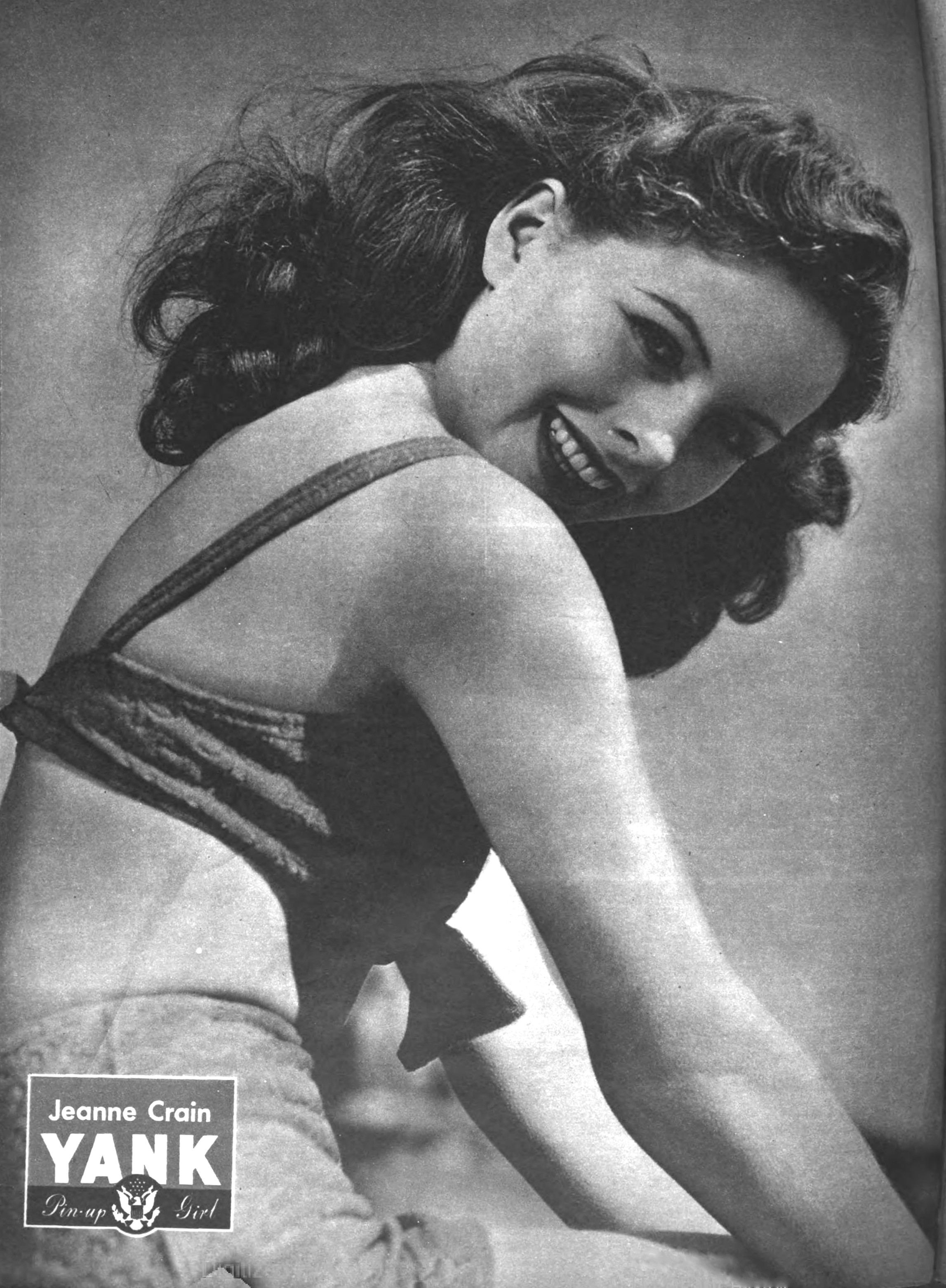
Jeanne Crain

I can't say that I was able to "overlook" Luise Rainer as "O-Lan" in The Good Earth or Susan Kohner as "Sarah Jane" in Imitation of Life (1959), but I can say that I their performances were good enough for me to "tolerate" them. For me, Jeanne Crain's performance wasn't good enough for me to "tolerate" her as 'Pinky'. Whenever she mentioned being "colored" or "Negro" I couldn't restrain myself from rolling my eyes. She didn't make me (almost) believe her. Don't get me wrong, her performance was good, but it wasn't standout (and certainly not worth an Oscar nomination, in my opinion). 

The majority of supporting cast, however, gave very memorable performances--a rare occurrence in my previous viewings and reviews. 

************

Jake and Rozelia

First of all, I was a bit saddened to witness Hollywood's first black Leading Lady playing such a small role twenty years after her big debut (in fact, Nina Mae McKinney's second Hollywood role--only a year after her debut--was uncredited). I was also irritated that Jake Walters and Rozelia--the only other black characters (besides Pinky, Dicey, and Dr. Canady, who we only see in two scenes) were two of the movie's most despicable characters. Nonetheless, Ms. McKinney and Frederick O'Neal (as Jake, a man whose actual profession I'm still clueless on--he owed (and stole) a lot of people's money, that's all I know) played their roles well enough to stay embedded on the audience's brain. At least mine.


Frederick O'Neal (photographed by Carl Van Vechten)

************

Judge Shoreham

This character (played by Raymond Greenleaf) really didn't become significant until near the film's end. In fact, his "shining" moment (more like Mr. Greenleaf's) was his last moment on the screen--and I will tell you, what he says and does will cut you like the sharpest of knives.


************

Melba Wooley

This character annoyed and frustrated me to no end--and you know what I always say: If a character makes you mad, then the actor did their job. Evelyn Varden did an amazing job as "Melba Wooley"--Miss Em's greedy and trouble-making cousin. You will not forget this character or the actress!

************

Dicey & Miss Em


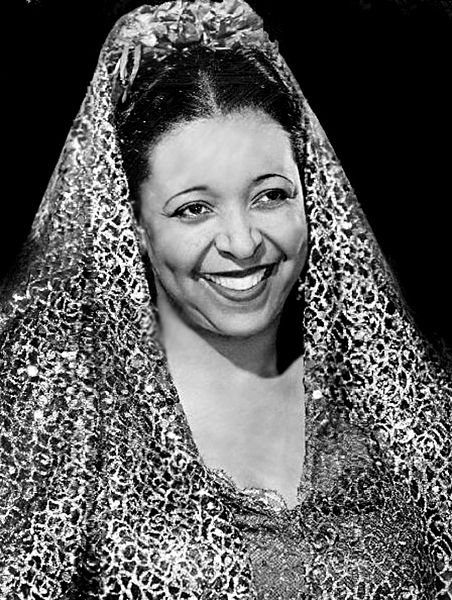
Ethel Waters

Ethel Waters and Ethel Barrymore both received the Oscar-nomination for 'Best Supporting Actress' for their work in this film, and the nominations were well deserved. Of course, the character of "Dicey" is your typical "mammy" stereotype--she does domestic work for Miss Em and is painfully devoted to the woman. Nonetheless, like most of the actresses who played these kinds of characters, Ethel Waters played Dicey Johnson seamlessly. 


Ethel Barrymore (photographed by Carl Van Vechten)

Miss Em is an ailing, no-nonsense woman who's actually beloved for her sharp tongue. This was the first time I'd seen a film with Ethel Barrymore in it, so as a first time observer of her work, I thought to myself: "Either Ethel Barrymore was as strict as Miss Em in real life, or she was extremely good at what she did..." I'm going to assume that the latter is the answer, especially since she was a member of acting dynasty known as "the Barrymore Family".


************


Overall Thoughts

Overall, I thought Pinky was a well-written story. There were some moments that made me yell "Oh, come on, really, Pinky?!", but then, there were a lot of moments that were absolutely real and realistic--moments that filled me with anger and sadness because I knew that something like that, whatever it was, happened often in Southern communities of the time (and sometimes, still happens today). 

Of course, it was especially disappointing to not see a black actress playing this part. Black Hollywood's "it girl", Lena Horne campaigned for the role, as did the blossoming starlet, Dorothy Dandridge, but of course, neither actresses would win the role. Fredi Washington, Hollywood's go-to actress for "passing" roles had long left Hollywood for good, plus, she was 46 years old at the time of the film's release. Even the movie's own Nina Mae McKinney could have been a good candidate, but I guess that 37 would have been a bit too old for a recent college grad, as well. The studio could have gone for a big name like Lena or unknown, but to avoid controversy and violating miscegenation laws, Fox Studios decided that it would be "best" to cast a white actress, and that they did (the film still met some "miscegenation violation" trouble, anyway). The majority of Jeanne Crain's lukewarm performance (that even director Elia Kazan commented on) pained me to watch and the whole time, all I could think was "Lena Horne...Lena Horne...Lena Horne...".


However, what's done is done. I do recommend that people watch this movie for both historical and entertainment purposes.


*Watch Pinky on Youtube*


************

All photos used in this post were obtained from Wikipedia. They are being used for informational purposes only. If the rightful owner(s) of any of these photos wishes to have them removed, please contact me, and I will do so immediately. (Adrienne)


Thursday, January 16, 2014

Movie of the Week: "The Duke is Tops" (Review)


The Duke is Tops was the featured movie for the week of January 6-13


"A theatrical producer (Duke Davis--played by Ralph Cooper) puts aside his own success to boost the career of a talented singer (Ethel Andrews--played by Lena Horne)."--[IMDb]

************

The Duke is Tops is sort of an A Star is Born-esque movie, but with a twist--we see the story from the man's point of view. In fact, it's actually a very sweet movie that (unlike A Star is Born), ends on a happy note. However, I really did struggle watching this movie...

A couple of years ago, I borrowed a "Harlem Double Feature" DVD from my school's library. The DVD had Hi-De-Ho (starring Cab Calloway) and The Duke is Tops. My roommate and I invested deep interest in Hi-De-Ho and found it to be quite entertaining and when it was over, we popped The Duke is Tops in. Next thing I knew, we were having a conversation about God knows what and suddenly realized that a movie was playing. Well, this sort of thing happened again as I watched it by myself...


************

Story/Script

As I stated before, it was very hard for me to watch this movie. The pace was slow and the performances (both musical and acting) were pretty bland. Things didn't start picking up until about...I'll say late in the second act (about forty-fifty minutes into the movie) and by that time, it was too late--I was already anxious for the movie to end. As I stated before, it's an A Star is Born kind of plot--entertainment man's career is failing, his significant other's is blossoming, he makes way for her, but unlike Star and movies like it, we watch the story unfold from the man's point of view, and again, the two characters actually live happily ever after.


Direction/Cinematography

Like everything else, the look of this movie was simple. No camera tricks, which I didn't expect, anyway; neither set nor costume design was particularly extravagant, but I didn't look at this as a bad thing--in fact, I thought it made the movie more realistic. However, just a little splash throughout (we don't get any splashiness until the last ten-fifteen minutes) probably would have kept me from feeling like I was watching paint dry. 


Characters/Acting


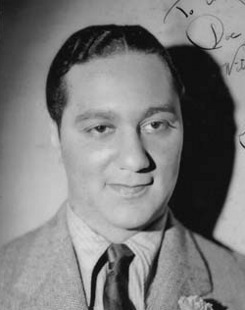
From NNDB, Ralph Cooper

I'd heard the name of Ralph Cooper before and prior to watching The Duke is Tops for review purposes, I'd known him as "the man who played in The Duke is Tops". No, no, no, Adrienne:

Ralph Cooper, an actor and producer, started the original Harlem Amateur Hour in April 1933 at Frank Schiffman’s Lafayette Theater. In 1934, Cooper began the Wednesday Amateur Night at Sidney Cohen and Morris Sussman’s 125th Street Apollo Theatre. Cooper’s Amateur Night in Harlem radio shows were broadcast live from the Apollo over WMCA and carried on a national network of 21 stations. When Amateur Night at the Apollo debuted in 1934, it quickly became the leading showcase for many young, talented, new performers such as a 15-year-old Ella Fitzgerald, who went on to become one of the first Amateur Night winners. [Apollo Theater]

Also, according to Wikipedia (which cites Donald Bogle's Toms, Coons, Mulattoes, Mammies, and Bucks: An Interpretive History of Blacks in American Films), Mr. Cooper founded Million Dollar Productions (which produced The Duke is Tops, of course) with actor George Randol and producers Harry and Leo Popkin. Mr. Cooper was more than just a legendary (and unsung) entertainer, he was a PIONEER; and ironically, he was born on this day in 1908. I bow to Mr. Cooper's greatness.


Ralph Cooper played the lead role of Duke Davis (he was also the co-writer and uncredited co-director of the flm). As the movie went on, it became clear to me that Mr. Cooper was more of a stage performer than a screen actor. Like most of the other actors, he recited his lines sort of cautiously--a bit dry. However, he began to pick things up in the middle of the movie: in scenes where he stood before various crowds as a seller of Doc Dorando's "universal elixir" (the old "all-healing bottle of medicine" salesman we've seen a hundred times before). Once he was off of that platform selling that elixir, it was back to lifeless script-reading. The liveliness returns near the end as his character leads a grand nightclub revue. 

I can't say that cameras made Mr. Cooper nervous (because I really don't know if they did), but I can say that his best moments in Duke were moments where he was standing on something and looking out at a crowd.


************

Lena Horne in 1941 (by Carl Van Vechten)

Ms. Lena Horne came a long way from her screen debut. As the promising songstress, Ethel Andrews, she too was reciting lines as though she wanted to put us all to sleep, but without a doubt, that unmistakable voice of hers made up for the acting performance.

In case you were wondering why the movie poster above says The Bronze Venus and not "The Duke is Tops", after the success of Cabin in the Sky and Stormy Weather, this movie was re-released as The Bronze Venus with Lena Horne's named above the title. It was not only a great way to keep the Lena Horne buzz a-buzzin', but I assume that it also may have brought some good to Million Dollar Productions.


Other Performances

Laurence Criner (born John Lawrence, sometimes credited as "Lawrence" Criner) gave the best acting performance as Doc Dorando--a has-been vaudeville producer, now salesman of the "miracle medicine". Mr. Criner was actually one of the more experienced screen actors in the film, so I wasn't too surprised by his performance. He also starred in Miracle in Harlem and King of the Zombies--two films I've reviewed before.

Screenshot of Laurence Criner (left) with Ralph Cooper


Neva Peoples (as Ethel's friend, Ella) also gave a good acting performance. She was in about three or four scenes and to be honest, I found her to be the most memorable character. The movie definitely could have used a little bit more Neva/Ella. 

Neva Peoples (left) with Lena Horne

The musical/dance performances were just 'okay'. The best ones came from Rubberneck Holmes--an entertainer who certainly lived up to his name--and the Cats and the Fiddle--a group who never disappoints. Again, everybody else was okay. No standout acts in my opinion.


************

I wouldn't dissuade anyone from watching this movie. As I always say when it comes to race movies, it's good to watch for historical purposes. Today (and probably since it's 1940s re-release), it is mainly referred to as "Lena Horne's screen debut" and that distinction alone is probably what draws most of its viewers. However, as much as I love Lena Horne (and race movies), unless you paid me, I wouldn't watch this movie again.


See it for yourself!


Click here to watch The Duke is Tops on The Riverbends Channel on Youtube!


************

Unless noted otherwise, the images used in this post were obtained from Wikipedia. They are being used for informational purposes only. If the rightful owner(s) of any of these photos wishes to have them removed, please contact me, and I will do so immediately. 

--Adrienne


************

Also, this is the last (planned) type review for People of Color in Classic Film! 

My video review for Buck Benny Rides Again (1940) will be coming soon!!!


Friday, November 30, 2012

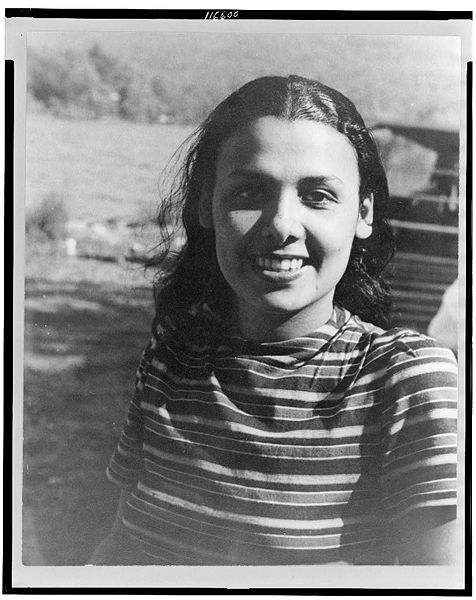
Lena Horne--MGM's Glamorous "Star"


Lena Horne is probably (if not THE) one of the most prominent and popular examples of a glamorous black woman being underused in Hollywood for just that--being a glamorous black woman. 

Besides casting her in the few all-black cast musicals they produced and in specialty numbers that could easily be cut out in the South, MGM had very little idea what to do with Lena Horne. Physically, she didn't fit the stereotypical (but always available) servant role; there were no black Leading Men in Hollywood at the time, and of course they couldn't cast her alongside white Leading Men. 

Ms. Horne was disheartened by Hollywood and its treatment of black actors/actresses and switched her focus to singing. 

Below is Lena singing "New Fangled Tango" from her live album Lena Horne at the Waldorf Astoria--recorded and released in 1957.