Showing posts with label Filmmakers. Show all posts

Friday, May 1, 2015

That's OLD News! (#13)


Today I present to you links to six different historic news articles. As always, I hope you find them informative!


************


(The Milwaukee Journal - August 5, 1958)


Hollywood's first Native American star, Red Wing (born with the "Christian name" Lillian St. Cyr and sometimes referred to as "Princess Red Wing") retired from the film industry in the early 1920s. By 1958 (the year this article was published), she'd been making war bonnets, war shirts, beaded suits, and other Native garments out of animal skins and furs. Click the link above to read the article!


************


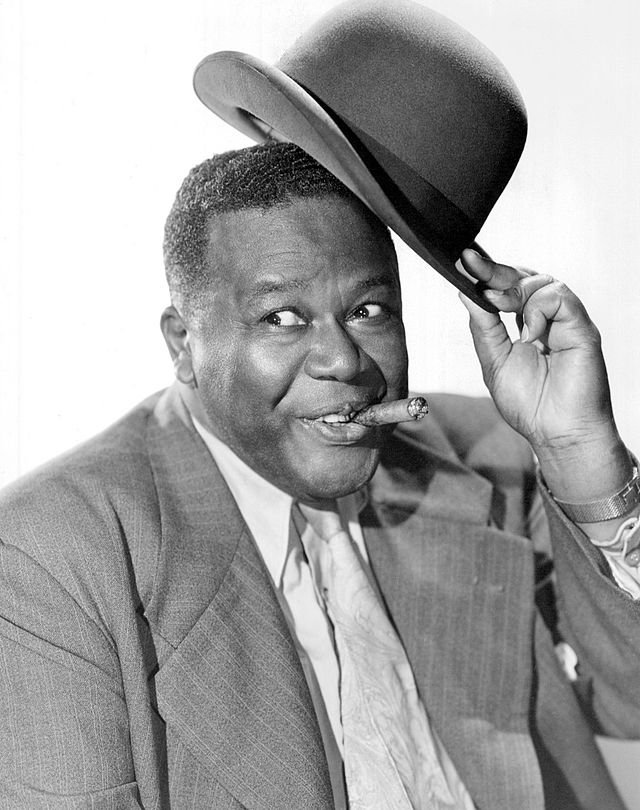
Actor and film producer, Noble Johnson 
Source

Every week, The Afro American included the schedules of Baltimore's black theaters. In the (Saturday) September 17, 1917 issue of the paper, they revealed that the Lincoln Motion Picture Company's film, Law of Nature would be shown at the Regent Theatre on the upcoming Monday. Click the link above to see the full program, including the annoucement of the Law of Nature's showing.


Additional Information: The Lincoln Motion Picture Company was one of the first African-American-owned film production companies. It was founded in 1916 (some sources say 1915) by screen star, Noble Johnson, and his brother George. 

Also, the Regent Theater was opened on June 19, 1916 in Baltimore, Maryland. The theater originally seated 500. Read more about the historic theater here.


************

"Claudia McNeil Role is Cited"

(The Milwaukee Sentinel - July 29, 1966)

Source

According to The Milwaukee Sentinel, stage and screen actress Claudia McNeil won the majority of votes for Plays and Players magazine's poll for "best feminine performance". 


************

"No Stopping Run Run Shaw"

(New Straits Times - November 5, 1990)


Source

I love this article from the New Straits Times. In just a few minutes of watching and listening to him interact, reporters like Suraya Al-Attas were able to get a glimpse of who entertainment mogul, Run Run Shaw was, what film meant to him, and what he meant to film. 


************

"Ben Powers Leads Talent - 'New Laugh-Ins' Being Hailed"

(The Victoria Advocate - July 9, 1977)


From article

In honor of an unsung talent who starred on my favorite television show (Good Times), Mr. Ben Powers. Read The Victoria Advocate's profile of one of Laugh-In's newest cast additions at the time.


************

"Gossip of the Movie Lots and Nite Clubs"

(The Afro American - December 3, 1932)

From the article

Many-a "colored players" (including Mildred Washington, pictured above) had a job in Paramount's Marlene Dietrich vehicle, Blonde Venus. Click the link above to see just a few of the movie's black bit players and extras.


Additional Information: Blonde Venus was race movie queen, Evelyn Preer's last movie. She died of double pneumonia two (almost three) months after the movie's U.S. release. Mildred Washington, one of Hollywood's "beautiful maids" died of appendicitis almost a year after the movie's release.


************


Sunday, April 5, 2015

Thoughts on Romeo y Julieta (1943) - Starring Cantinflas


Source

Romeo y Julieta is a burlesque of William Shakespeare's play, Romeo and Juliet. The film was a critical failure at the time of its release--critics called it "gross", "vulgar", and funny only to people with "limited mentality".


In this post, I will share my thoughts on the film, and in a way that's almost similar to the way I commented on Gran Hotel.


************

Positive Thoughts


There isn't much for me to say but, I enjoyed this movie! I laughed. For the most part, I was able to keep up with the film because I'm familiar with William Shakespeare's play. I don't have a single negative comment.

María Elena Marqués played 'Julieta' [Source]


Overall Thoughts

Title page of the first edition of Romeo and Juliet [Source]

I wasn't shocked to learn about initial reviews of Romeo y Julieta. William Shakespeare and his works are highly revered worldwide, and its just one of those things that shouldn't be trifled with, or at least that's how most people feel about it. However, again, I enjoyed this take on Romeo and Juliet. It was different, and that alone made it refreshing, I think. When watching the film, you'll see that creators didn't intend to mock or bash Shakespeare's play.

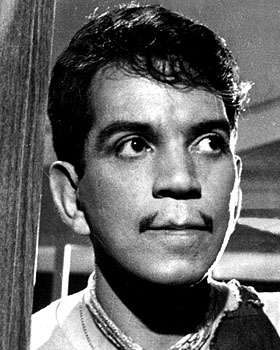
This candid photo of Cantinflas is from NBC Latino. He played the role of 'Romeo' in the film.

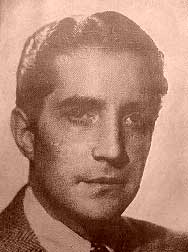
Miguel M. Delgado & Jaime Salvador

In my viewing and reviewing of Gran Hotel, I became curious about the similarities between "Cantinflas'" view of the upper class/social elite and Mario Moreno's views. Since then, I've realized that while Cantinflas' performances made him a voice for those without a voice in Mexico, I've also been overlooking two people who may hold answers to my curiosities--writer/directors Miguel M. Delgado and Jaime Salvador.

Writer/director Miguel M. Delgado [Source]

According to Wikipedia, Miguel M. Delgado directed (and sometimes co-wrote) thirty-three of Cantinflas' films. Jaime Salvador wrote the screenplay for many of his films, also. Three out of four of the Cantinflas movies I've viewed were directed by Delgado (Romeo y Julieta, Gran Hotel, and El padrecito) and two out of four were written/written for the screen by Salvador (Romeo y Julieta and Gran Hotel). Realizing this now, it makes me curious about Delgado's, Salvador's, and Moreno's (Cantinflas) precise views on class differences--the common ground, the individual differences. 


Writer/director Jaime Salvador [Source]

How did they interact before starting a film? Was Romeo y Julieta simply a funny homage to Shakespeare and Romeo and Juliet? Was it their way of trying to un-stuff some of Shakespeare's stuffiest fans? Was it both? Did these men--both individually and as a group--just want to tell stories? Did they intentionally set out to make the rich/elite uncomfortable? Both? Neither? I have so many questions! And I know many of the answers lie in the works of these men!

************


Any and all Cantinflas, Miguel M. Delgado, Jaime Salvador, and/or cinema experts and fans, feel free to leave comments and thoughts!

Tuesday, March 24, 2015

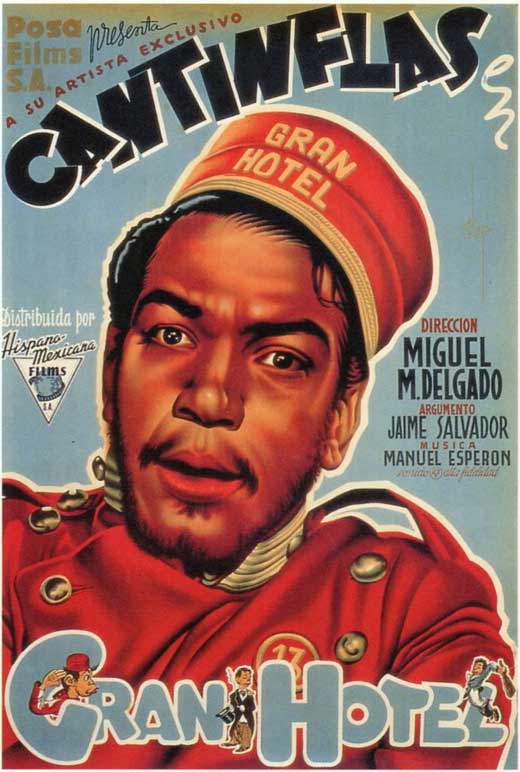
Cantinflas gets physical in 'Gran Hotel'...too physical.


The films of Cantinflas pretty much have the same formula--his tramp-ish character doesn't fit in anywhere, particularly among "higher-ups". Then, he manages to step into sticky situations, but of course, he manages to bumble his way out of these situations. With that said, you'd think that Cantinflas vehicles would get pretty redundant--but they don't. At least, that hasn't been an issue for myself.

This weekend I watched Gran Hotel (1944)--and of course, Cantinflas played his trademark "peladito" character. He's a man who stirs up trouble in his community (his work place to be more specific) and moves to a place where he's 10x more likely to stir up more trouble. Here is the IMDb summary:

"After failing as a waiter, Cantinflas gets a job as a bellboy in a fancy hotel, by recommendation of his girlfriend. He has to deal with posh people and even with the nobility. One day, an expensive and rare collar, property of a noblewoman, disappear, and Cantinflas is the only one who knows where it is. But Cantinflas gets amnesia caused by a big bunch in his head. Will he tell us the real location of the relic?"

When it comes to "reviewing" Cantinflas' films (or any non-English films), I tend to stray away from actually "reviewing" them, because a good review obviously requires one to fully understand the film's dialogue. Instead, I will simply share my 'Positive Comments', 'Negative Comments', and my 'Overall Thoughts'. 


************


Positive Comments

As previously stated, most Cantinflas vehicles stuck to a certain formula, but they all managed to stand out in their own ways. Gran Hotel was no different. When comparing it to the movies I have seen (1952's El bombero atómico and 1964's El padrecito), I noticed that Gran Hotel was more aggressive in its criticism of the upper/middle class. The main character freely (and physically) expresses his indignation toward people who could be considered "better" or higher up than him (the elite, employers). In the movies I've previously viewed, the character of Cantinflas is carefree, cheerful, and silly. In Gran Hotel, he was a bit darker--he was still silly, but purposely silly--mischievous, I should say--and he was a bit hostile. This led me to wonder if the Cantinflas image "cooled down" as the years went by, or if it was by chance that I chose the one movie where he plays a more testy character. It also made me want to watch his movies through a more historical, political, and cultural lens.

Oh, movies that make you think!


Negative Comments

There were a few moments where Cantinflas' character was a bit...too aggressive. I found one scene in the film to be especially horrifying--as he was dancing with a woman (after knocking out her real dance partner), he tossed her around, threw her to the floor, grabbed her by her hair, and even kicked her a few times. I may have missed something in terms of dialogue or context clues prior to the scene, but not only was it freakishly violent, but it was also completely out of left field.


Overall Thoughts

I'll be honest, the dancing scene put a huge damper on my interest in the rest of the movie. It was still a pretty fun film to watch--a typical classic comedy--but again, after that scene, I immediately felt indifferent toward it. I personally wouldn't recommend this movie to anyone, but if you're able to overlook a woman being thrown around by her hair, by all means, go for it!


Click here to watch Gran Hotel (1944)


Monday, March 23, 2015

Cantinflas (Star of the Month) Social Media Shares


Links shared on POC in Classic Film's Twitter and Facebook pages: 

(Will be updated throughout the remainder of the month)


************


1956's Around the World in 80 Days' featured an endless cast (including cameos) of Hollywood stars, like Charles Boyer, Marlene Dietrich, Buster Keaton, Red Skelton, and David Niven, Cantinflas, Shirley MacLaine, and Robert Newton in the leading roles. It was Cantinflas who received the most praise for his performance, however. He won the Golden Globe for 'Best Performance by an Actor in a Comedy or Musical' in 1957.

Read a 1958 article in The Cavalier Daily that mentions Cantinflas "stealing the show": article here.

Screenshot of full page in The Cavalier Daily

Ironically, U.S. publications promoting the 1960 film, Pepe, practically referred to Cantinflas as someone who was only famous in Mexico--and interestingly enough, he was nominated for the Golden Globe for Best Performance by an Actor (in a Comedy or Musical) for his work in the film.


************

Headline of the Lodi News-Sentinel article

Cantinflas was one of many celebrities who got together to raise money for victims of the tragic Mexico City earthquake of 1985. The first quake occurred on May 28, 1985. The second (and most powerful with an 8.1 magnitude) took place on September 19, 1985. Two aftershocks occurred after September 19th--the first the next day and the final one on April 30, 1986. An estimated 10,000 lives were lost in this earthquake, but experts believe that the number could have been as high as 40,000. 

Of course, this year will mark 30 years since that tragic event, and I personally want to use this opportunity to share my thoughts, prayers, and positive energy with all of those who will be remembering their lost loved ones in September.

Click here to read more about the telethon that aired on the Spanish International Network (now known as Univision). 


In February of 1961, journalist Mae Tinee provided readers of the Chicago Tribune with a glimpse into Cantinflas' life and career! Click here to read her article.

Friday, March 13, 2015

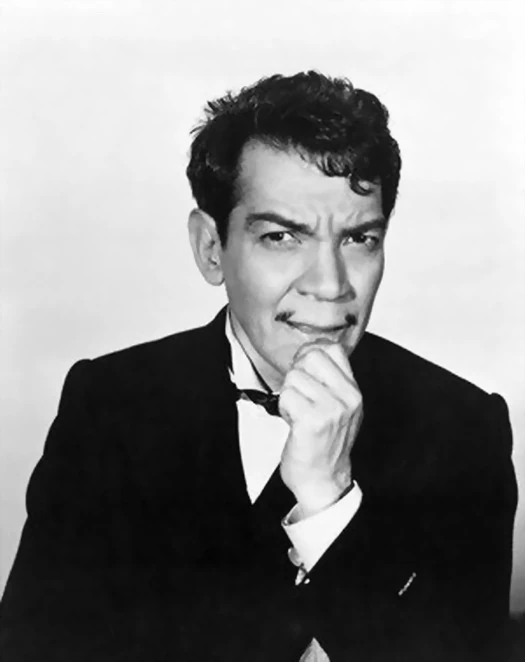
Cantinflas: Appreciation Post (March 2015's Star of the Month)


There's such a wide selection of Mr. Mario "Cantinflas" Moreno's work online! I hope you get a chance to check some of it out!


From the LA Times

Links
(All YouTube)

Before I get into the movies and television appearances, below is an awesome find!


Television Appearances


(28th Academy Awards)

(Original Air Date: Sept. 18, 1960)

(Cantinflas died of lung cancer on April 20, 1993)


From Variety

Movies
(All Spanish language)

*My apologies for any incorrect translations. Please correct me in the comments, if needed!*

* - also written/co-written by Cantinflas.

No te engañes corazón (1937)
(Don't Fool Yourself Dear; in parts: 1 2 3 4)

¡Así es mi tierra! (1937)
(Such is My Country!)
(Neither Blood Nor Sand)

(The Unknown Policeman ?)

(Carnival in the Tropics)

(The Three Musketeers)

(The Circus)


Gran Hotel (1944)

Un día con el diablo (1945)
(One Day with the Devil)


Soy un prófugo (1946)
(I Am a Fugitive ?)

(The Super Scientist)

(The Magician)

(The Porter)

Si yo fuera diputado (1952) *
(If I Were Deputy)


El bombero atómico (1952) *
(The Atomic Firefighter ?)

Caballero a la medida (1954)
(The Tailored Gentleman ?)

Abajo el telón (1955)
(Drop the Curtain)

(The Bolero of Raquel)

Housewife to Your Neighbor (1958)
(Ama a tu prójimo)

Sube y baja (1959)
(Ups and Downs)

El Extra (1962)
(The Extra)

Entrega Immediata (or Agente XU 777) (1963)
(Immediate Delivery)

El señor doctor (1965)
(The Head Doctor ?)

Por mis pistolas (1968) *
(For/By My Guns ?)

El profe (1971) *
(The Professor)

El patrullero 777 (1978)
(Patrolman 777)


Book

Cantinflas and the Chaos of Mexican Modernity (2001)

This book just isn't a simple biography--the story of Cantinflas' life and career is paralleled with Mexico's cultural and social history during the 20th century.


************


Saturday, February 28, 2015

Spencer Williams Online (An Appreciation Post)


Check out movies (and television episodes) featuring, written by, and/or directed by February 2015's Star of the Month, Spencer Williams!


Spencer Williams (right) with Tim Moore (middle) and Alvin Childress (left) for the Amos 'n' Andy TV series


YouTube Links:


(also writer)


(also writer)

(also writer and director)

(also writer and director)

(also director)

(also director)


(YouTube Search Results)


Spencer Williams News Articles

(Washington Afro-American - Jan. 24, 1950)

(Baltimore Afro-American - Sep. 11, 1954)

(Toledo Blade - Dec. 17, 1969)

(Times Daily - Jan. 2, 1996)

Sunday, February 1, 2015

Thursday, October 24, 2013

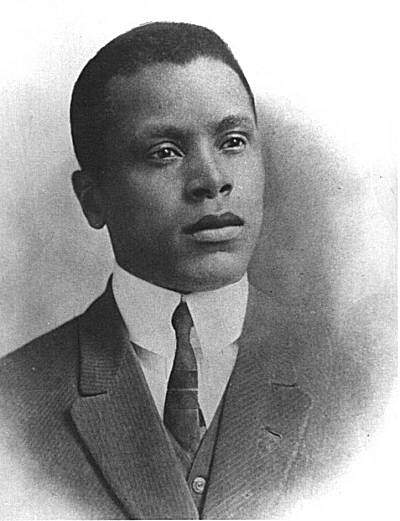
Oscar Micheaux's 'Homesteader'


Did you know that filmmaker Oscar Micheaux was also a novelist? His third book, The Homesteader: A Novel (which would also be released as a movie in March of 1919) is available online for your reading pleasure!


You can download Amazon's Kindle Edition (Free) or check it out on the Internet Archive!

Of course, you could also purchase a hardback or paperback edition on Amazon as well. 


Happy Reading!

Thursday, April 25, 2013

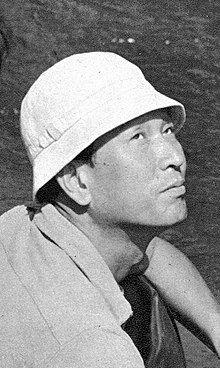
Akira Kurosawa.


"When I start on a film I always have a number of ideas about my project. Then one of them begins to germinate, to sprout, and it is this which I take and work with. My films come from my need to say a particular thing at a particular time. The beginning of any film for me is this need to express something. It is to make it nurture and grow that I write my script- it is directing it that makes my tree blossom and bear fruit."

That was a lovely quote by the late, great filmmaker Akira Kurosawa--the kind of person who doesn't need anything more than his name in a blog post title. 


From Wikipedia


****

Biography via Main Website

The most well-known of all Japanese directors, the great irony about Akira Kurosawa's career is that he is far more popular outside of Japan than he is in Japan. The son of an army officer, Kurosawa studied art before gravitating to film as a means of supporting himself. He served seven years as an assistant to director Kajiro Yamamoto before he began his own directorial career with Sanshiro Sugata (1943), a film about the 19th-century struggle for supremacy between adherents of judo and ju-jitsu that so impressed the military government, he was prevailed upon to make a sequel (Sanshiro Sugata Part II).
       Following the end of World War II, Kurosawa's career gathered speed with a series of films that cut across all genres, from crime thrillers to period dramas -- among the latter, his Rashomon (1951) became the first postwar Japanese film to find wide favor with Western audiences, and simultaneously introduced leading man Toshiro Mifune to Western viewers. It was Kurosawa's The Seven Samurai (1954), however, that made the largest impact of any of his movies outside of Japan. Although heavily cut on its original release, this three-hour-plus medieval action drama, shot with painstaking attention to both dramatic and period detail, became one of the most popular of Japanese films of all time in the West, and every subsequent Kurosawa film has been released in the U.S. in some form, even if many -- most notably The Hidden Fortress (1958) -- were cut down in length. At the same time, American and European filmmakers began taking a serious look at Kurosawa's movies as a source of plot material for their own work -- Rashomon was remade as The Outrage, in a western setting, while Yojimbo was remade by Sergio Leone as A Fistful of Dollars (1964). The Seven Samurai (1954) fared best of all, serving as the basis for John Sturges' The Magnificent Seven (which had been the original title of Kurosawa's movie), in 1960; the remake actually did better business in Japan than the original film did. In the early 1980s, an unfilmed screenplay of Kurosawa's also served as the basis for Runaway Train (1985), a popular action thriller.
       Kurosawa's movies subsequent to his period thriller Sanjuro (1962) abandoned the action format in favor of more esoteric and serious drama, including his epic length medical melodrama Red Beard (1965). In recent years, despite ill-health and the problems getting financing for his more ambitious films, Kurosawa has remained the most prominent of Japanese filmmakers. With his Westernized style, Kurosawa has always found a wider audience and more financing opportunities in Europe and America than he has in his own country. A sensitive romantic at heart, with a sentimental streak that occasionally rises forcefully to the surface of his movies, his work probably resembles that of John Ford more closely than it does any of his fellow Japanese filmmakers.  

--Bruce Eder, All Movie Guide

**** 

Check out this clip of Akira Kurosawa being presented with an Honorary Academy Award in 1990:


Steven Spielberg and George Lucas are two of the many filmmakers who've been greatly influenced by Mr. Kurosawa's work.

****


Mr. Kurosawa has a great number of credits in numerous departments of Film--Writing, Directing, Producing, Editing--everything that his hands touched turned into timeless works of art.


Theatrical release poster for Yojimbo (1961)


In 2009, "AK 100: 25 Films by Akira Kurosawa" was released as a part of The Criterion Collection--I'm assuming the title is in honor of what would have been Mr. Kurosawa's 100th birthday the next year. The set is now unavailable on the Criterion Collection site, but is available on Amazon and possibly Ebay. 


Of course, you can also purchase individual DVDs online. Some of his more popular films are: Rashomon (1950), Ikiru (1952), Seven Samurai (1954), Yojimbo (1961), and Ran (1985).


************

All of the images above were obtained from Wikipedia and were used for informational purposes only. If the rightful owner(s) of any of these photos wishes to have them removed, please contact me (Adrienne), and I will do so immediately.


Wednesday, April 10, 2013

"...and the Emilio goes to..."


The Academy Awards has been apart of American, Hollywood, and Cinema History for 85 years now and the great Oscar statuette is just as much apart of that history--it's an insignia of Hollywood. But did you know that Oscar was a Mexican man?


Actor, writer, and director Emilio Fernández was born on March 26, 1904 in Hondo, Coahuila, Mexico. In 1928, he would become the face (and body) of one of America's most coveted awards.

While in exile in Los Angeles after a failed military revolt back in his native Mexico, actress Dolores del Rio -- a native of Mexico -- thought his physique would be perfect for the Crusader Knight her husband, the art designer Cedric Gibbons, had sketched out as the basis of the award he had been tasked with creating. Del Rio introduced Fernández to Gibbons with the idea of him being the model for the Knight, whom Gibbons envisioned as being totally in the buff. Though reluctant at first, Fernández finally was convinced to pose naked to create what today it is known as the "Oscar". [IMDB]

Check out the links below to find out more about Mr. Fernández: