Showing posts with label Opinion. Show all posts

Sunday, April 27, 2014

Educating Ourselves and Others


Updated! 
June 2, 2014

We (I) see it in tweets and posts all the time. I've even touched on it on POC in Classic Film a bit myself. "Why do black people (girls specifically) know Marilyn Monroe, but not Dorothy Dandridge/Lena Horne?"


Lena Horne (from Quite Continental)

I, for one, think such statements are exaggerated and blown out of proportion--I say this from personal observation. I could actually be wrong, but that isn't the purpose of this post. Let's say that such a statement is true. What exactly are we doing about it? I discussed this another a blog and made a statement like this:

"We get upset that black girls don't know anything about Dorothy Dandridge or Lena Horne or Eartha Kitt, but instead of teaching them--we tell them that they hate themselves and that something is wrong with them. 

Say someone who has grown up in the city visits a family member who lives on a farm. They don't know how to milk a cow--because they haven't been exposed to cow milking. Will the farm-dwelling relative teach them how to milk a cow? Or will they chastise them and do nothing else about it?"


Those weren't my exact words, but that's just about the gist of it. Basically, we're chastising girls and boys (a lot of women and men, too) for their lack of knowledge about our classic stars of color, but we (the people who know some things) are doing little to nothing to change things for them. You can't know or love something or someone that you haven't been exposed to. That's what "learning" is all about. It's time for us all to do a little less chastising and a lot more teaching. 

Below is a list of some material that I believe could aid in the education of those around us--and ourselves.


************

Books

(Series of books for Children, Teens, and Young Adults)


Vintage Black Glamour Book

Heroes, Lovers, & Others: The Story of Latinos in Hollywood

Works of Donald Bogle

Chinese in Hollywood

Chicanos and Film: Representation and Resistance


Hollywood Asian: Philip Ahn and the Politics of Cross-Ethnic Performance


******

Images of America

We don't have to limit our learning and teaching to famous people, either! I highly recommend that people visit their local bookstores (Barnes and Noble is probably the best) or Arcadia Publishing's website to check out books from their "Images of America" series:


"Discover hometown history and help your loved ones remember their past in books filled with vintage photographs and images. From the sports lover to the rail enthusiast, from adored amusement parks to alma maters, you'll find a unique gift for everyone."


As the description above states, you can find books filled with vintage photographs of and for just about everything. Your local Barnes and Noble may carry books specific to your area (for example, I'm from Richmond, Virginia, and my family owns two books with vintage photos of African-Americans from the city and a nearby county). Not only can you purchase city-specific books, but you can also purchase ethnicity-specific ones. Chinese in Hollywood is a part of that series, by the way.

******

Lee and Low Books

"LEE & LOW BOOKS - An independent children's book publisher focusing on diversity. It is the company's mission to meet the need for stories that all children can identify with and enjoy."

 I have to give a special "shout-out" to a blogging acquaintance and co-moderator of mine, Ms. M, for bringing this book publisher to my attention! Lee and Low publishes books that, as the description says, promotes diverse reading, particularly for children of color. These books can be used for your child's private collection, for homeschooling, public/private school, and wherever else your child learns. Lew and Low also provides free reading resources for teachers.

Here are just a few books published under Lee and Low:

Baby Flo: Florence Mills Lights Up the Stage

Paul Robeson

Shining Star: The Anna May Wong Story

Rent Party Jazz


******

A Mighty Girl


"The world's largest collection of books, toys and movies for smart, confident, and courageous girls."

Another shoutout to Ms. M! Here are just a few books available with A Mighty Girl:


Skit-Scat Raggedy Cat: Ella Fitzgerald

When Marian Sang: The True Recital of Marian Anderson

Jazz Age Josephine

************

Video

Segment on African-American vaudevillians in the PBS documentary, Vaudeville
(YouTube - Part I, Part II)

Jazz (by Ken Burns) 
(PBS Link)

Small Steps - Big Strides: The Black Experience in Hollywood 
(Amazon Link)

(Warning: A photo of a man burned alive is shown for a few seconds in this documentary. I haven't watched it in awhile, but if memory serves me correctly, the image appears when the documentary transitions from WWII era Hollywood and into the 1950s. The pan over the photo, and onto the actual image of the man is very slow--it gives you enough time to realize something graphic is about to appear)


************

I'll continue adding on to the list as time goes by and I would be extremely appreciative of your suggestions!

Again, a little less chastising and a little more teaching, please. :)


Let's start a movement, shall we?

Saturday, June 1, 2013

If Ethel were Chick...


Ethel [Waters] could have had her first starring role in MGM's Hallelujah!, which was released on August 20, 1929. She was the first choice of the film's director, King Vidor, but lost the part to a sixteen year old chorus girl named Nina Mae McKinney when "the talent man King Vidor went East to wave gold bags at me was stalled on the job by the colored theatrical people unfriendly, to me." Consequently, it was Nina, not Ethel, who was given the chance to be the first black actress to play a leading role in a Hollywood film. [From Ethel Waters: Stormy Weather, Stephen Bourne (2007)]


While Hollywood was casting dark-skinned black women in all of their "happy-to-be-serving" supporting (or uncredited) roles, they were also laying foundations for their (few) black Leading Ladies. Nina Mae McKinney would arguably (see page 181 for criticism of Oscar Micheaux's casting) set the blueprint for Hollywood's future black Leading ladies (Lena Horne, Dorothy Dandridge, etc.)--and the character of "Chick" would lay the foundation for the "tragic" roles that these women were often offered (characters that would eventually fade away by the late 50's/early 60's, though).


However, I don't want to get into the intricacies of color-coded casting--that's another subject for another day. Instead, I would like to pose a question with the hope of encouraging a lot of discussion in the 'Comments' section. Before I ask this question, keep the following things in mind: The "look" of Chick (and Nina Mae McKinney) is believed to have set the standard for Hollywood's next black Leading Ladies, but while the black community has revered these women--Nina Mae, Lena Horne, Dorothy Dandridge, etc.--there has also been criticism of the roles that they've played (tragic mulattoes, "harlots"). With that in mind, I now pose this question:


In your opinion, how would the casting of Ethel Waters in Hallelujah! have changed the course of American history for black women (of all shades and complexions) in Film, Television, Music, and perhaps society in general? 


Ethel Waters


Tuesday, October 30, 2012

Portrayal of Mexican Men in "Touch of Evil"


Last week I watched Orson Welles' Touch of Evil in one of my film classes--a Film Noir.

Right off the bat I began noticing a negative portrayal of the Latino man. 


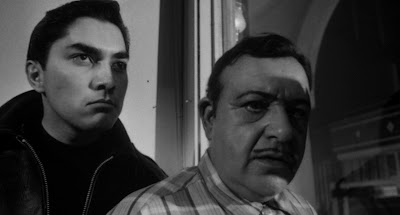
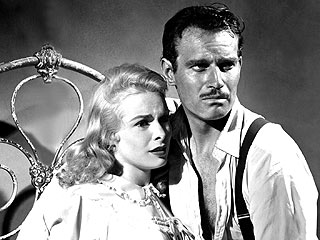
The film stars Charlton Heston as Mike Vargas, a Mexican government official (in brownface and all), Orson Welles as crooked official Hank Quinlan, and Janet Leigh as Mike's bride, Susie. 


Mike Vargas is the good guy, so of course it was only right that a white actor was hired to play the role.

As mentioned before, this is a Film Noir--filled with crime, violence, drugs, and sex. In this particular film however, sex is presented to us in what could be conceived as a racially charged way.

From the start, it is made clear that Susie is to become the target of the Mexican characters' lust. Throughout the film, her personal space is constantly invaded by the Latino men--at one point the character "Uncle Joe" licks his lips in a sort of sleazy kind of way when Susie walks away from him. 


Near the climax of the film, it is also strongly suggested that Susie is about to be raped, as a large group of both men and women (one woman stating "I wanna watch...") surround her and stare at her with menacing eyes--as she lies helplessly on a bed. 

Although it is unclear (to me anyway) if that was a part of what happened, the implication was strong to me and my classmates as well. 


I recommend that you see Touch of Evil(1958). I think it was a pretty good movie--it lived up to its genre. It got a little crazy towards the end, but it kept my interest throughout. 


What are your thoughts on such portrayals of Latino men--or any other man of color?


Photo Sources:

http://t3.gstatic.com/images?q=tbn:ANd9GcR2HcflyLSD8YsdSXm2y_MCGhkZ8PkQ9ZJUWUAW8nzFrNvXY_TSXAXB4yuvzQ

https://blogger.googleusercontent.com/img/b/R29vZ2xl/AVvXsEjHlFYBq-ZYj8BGzrQHFM-Oh9h76vo06OL2PxPKaliUINcp0uts2hyphenhyphentDpxI7t91cOeb6WodeXFBF3qm_5qsSPRC3nPiLihQu2N2ZUQlTDVRlZ7OLxrEr3TawoxhPqwgzpNtdGLiu7jbSdw/s400/Touch+Of+Evil+100.jpg


http://www.betterlivingthroughbeowulf.com/wp-content/uploads/2011/02/heston.jpg

http://thumbs.anyclip.com/tG3FUwjmx/tmb_388_480.jpg


Friday, September 28, 2012

Theme One: Mr. Yunioshi Review (Breakfast at Tiffany's)


I must first start off by saying that the typical girly-girl in me loves this movie. I can pop this in on a rainy day, crawl under the covers and just enter the world of Holly Golightly.

However, I won't review Breakfast at Tiffany's here, because doing so would draw away from what's really important for this blog: The observation and evaluation of Mr. Yunioshi, played by Mickey Rooney in the dreaded yellowface.


Wednesday, August 8, 2012

Let's Talk: Dorothy Dandridge & Marilyn Monroe (Part Two)


Last week, I left you all with some questions...

Why do people like Marilyn Monroe more than they like Dorothy Dandridge? Why is she remembered more?

Why do Black girls idolize Marilyn Monroe, but not Dorothy Dandridge?


It's quite simple and returns to the conclusion that was made in the beginning of the previous post--a commentator on that same post also brought up the some good points.


Dorothy Dandridge was a woman of color--a Black woman, therefore it was very unlikely for her to be awarded the same opportunities in Hollywood that Marilyn got--even if she was the better actress and singer. Plus, the few films Dorothy had leading or supporting roles in (or minor and bit roles for that matter) are a bit hard to find due to them being banned and/or simply forgotten, and because of thatpeople outside of her fanbase or the Black Cinema fanbase haven't even heard of her films, let alone seen them. 

To be quite honest with you, I'm all the way in her fanbase and even I have only seen Carmen Jones, Island in the Sun, & Tamango. If the fans have a hard time finding her movies (legally especially), then that says enough about how much access the general public has. 

Things are getting better though if you check out Amazon and Ebay.

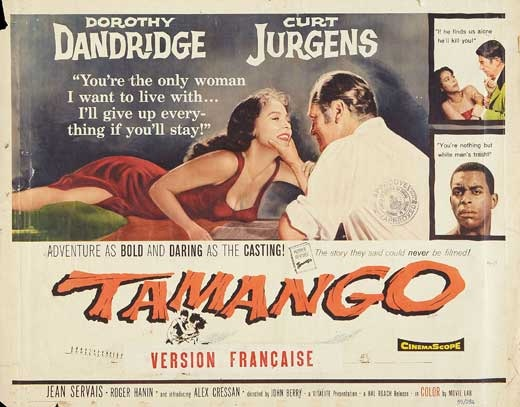
Tamango, the 1958 film made in France and Italy that was banned in the French colonies in Africa and in the United States until 1962 (with the exception of theatrical release in New York City). 


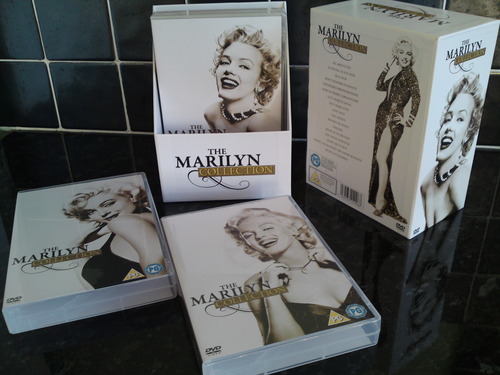
Young Black girls and young Black women (not all, but too many of them) don't know about her because no one is telling them about her. No one is putting her face on pocketbooks and T-shirts, or making big posters of her. No one is releasing special edition DVDs of her movies. We can't blame or shame these young ladies and frankly, we the Dottie fans and/or Black Cinema fans can't blame ourselves either. Hollywood simply was not ready for her or her movies and as a result, did (and still do) very little to preserve her legacy and save her films.

 However, we can change this--not even just for Black women and girls, but for everyone. Everyone needs to know and praise this woman. 

Now, let's get another thing straight--we shouldn't encourage young people to hate or dislike Marilyn Monroe in order to love Dorothy Dandridge. Calling Marilyn Monroe names and attacking her character is not the way. Especially when the thing people accuse Marilyn of being is the same thing men have been getting away with being for centuries; and women today are probably just as bad or worse. Marilyn wasn't any less human than anyone else (and neither are the aforementioned people) and deserves respect, no matter what good or "bad" happened below her waist. 


Back to subject at hand:

We shouldn't pit Dottie & Marilyn against one another because when you really think about it--they really were so much alike. They were both women looking for love and protection; women who were triumphant and tragic, misused and abused; they both fought to push through struggles and hardships until they eventually passed away. They even died the same way and did so about three years apart (although the jury is still out on exactly how Marilyn overdosed). 

Heck, both of their middle names were "Jean"! How much more similar can you be? 

But the reason above all reasons to not pit these women against each other is the fact that they were actually very close friends. I think that reason alone rises above all other reasons. 


The comparisons between these two shouldn't be negative, but because they shared similar experiences and were both talented women, the comparisons should be positive and filled with love and admiration for them both. Then that love and admiration should be divided and shared equally between them and their legacies.


Not only do they both deserve that love, but as two women who were desperate for it in their lives--shouldn't that be the least we give to them in death?


**** 


This photo of Dorothy Dandridge, Otto Preminger, and Marilyn Monroe recently surfaced on the internet. It is currently the only photo of them together known to exist.
Photo Source: DandridgeDaily


Also check out these two links:


Thank you for reading. 


*UPDATE*

*READ BY JULY 2014 FOLLOW-UP POST here.*

Tuesday, July 31, 2012

Let's Talk: Dorothy Dandridge & Marilyn Monroe (Part One)


It's never really been much of a debate. It's just been more of a question. Many questions actually. Why is Marilyn Monroe so glorified and Dorothy Dandridge is not? The answer is simple. Dorothy Dandridge was a woman of color, specifically--a Black woman. The answer isn't that simple however. First, let me break down my personal opinion on each of these women.


Marilyn Monroe. Beautiful. Gorgeous. Smoldering. Sexy. The quintessential sex symbol and love goddess. I love Marilyn Monroe. I love her work and I admire her as a person. Yes, I admire Marilyn as a person. Call her what you want--slut, whore, dumb, whatever. Marilyn's personal life is not my business and even if it was, I wouldn't judge her for what she does/did with her vajayjay unless it somehow makes/made its way onto my boyfriend/husband. Nothing to do with me! 

Based on some of the things I've read about Marilyn, she was a very smart woman--very different from her film roles, but the roles she played--she played them well, despite what anyone says about her acting ability. Marilyn just had an unhappy life and she was pretty much BORN into chaos. Like someone said about Dorothy Dandridge, to me Marilyn's death was was simply a "murder that took a lifetime". 

Do I look up to Marilyn Monroe, as a role model? No, I don't and that's not for any particular reason. But I certainly do admire her for her beauty and her style. I do believe that Ms. Monroe was a lovely, lovely woman. 

****


Dorothy Dandridge. Dorothy Jean Dandridge. MY QUEEN!!! Need I say more? I don't need to, but I will.

Beautiful, gorgeous, radiant, sexy--and even though a lot of people may not know this--funny! Dorothy also made a few mistakes in her personal life (although the majority of them were little to no fault of her own), but hey what can you do? We all make mistakes. 

****

The fame of Marilyn vs. The Fame of Dorothy
(Merely my opinions, not facts or anything researched)

In some ways, Marilyn Monroe filled the void left by Jean Harlow and the void that Mae West had become "too old" to fill in Hollywood. She was blonde, curvaceous, talked with a breathy voice, an exuded sex appeal, but the thing about Marilyn is that her star began to rise when "sex" began to peek its way back into movies (and now television) after being smothered by the Production Code. Necklines were getting shorter (again), the long, glamorous, Hollywood gowns were becoming shorter and more form-fitting. Women young and old were now returning to the "small waist, big bust" look. Physically, Marilyn had everything to offer the post-war, 1950s public.

 In my opinion, Marilyn seems to be a symbol of the freedom that had been ripped from American women once the men returned home from the Second World War and for American men, she represented something that average American man felt he wasn't rich and/or handsome enough to have. 

****

Dorothy Dandridge has been referred to as "our Marilyn Monroe" (I believe by Lena Horne). "Our" meaning Black America. Dorothy Dandridge had the painfully gorgeous face, the slim yet curvy body, the deep dark eyes. On screen she was electrifying and confident, but when she wasn't on a movie set you could see her vulnerability as clear as day. 

Of course for Hollywood, a gorgeous, elegant, stylish, and poised Black woman was like a display in an art museum--look, but don't touch. Dorothy Dandridge was the kind of woman that Black America wanted and needed to represent their women, but of course--what can Hollywood do with a woman like Dorothy Dandridge? A beautiful woman with class, style, sophistication whose skin color happens to be a little dark than what's "normal" and a little too light for what's normal for the "abnormal". "What in the world can we do with this oddity?" Hollywood asked. 

She wouldn't be a convincing mammy or maid (because of her complexion and other physical attributes). Most Hollywood films had a Leading Man and a Leading Lady--there weren't enough Black Leading Men, and they certainly wouldn't put her with a White man. The only thing they can do with a Black woman like Dorothy Dandridge was cast her in bit-parts and as a specialty act (a simple song and/or dance scene) and if she dare want anything more, well the femme fatale, sexpot role (more than likely in an all-Black cast film--which were few and far apart) is the only role she can play. 

Eventually, a woman gets tired of playing the same role and her fans get tired of her playing them as well. Dorothy Dandridge stated in her autobiography that she literally would get so many letters from fans asking her "Why do you keep playing whores?" She kept playing these roles (which really wasn't even that often) because there were no other roles for her to play and like Nina Mae McKinney and Lena Horne--the other gorgeous stars who happened to be a lighter shade of back, Dorothy Dandridge would basically become unusable in Hollywood. 

Dorothy Dandridge had everything Marilyn Monroe had and more--she was a more natural (It would be too blunt if I just flat out say "better" like I really want to) actress and even though she herself said she wasn't that great a singer, she still was a better singer than Marilyn. She could have reached the same heights and popularity, but the color of her skin stunted the growth of her career and fame.

****

Their Legacies

Well I think we all know how much and how well Marilyn Monroe's legacy has been preserved...


Dorothy Dandridge's legacy?


Wanna know what came up on the side when I Googled "Dorothy Dandridge t-shirts?"


During the 1990s there was a sudden burst of interest in Dorothy Dandridge  which led to a scramble over rights to her life story. Women who were born during the same decade that Dorothy died--Vanessa L. Williams, Janet Jackson, Whitney Houston, Jasmine Guy, and of course--Halle Berry were fighting to play this woman. In 1999, we got to see Halle Berry portray Dorothy in the HBO film Introducing Dorothy Dandridge. A younger generation came to know who Dorothy Dandridge and she once again became a household name...but much like when Dorothy was alive and soon after she died--the mention of her name slowly made its way back to a whisper strictly among Black Cinema enthusiasts and hair/makeup/fashion lovers. 

However, I will say that since being on Tumblr, I've discovered many Dorothy Dandridge fans--ones who appreciate her work just as much as her beauty. Her name has also come up with talks of Whitney Houston's recent passing and its eerie similarity to Dorothy's passing (in terms of where she was found, how she was found, and of course the similar cause of death that has replayed itself with too many entertainers). Can I also note the fact that both of these women were anticipating new and exciting chapters in their careers before they passed as well?


But now, I come to "the question". The question that's sticking its little head up further and further from the ground.....

Why do people like Marilyn Monroe more than they like Dorothy Dandridge?

or better yet...

Why do Black girls idolize Marilyn Monroe, but not Dorothy Dandridge?


...To be continued...


What are your thoughts so far?


To read Post Two, completed on August 8, 2012. 


ALSO

Read by July 2014 follow-up to this post here.