Showing posts with label Archive. Show all posts

Friday, August 10, 2012

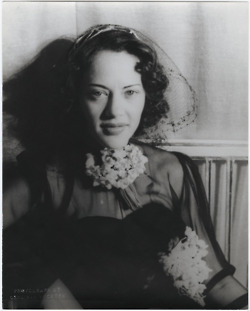
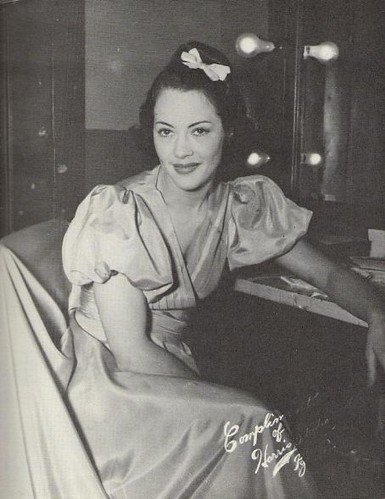
Margarita Carmen Cansino (Rita Hayworth)


This post was written when this blog was known as "Aige: Film and Television"

*************

I'm currently working on a script and I suddenly got the great idea to make it "Film Noir". With that decision, I also thought it would be a good idea to watch more Film Noir movies and take notes--really looking into the details of the genre and noting what made them different from other films of the time. 

The first movie I watched today was 1946's Gilda. I love looking at Rita Hayworth and I think she is/was one of the most beautiful women to walk this planet, but oddly enough the only film I saw with her before Gilda was Pal Joey and only a little bit of Cover Girl. I'd never really seen a film with her where she was the BIG star or big lead. 


 I was completely blown away by not only her beauty, but her Ms. Rita's overall screen presence. I couldn't keep my eyes of her for fear that I would miss a facial expression or a diva-like puff of her cigarette. She was a marvelous actress and the chemistry between her and Glenn Ford was AMAZING.


As I was watching and looking at Rita--or Senora Margarita, I thought about the painful changes she had to go through to make her look less "Mediterranean" or less "Spanish-y" as one website put it. Her mother was of Irish/English descent and her father was from Spain, so of course she probably gained more of her father's Spanish or (according to Hollywood) "exotic" features, causing her to only acquire "exotic" movie roles. 
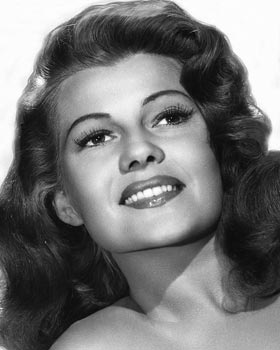

She also dyed her hair an auburn color. 


I will say however that she was a gorgeous woman before and after the alterations to her face. But I'm very curious to know how she would be remembered had she not gone through with it. Would she have been able to push through? Or would she have been confined to the "exotic beauty" roles and the characters that stereotype(d) Latin women women of Spanish and/or Latin descent.


Before the alterations--hairline electrolysis, skin lightening


Thank you to the commentators below. Rita Hayworth DID NOT have her skin lightened and I apologize for the inaccurate information. Rita Hayworth DID NOT have her skin lightened! 

My sincerest apologies.


Sources:

(Scroll down to #3):


Rita and Glenn photo:
http://www.classichollywoodbios.com/Images/Glenn%20Ford%20Images/G.%20Ford%20Gilda%20(1946).jpg.jpg

Photo of Rita before surgery (Rita Cansino):
http://upload.wikimedia.org/wikipedia/commons/thumb/4/43/Rita_Hayworth_Argentinean_Magazine_AD.jpg/220px-Rita_Hayworth_Argentinean_Magazine_AD.jpg






Thursday, August 9, 2012

Betty Boop's 1930 Debut


The beloved sweetheart of an animation known as Ms. Betty Boop made her debut today in 1930 in a Max Fleischer Talkartoons animation titled Dizzy Dishes.


Betty Boop was the girlfriend of Fleischer's character "Bimbo"--a dog, therefore making Betty Boop originally a dog herself.


Check out Betty's debut here:


Happy Birthday Betty!


Wednesday, August 8, 2012

Let's Talk: Dorothy Dandridge & Marilyn Monroe (Part Two)


Last week, I left you all with some questions...

Why do people like Marilyn Monroe more than they like Dorothy Dandridge? Why is she remembered more?

Why do Black girls idolize Marilyn Monroe, but not Dorothy Dandridge?


It's quite simple and returns to the conclusion that was made in the beginning of the previous post--a commentator on that same post also brought up the some good points.


Dorothy Dandridge was a woman of color--a Black woman, therefore it was very unlikely for her to be awarded the same opportunities in Hollywood that Marilyn got--even if she was the better actress and singer. Plus, the few films Dorothy had leading or supporting roles in (or minor and bit roles for that matter) are a bit hard to find due to them being banned and/or simply forgotten, and because of thatpeople outside of her fanbase or the Black Cinema fanbase haven't even heard of her films, let alone seen them. 

To be quite honest with you, I'm all the way in her fanbase and even I have only seen Carmen Jones, Island in the Sun, & Tamango. If the fans have a hard time finding her movies (legally especially), then that says enough about how much access the general public has. 

Things are getting better though if you check out Amazon and Ebay.

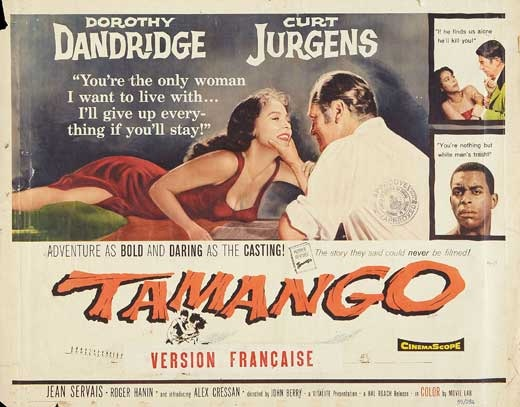
Tamango, the 1958 film made in France and Italy that was banned in the French colonies in Africa and in the United States until 1962 (with the exception of theatrical release in New York City). 


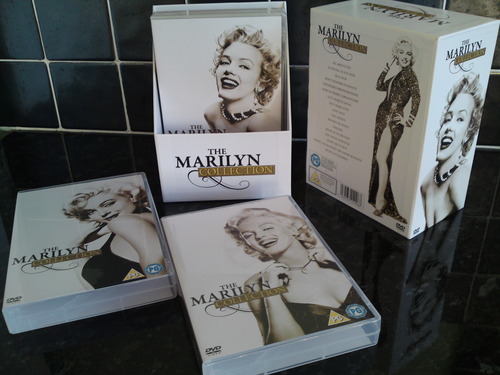
Young Black girls and young Black women (not all, but too many of them) don't know about her because no one is telling them about her. No one is putting her face on pocketbooks and T-shirts, or making big posters of her. No one is releasing special edition DVDs of her movies. We can't blame or shame these young ladies and frankly, we the Dottie fans and/or Black Cinema fans can't blame ourselves either. Hollywood simply was not ready for her or her movies and as a result, did (and still do) very little to preserve her legacy and save her films.

 However, we can change this--not even just for Black women and girls, but for everyone. Everyone needs to know and praise this woman. 

Now, let's get another thing straight--we shouldn't encourage young people to hate or dislike Marilyn Monroe in order to love Dorothy Dandridge. Calling Marilyn Monroe names and attacking her character is not the way. Especially when the thing people accuse Marilyn of being is the same thing men have been getting away with being for centuries; and women today are probably just as bad or worse. Marilyn wasn't any less human than anyone else (and neither are the aforementioned people) and deserves respect, no matter what good or "bad" happened below her waist. 


Back to subject at hand:

We shouldn't pit Dottie & Marilyn against one another because when you really think about it--they really were so much alike. They were both women looking for love and protection; women who were triumphant and tragic, misused and abused; they both fought to push through struggles and hardships until they eventually passed away. They even died the same way and did so about three years apart (although the jury is still out on exactly how Marilyn overdosed). 

Heck, both of their middle names were "Jean"! How much more similar can you be? 

But the reason above all reasons to not pit these women against each other is the fact that they were actually very close friends. I think that reason alone rises above all other reasons. 


The comparisons between these two shouldn't be negative, but because they shared similar experiences and were both talented women, the comparisons should be positive and filled with love and admiration for them both. Then that love and admiration should be divided and shared equally between them and their legacies.


Not only do they both deserve that love, but as two women who were desperate for it in their lives--shouldn't that be the least we give to them in death?


**** 


This photo of Dorothy Dandridge, Otto Preminger, and Marilyn Monroe recently surfaced on the internet. It is currently the only photo of them together known to exist.
Photo Source: DandridgeDaily


Also check out these two links:


Thank you for reading. 


*UPDATE*

*READ BY JULY 2014 FOLLOW-UP POST here.*

Sunday, August 5, 2012

August 5th: The DODs of Two Icons


On this day (August 5th), the world lost two icons too soon.


On August 4, 1955 singer, actress, and dancer Carmen Miranda unknowingly suffered a mild heart attack on a live broadcast of The Jimmy Durante Show

Early the next morning, she suffered a second heart attack--one that would take her life. She was only 46 years old.


The masses may also know that on this date--exactly 50 years ago today, the world was shocked to learn that Marilyn Monroe had died of a barbiturate overdose at the age of 36. Though this overdose was declared an accident, other thoughts, theories, and stories have been swirling around heavily for the past five decades. 


Tuesday, July 31, 2012

Let's Talk: Dorothy Dandridge & Marilyn Monroe (Part One)


It's never really been much of a debate. It's just been more of a question. Many questions actually. Why is Marilyn Monroe so glorified and Dorothy Dandridge is not? The answer is simple. Dorothy Dandridge was a woman of color, specifically--a Black woman. The answer isn't that simple however. First, let me break down my personal opinion on each of these women.


Marilyn Monroe. Beautiful. Gorgeous. Smoldering. Sexy. The quintessential sex symbol and love goddess. I love Marilyn Monroe. I love her work and I admire her as a person. Yes, I admire Marilyn as a person. Call her what you want--slut, whore, dumb, whatever. Marilyn's personal life is not my business and even if it was, I wouldn't judge her for what she does/did with her vajayjay unless it somehow makes/made its way onto my boyfriend/husband. Nothing to do with me! 

Based on some of the things I've read about Marilyn, she was a very smart woman--very different from her film roles, but the roles she played--she played them well, despite what anyone says about her acting ability. Marilyn just had an unhappy life and she was pretty much BORN into chaos. Like someone said about Dorothy Dandridge, to me Marilyn's death was was simply a "murder that took a lifetime". 

Do I look up to Marilyn Monroe, as a role model? No, I don't and that's not for any particular reason. But I certainly do admire her for her beauty and her style. I do believe that Ms. Monroe was a lovely, lovely woman. 

****


Dorothy Dandridge. Dorothy Jean Dandridge. MY QUEEN!!! Need I say more? I don't need to, but I will.

Beautiful, gorgeous, radiant, sexy--and even though a lot of people may not know this--funny! Dorothy also made a few mistakes in her personal life (although the majority of them were little to no fault of her own), but hey what can you do? We all make mistakes. 

****

The fame of Marilyn vs. The Fame of Dorothy
(Merely my opinions, not facts or anything researched)

In some ways, Marilyn Monroe filled the void left by Jean Harlow and the void that Mae West had become "too old" to fill in Hollywood. She was blonde, curvaceous, talked with a breathy voice, an exuded sex appeal, but the thing about Marilyn is that her star began to rise when "sex" began to peek its way back into movies (and now television) after being smothered by the Production Code. Necklines were getting shorter (again), the long, glamorous, Hollywood gowns were becoming shorter and more form-fitting. Women young and old were now returning to the "small waist, big bust" look. Physically, Marilyn had everything to offer the post-war, 1950s public.

 In my opinion, Marilyn seems to be a symbol of the freedom that had been ripped from American women once the men returned home from the Second World War and for American men, she represented something that average American man felt he wasn't rich and/or handsome enough to have. 

****

Dorothy Dandridge has been referred to as "our Marilyn Monroe" (I believe by Lena Horne). "Our" meaning Black America. Dorothy Dandridge had the painfully gorgeous face, the slim yet curvy body, the deep dark eyes. On screen she was electrifying and confident, but when she wasn't on a movie set you could see her vulnerability as clear as day. 

Of course for Hollywood, a gorgeous, elegant, stylish, and poised Black woman was like a display in an art museum--look, but don't touch. Dorothy Dandridge was the kind of woman that Black America wanted and needed to represent their women, but of course--what can Hollywood do with a woman like Dorothy Dandridge? A beautiful woman with class, style, sophistication whose skin color happens to be a little dark than what's "normal" and a little too light for what's normal for the "abnormal". "What in the world can we do with this oddity?" Hollywood asked. 

She wouldn't be a convincing mammy or maid (because of her complexion and other physical attributes). Most Hollywood films had a Leading Man and a Leading Lady--there weren't enough Black Leading Men, and they certainly wouldn't put her with a White man. The only thing they can do with a Black woman like Dorothy Dandridge was cast her in bit-parts and as a specialty act (a simple song and/or dance scene) and if she dare want anything more, well the femme fatale, sexpot role (more than likely in an all-Black cast film--which were few and far apart) is the only role she can play. 

Eventually, a woman gets tired of playing the same role and her fans get tired of her playing them as well. Dorothy Dandridge stated in her autobiography that she literally would get so many letters from fans asking her "Why do you keep playing whores?" She kept playing these roles (which really wasn't even that often) because there were no other roles for her to play and like Nina Mae McKinney and Lena Horne--the other gorgeous stars who happened to be a lighter shade of back, Dorothy Dandridge would basically become unusable in Hollywood. 

Dorothy Dandridge had everything Marilyn Monroe had and more--she was a more natural (It would be too blunt if I just flat out say "better" like I really want to) actress and even though she herself said she wasn't that great a singer, she still was a better singer than Marilyn. She could have reached the same heights and popularity, but the color of her skin stunted the growth of her career and fame.

****

Their Legacies

Well I think we all know how much and how well Marilyn Monroe's legacy has been preserved...


Dorothy Dandridge's legacy?


Wanna know what came up on the side when I Googled "Dorothy Dandridge t-shirts?"


During the 1990s there was a sudden burst of interest in Dorothy Dandridge  which led to a scramble over rights to her life story. Women who were born during the same decade that Dorothy died--Vanessa L. Williams, Janet Jackson, Whitney Houston, Jasmine Guy, and of course--Halle Berry were fighting to play this woman. In 1999, we got to see Halle Berry portray Dorothy in the HBO film Introducing Dorothy Dandridge. A younger generation came to know who Dorothy Dandridge and she once again became a household name...but much like when Dorothy was alive and soon after she died--the mention of her name slowly made its way back to a whisper strictly among Black Cinema enthusiasts and hair/makeup/fashion lovers. 

However, I will say that since being on Tumblr, I've discovered many Dorothy Dandridge fans--ones who appreciate her work just as much as her beauty. Her name has also come up with talks of Whitney Houston's recent passing and its eerie similarity to Dorothy's passing (in terms of where she was found, how she was found, and of course the similar cause of death that has replayed itself with too many entertainers). Can I also note the fact that both of these women were anticipating new and exciting chapters in their careers before they passed as well?


But now, I come to "the question". The question that's sticking its little head up further and further from the ground.....

Why do people like Marilyn Monroe more than they like Dorothy Dandridge?

or better yet...

Why do Black girls idolize Marilyn Monroe, but not Dorothy Dandridge?


...To be continued...


What are your thoughts so far?


To read Post Two, completed on August 8, 2012. 


ALSO

Read by July 2014 follow-up to this post here.


Friday, July 27, 2012

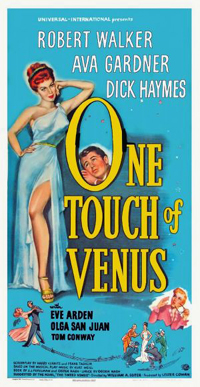
Classic Film of the Day: One Touch of Venus


Today's Classic Film of the Day is 1948's One Touch of Venus starring Robert Walker and Ava Gardner.


IMDB Summary:

"Fantasy comedy about a young window dresser who kisses a statue of Venus, which then comes to life in the form of Ava Gardner. The problems begin, however, when Venus falls in love with him."


Unsung of the Screen: Fredi Washington (Post Five)


Fredi Washington dated Duke Ellington for a short time, but when she realized he wouldn't marry her she ended the relationship. She began dating Lawrence Brown and they later married, but the marriage ended in divorce.

She later married Anthony Bell, a dentist. Bell passed away in the late 1980s.

Fredi Washington passed away on June 28, 1994 after having a stroke. She was 90 years old.


It is very, VERY important that America, especially Black America recognizes this woman and her contributions to film, civil rights, and racial equality. Please read more about her and put her name further out there. Hopefully a biography or some more information about her comes out to the public. 

Thursday, July 26, 2012

Unsung of the Screen: Fredi Washington (Post Four)


After leaving Hollywood, Fredi would become heavily involved in the fight for Civil Rights and against racism in America and in Hollywood as well. 

In 1937, she, Noble Sissle, W.C. Handy, Dick Campbell, and Alan Corelli, became founding members of the Negro Actors Guild of America. She served as the executive secretary, working to help Black actors/actresses get better opportunities in Hollywood. She was also active in the NAACP.

She served as the Entertainment editor for Adam Clayton Powell, Jr.'s newspaper, People's Voice, a newspaper for Black Americans. The newspaper lasted from 1942-1948. Powell was also married to Fredi's sister, Isabel for some years. 

Ms. Washington was also a film casting consultant for 1954's Carmen Jones and also a casting consultant for the Porgy and Bess opera revival in 1952 and the film in 1959. 

Wednesday, July 25, 2012

Classic Film of the Day: The Divorcee (1930)


Today's Classic Film of the Day is the 1930 film The Divorcee starring the legendary Norma Shearer. 

IMDB Summary:

"When a woman discovers that her husband has been unfaithful to her, she decides to respond to his infidelities in kind."

(Hmmmm...sounds interesting!)

The film also stars Chester Morris, Conrad Nagel, and Robert Montgomery. 

Norma Shearer won the Best Actress Oscar for this role and the film was also nominated for Best Director, Best Picture, and Best Writing.

Unsung of the Screen: Fredi Washington (Post Three)


With her very fair skin and green eyes, Fredi was often given the opportunity to pass for white to gain more film roles, but turned all of them down. 

In 1935 she told the Chicago Defender:

"I have never tried to pass for white and never had any desire. I am proud of my race." Then she went on to say "In Imitation of Life I was showing how a girl might feel under the circumstances, but I am not showing how I felt."

Some years later she would also state:

"...Frankly, I do not ascribe to the stupid theory of white supremacy and try to hide the fact that I'm Negro for economic or any other reasons, if I do I would be agreeing to be a Negro makes me inferior and that I have swallowed that whole hog all of the propaganda dished out by our fascist-minded white citizens."


Tuesday, July 24, 2012

Unsung of the Screen: Fredi Washington (Post Two)


When Fredi moved to Harlem with her family, she quit school to pursue an acting career and help her family out financially. She started her career as a dancer in Shuffle Along, one of the few black plays on Broadway. Pretty soon, she moved up to becoming a popular featured dancer because of her talent and looks. Around this time, she also became friends with Josephine Baker who was also getting her start in this play.

Her first movie role was in the 1929 short film Black and Tan where she played a dancer with a heart condition. She had small roles in the classic Paul Robeson film The Emperor Jones and in Cab Calloway's Hi-De-Ho (a short film). Her biggest and most identifying role came in 1934, the year she played Peola in the film classic Imitation of Life


Classic Film of the Day: 9 to 5


Today's Classic Film of the Day is the 1980 film 9 to 5 starring Jane Fonda, Lily Tomlin, Dolly Parton, & Dabney Coleman. 


Monday, July 23, 2012

Classic Film of the Day: Hi-De-Ho (1947)


Today's Classic Film of the Day is the 1947 Cab Calloway film Hi-De-Ho. The film stars, of course, Cab Calloway, Ida James, and Jeni Le Gon and is based on the story out of Calloway's hit song "Minnie the Moocher".


Saturday, July 21, 2012

Unsung of the Screen: Mel Blanc (Post Five, Pt. 2)


Mel Blanc continued doing his voice work throughout the 60s, 70s, and 80s. During the 70s, he did a series of college lectures in the United States that actually broke attendance records for any college lectures in the country. 

He continued voicing his famous cartoon characters for commercials and TV specials (except for the Tasmanian Devil, Yosemite Sam, and Foghorn Longhorn, because these voices had become to hard on his throat). He also provided the voice of Twiki, a robot in the television series Buck Rogers in the 25th Century, his last original voice. 

Mel Blanc's final work was providing the voices of most of the Looney Tunes characters in Who Framed Roger Rabbit in 1988. 

After shooting an Oldsmobile commercial, his son Noel (who was also in the commercial) noticed his father had a heavy cough. He took him to the hospital and the doctor recommended he either stay overnight to be safe or take an inhaler home. Mel chose to stay at the hospital overnight. Unfortunately, someone forgot to put bed rails on his bed and Mel would fall out, breaking his femur and releasing fat emboli into his brain, causing him to have a stroke. 

Mr. Blanc died about 48 hours later on July 10, 1989. He was 81 years old.


Check out this popular Christmas episode of The Jack Benny Show. This showcases Mel's talent as a comedian and actor.


My admiration and fascination for this man has grown to new heights. I hope you find inspiration in him as well.


Sparkle vs. Dreamgirls


*Originally posted when blog was "Aige: Film and Television"*


***Class is in session***

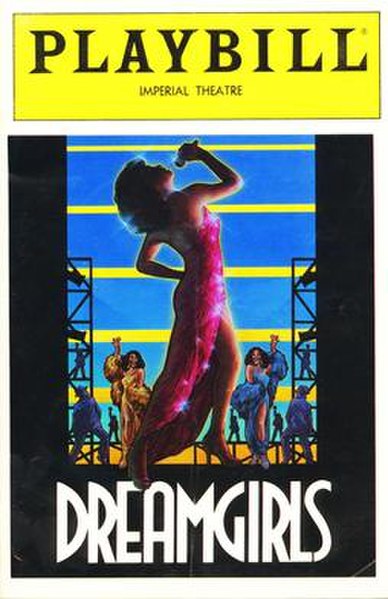
A lot of people (mostly young people) have been saying "Sparkle looks like Dreamgirls". Over and over again. Well, if the only thing you're looking at is "girl group" and "costumes", then yes it may look like Dreamgirls to you, but first of all if you really look at the trailer, Sparkle is more about the struggle within the family of the main characters--while Dreamgirls was more about the struggle in the careers and friendships of the main characters.

Also, if you watch the original Sparkle movie that came out in 1976, you'd know this as well. I don't understand how people, especially Black Americans old and young cannot know this movie. It's been on BET, TVOne, BounceTV, UPN (before it was the CW of course), and it's simply a Black Cinema classic that came out during the "Blaxploitation" era. But of course, we all know that most people around my age, the "younger crowd" never cares about the original of anything or anything "old", or I'll be fair and also say that some simply just don't know (In that case I blame their parents. No, I'm just playin' lol.............).


But let's really get deep with it:


The original Sparkle came out in 1976. The film starred Irene Cara as Sparkle, Lonette McKee as Sister, and Dwan Smith as Dolores and Mary Alice played their mother Effie (yes, Effie). The story of the Supremes is what inspired this movie as well.

(This is absolutely my favorite photo of them)


****


Dreamgirls opened on Broadway in December of 1981. This show was based on the triumphs, tragedies, and musical careers of The Supremes, The Shirelles, James Brown, Jackie Wilson, and some others. It starred Sheryl Lee Ralph as Deena Jones, Jennifer Holiday as Effie White, and Loretta Divine as Lorelle Robinson.

****


Pre-production of the remake of Sparkle actually began over ten years ago. Whitney Houston, the executive producer wanted to cast Aaliyah in the lead role and Aaliyah agreed to doing it. Unfortunately, we all know what happened  with that. When Aaliyah passed away, Whitney decided to put the film to the side and to the side was where it stayed for a long time.

****


Of course, in 2006 we saw Dreamgirls come to the big screen starring Beyonce as Deena Jones, Jennifer Hudson as Effie White, and Anika Noni Rose as Lorrell Robinson.

****

Now here we are in 2012, awaiting the release of the Sparkle remake starring Jordin Sparks as Sparkle, Carmen Ejogo as Sister, Tika Sumpter as Dolores, and Queen Whitney Houston as their mother Emma.


****

Now I'm not taking anything away from Dreamgirls (heck, like every other person who has seen it I know all the songs, most of choreography, and the dialogue) and I'm not saying that Dreamgirls copied Sparkle either.

I just want people to be aware while they're saying "Sparkle looks like Dreamgirls", "Sparkle is just another Dreamgirls" that not only are the two stories quite different, but in terms of these stories being brought to the screen/stage, 1976's Sparkle is what really started it all.


I think we all should thank the Supremes and the shady ways of Berry Gordy for these movies/the Broadway play as well.


***Class dismissed***

Don't forget to go see Sparkle on August 17th!

Friday, July 20, 2012

Happy Birthday Natalie Wood


The beautiful Natalie Wood would have been 74 years old today.


What's your favorite Natalie Wood film?


Classic Film of the Day: Ocean's Eleven (1960)


Today's Classic Film of the Day is a very good choice! 1960's hit movie, Ocean's Eleven starring the Rat Pack--Frank Sinatra, Dean Martin, Sammy Davis Jr, and Peter Lawford. The film also stars Angie Dickinson.


Check out the trailer:


Unsung of the Screen: Mel Blanc (Post Five, Pt. 1)


Even a near death experience couldn't hold Mr. Blanc down. On January 24, 1961 he was in a near-fatal accident on Sunset Boulevard. He was hit head on and suffered fractures in the legs and pelvis and a triple skull fracture that left him in a coma for three weeks.

In Mel's autobiography, he states that he received over 15,000 get well cards from fans, some addressed to "Bugs Bunny, Hollywood, USA". His wife and son would also inform him of how he came out of his coma. A very clever doctor would talk to Mel as though he were his cartoon characters. One day the doctor asked "How are you doing today Bugs Bunny?" and Mel answered him in Bugs' voice. 

Mr. Blanc would later reveal that during his recovery, his son Noel provided Warner Brothers voice tracks for his father. Daws Butler would also provide the voice of Barney Rubble for a few episodes, then producers would set up recording equipment in his hospital room, and he and his Flintstones co-stars recorded in his room. 


Mel returned home on March 17 to the cheers of over 150 neighbors. Later in the year, he would also return to The Jack Benny Show in a wheelchair and crutches as well to film their Christmas episode of the year.


Part Two of this Post to come tomorrow morning.