Showing posts with label Sheila Guyse. Show all posts

Sunday, December 28, 2014

Sheila Guyse: The Sweetheart of Race Movies


I don't know if anyone else was given that title at some point, but until noted otherwise, I've taken it upon myself to dub our Star of the Month, Sheila Guyse, the Sweetheart of Race Movies.


In an era where most of America typically only got to see Black-Americans as servants, merry Southern-dwellers, and as "specialty acts" in your favorite Hollywood musicals, black filmmakers (and some white as well) were still maintaining the house that Oscar Micheaux built--creating movies specifically for Black-American audiences. A lot of these movies were musical, true, but the majority of them also provided storylines for its characters. These characters had pasts--they had futures. There was romance, drama, and suspense. These low-budget, independent movies gave black performers the kind of roles that Hollywood wouldn't. In the midst of all this emerged a young singing starlet, fresh off the nightclub circuit of Kansas City--that is Ms. Sheila Guyse. 

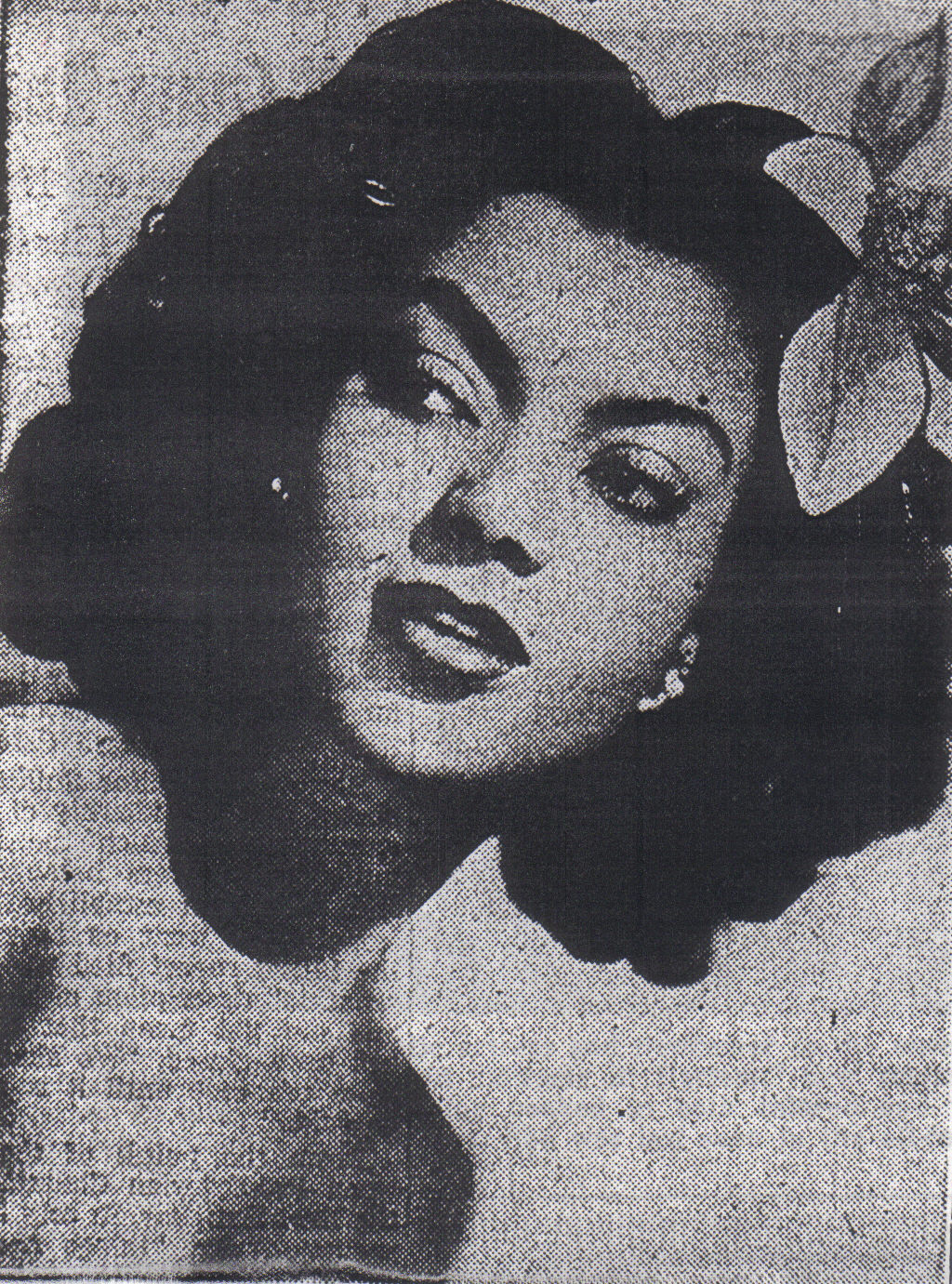
From NY Daily News

Sheila Guyse appeared in four of Herald Pictures' five productions--Boy! What a Girl!, Sepia Cinderella, Miracle in Harlem, and Harlem Follies of 1949. Harlem Follies is the only one of these movies that is still considered "lost", but in the other three, Ms. Guyse flawlessly embodies the "girl-next-door" archetype. 

Now, as a young Black-American woman, let me tell you why Sheila Guyse and the characters she portrayed were/are important.


************


Brown Gal, Sheila Guyse

As you may have noticed by reading a few of my previous posts, colorism is one of many issues that is close to my heart. I despise the mistreatment and disregard of dark-skinned people--especially women--in the media and in society. This disrespect isn't always outright, like a tweet or a song lyric. Sometimes, it's very much..."implied"...by images on a screen. Examples: Observe the treatment of the "Patrice McDowell" character vs. the "Lisa McDowell" character in Coming to America. Also do the same with the "Sylvia Landry" and "Alma Prichard" characters in Oscar Micheaux's Within Our Gates; the "Stella" and "Anna" characters in 1958's Anna Lucasta--even the "Minnie" and "Nettie" characters in Hi-De-Ho (1947). I could go on. 


From last.fm

Sheila Guyse wasn't exactly the hue of Hattie McDaniel or Theresa Harris, but by looking at her, it's clear that she wasn't the sand-colored woman cast to make "white audiences comfortable" or to imply a higher level of education, wealth, and/or "goodness" (an "implication" that was prevalent in a lot of race movies, unfortunately: see The Scar of Shame, Within Our Gates, The Symbol of the Unconquered). Although her film career was short, Ms. Guyse was fortunate to not have to play the "the maid" like fellow brown girls Hattie McDaniel, Theresa Harris, Louise Beavers, Daisy Bufford, or Marguerite Whitten (Bufford and Whitten actually had the opportunities to play "sweetheart" or "girl next door" types in a handful of race movies, but prevalent on their long lists of credits are servant roles). She also didn't play the jealous, conniving relative/friend (the aforementioned "Alma" in Within Our Gates and "Stella" in Anna Lucasta; as well as the character of "Rusty" character in Reet, Petite, and Gone). 

Mind you, this isn't a discredit to the Hatties, and Theresas; Flo Clements ("Alma Prichard") or Rosetta LeNoire ("Stella)" and their work as actresses. I'm not supporting the categorization of "good blacks vs. bad blacks" or "good girls vs. bad girls" either.


Francine, Barbara, & Julie in Love

Race movies provided black audiences with something else Hollywood couldn't/wouldn't provide them with--great love stories! In actresses like Evelyn Preer, Dorothy Van Engle, Izinetta Wilcox, and Sheila Guyse, we had "our" Mabel Normand--"our" Ginger Rogers, Claudette Colbert, and Judy Garland. Of course, there were actresses who could have been models for our love lives in the 1920s, 30s, and 40s (Nina Mae McKinney, Fredi Washington, Ethel Waters, Lena Horne)--but love was rarely a central focus in lives of the characters they played (Possible exceptions: Bessie, Petunia Jackson, Selina Rogers, Ethel Andrews, and Klili Gordon/Isabelle Walton).
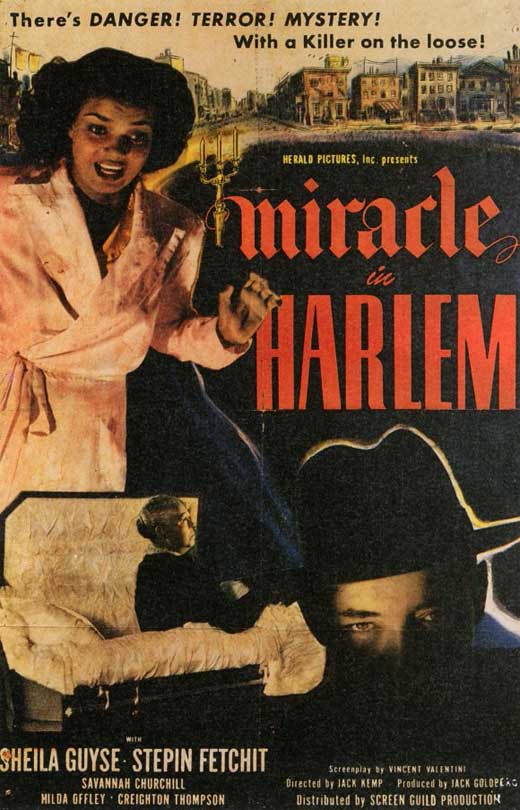

From Movie Poster Shop

What Sheila Guyse brought to mid-1940s cinema was the character of a young black woman who longed for love--and was loved. In her three starring roles, she cried over the loss of love. She fought for love. She defended and protected the men she loved. She found happiness in love. She was motivated by love. Even today, we don't see these black women on the screen often. In fact, love (lack of it or fear/rejection of it) tends to destroy us on the screen ("Chick" in Hallelujah!, "Carmen Jones", "Bess" in Porgy and Bess, "Delilah/Annie" and "Peola/Sarah Jane" in the Imitation of Life movies). Of course this isn't and wasn't always the case, but we saw/see the theme pretty often in Hollywood film and television. 

"Getting the guy/girl" was something we got to see often in race movies, thankfully. However, for the women, again, love wasn't always the central focus for their characters. Their intelligence and bravery (see: Claudia and Eve Mason) often served as the central focus--another topic I'd be ecstatic to leave my typing fingers to tackle later.

Barbara got the guy in Sepia Cinderella. Julie Weston got the guy in Miracle in Harlem. Francine Cummings got a guy in Boy! What a Girl!--and nobody had to die for it to happen, either. With all of the qualities that made Sheila Guyse unique--a certain beauty, grace, and charm--she brought something to these characters that I can't imagine any other actress of the time being able to bring.

************

Make some time to discover Sheila Guyse--the "Sweetheart of Race Movies". Watch her films, listen to her album, This is Sheila (available in digital format on Amazon). Tell everyone you know about this talented woman!






Monday, December 15, 2014

Sheila Guyse in the News!


The Google News Archive has practically become a second home for me. You're guaranteed to find many interesting pieces of history in entertainment news' past. You could go on a quest for one piece of information, and end up opening a treasure chest of news stories. This was the case for my Sheila Guyse search.

From 16 Stone Vintage (a MUST visit site!)


I always refer to Ms. Guyse, our 'Star of the Month', as "unsung", falsely (and hastily) assuming that she never got her just due, but the infinite number of articles written about her in The Afro American prove otherwise. Here are links to just a few of these articles:


(Mar. 31, 1945)

According to this small section, Ms. Guyse was discovered in a Kansas City nightclub. As a result, she was signed on to play a lead role in the short-running Broadway play, Memphis Bound!. Click the link above to read about Ms. Guyse's rise and to see a beautiful photo of her. 

Related Articles: ""Memphis Bound" to Open May 17" and ""Memphis Bound," May 23" (two sections down from Katherine Dunham story)


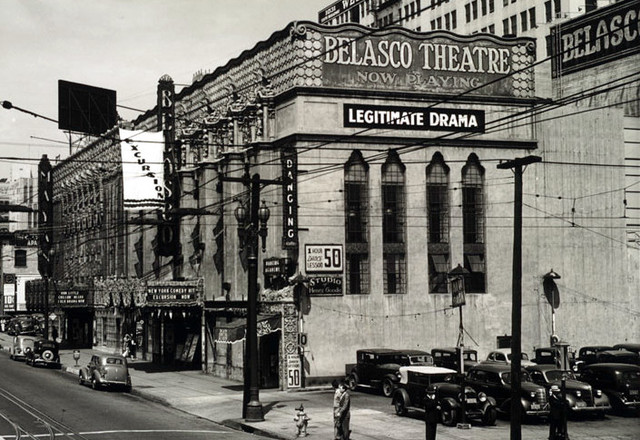
Belasco Theatre (where Memphis Bound! played) [Source]

************

(Jun. 30, 1945)

Ms. Guyse was the subject of a terrible rumor spread by columnist, Walter Winchell, and also by columnists David Quirk, and Earl Wilson. These columnists falsely (or misleadingly) reported that Ms. Guyse was seen "picking cotton in Mississippi". Ms. Guyse, a Mississippi native, told the press that she'd made a visit to the South and only pulled a few bolls out of curiosity. Get more details about this news story in the link.

The notorious Walter Winchell (from Wikipedia)


************

(Oct. 27, 1945)

According to an October 1945 edition of The Afro American, Sheila Guyse, along with many others, staged a grand show for "the boys of the S.A. Club". Read about it in the link above!


************


(Jan. 11, 1947)

Ms. Guyse and Billy Daniels were both lauded for their performances in the Herald Pictures film, Sepia Cinderella. Read all about it in the link!

From Turner Classic Movies

Related Article: "In Herald's New Flicker" (another beautiful photo of Ms. Guyse in this link)


************


(Jun. 1, 1954)

This section of a June 1954 issue of the Washington Afro-American announces Ms. Guyse's impending role in a Broadway musical titled, Black Cotton


************


It appears that Sheila Guyse was welcomed back to the nightclub circuit in 1957 with opened arms! Click the link to read her section in the Star Gazing column.


Sheila Guyse in Sepia Cinderella (gif by me; originally shared on Classic Ladies of Color)


Honorable Mention


This Washington Afro-American article populated in Google News Archive search results for Sheila Guyse. It is an article on actress Sheila Anderson, daughter of Sheila Guyse. It was young Sheila, who now goes by S. Crystal Devin, who informed me (and other entertainment/informative outlets) of her mother's illness and passing.

In the 1983 article, Ms. Devin talks about her life as an actress and her life overall--from how she lives and eats to what her aspirations are. Check out the link!

Wednesday, December 3, 2014

Star of the Month: Sheila Guyse - Album Review (from Aige Old Soul)


In June, I reviewed Sheila Guyse's sole album, This is Sheila (1958) on my other blog, The Life of an Aige Old Soul

to read my review!

Monday, August 25, 2014

That's Old News! (#7)


I hope you find these newspaper finds interesting and informative!


************

"Betti Mays Rose From Orphanage Ward to Become the Toast of Band Circles"


In May of 1947, The Afro American published a mini-biography of singer, dancer, actress, and bandleader, Betti Mays in their paper. I had no idea that Ms. Mays (who was also married to Ralph Cooper) was a bandleader! Click here to read the story of this multi-talented legend.


************

"Talented Ruby Dee Plays the Wife of a Neurosurgeon in 'Peyton Place'"


The late, great Ruby Dee appeared in 20 episodes of Peyton Place. Along with mention of her 1968 debut on the show, the Schenectady Gazette also gives a brief biography and mentions her "recently" completed role in Uptight!. Click here to read the article.


************

"Sheila Guyse Explodes Myth"


From the The New York Times

Journalist Walter Winchell was known as the entertainment industry's most feared journalists. He was known for exposing embarrassing or scandalous information about certain celebrities and government officials. Even the late singer and actress, Sheila Guyse was a target of Mr. Winchell at one point. Click here to read about a (dispelled) rumor published by Winchell and two other journalists--David Quark and Earl Wilson.


************

"Cab Calloway Tilt with Booking Agent Was Surprise to Broadway"


From Wikimedia Commons

Apparently, things got a little heated backstage at a Broadway show in August of 1940! Click here to read the Afro American article.


************

"Casting Begins for All-Sepia Mystery Film"


From Wikipedia

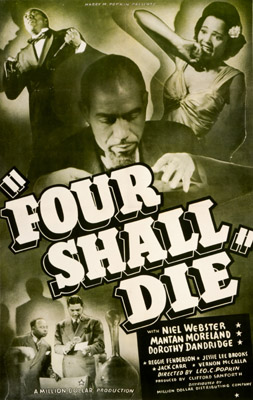
Casting for the 1940 film, Four Shall Die was announced just underneath the Cab Calloway article above. Click here and scroll down to read about the casting news. 


************

"Mantan Moreland says he's ready for serious roles now"


Mantan Moreland is probably best remembered for his role as "Birmingham Brown" in the Charlie Chan films. In the late 1950s, Mr. Moreland revealed that he wanted to "keep up with the times" and the industry's "growth"--and wanted to play more dramatic roles. Read more in The Afro American here.


************

Friday, January 10, 2014

Sheila Guyse Appreciation


From Prince.org


Singer and actress (of the stage and screen), Sheila Guyse was born Etta Drucille Guyse to Wilbert and Ethel (Williams) Guyse on July 14, 1925 in Forest, Mississippi. Along with being an entertainer, she was also the wife of a man named Joseph Jackson (who passed away in 2012) and the mother of two daughters and a son.


From 16 Stone Vintage


Sheila Guyse (Jackson) passed away on December 28, 2013 of Alzheimer's disease in Hawaii. 


************

Sheila Guyse Appreciation

(Album - Amazon MP3)


[Youtube]


[Youtube]

[Youtube]


[More photos/magazine covers]


(Where information was obtained)


*POC in Classic Film posts*
(added 5/24/2014)

Celebrating Women's History Month

Sheila Guyse News


*MORE INFORMATION*

William Yardley of The New York Times recently wrote an obituary for Ms. Guyse, with information provided by her daughter. Please click here to check out the article.


************

Personal Thoughts

All of my love and my prayers go out to the family of this lovely woman. Of course, I didn't know Ms. Guyse personally, but there are just some people--celebrities, friends of friends, anyone--who just "stick" with you from the first moment you see them from afar or in a photo. Ms. Guyse was one of those people. 

Over the past year or so, I've come across many new names and faces, and gave up on searching for information about them. Not Sheila Guyse. I don't know what it is or what it was, but there was just something about her that kept me typing her name into Google every other month or so. As I've stated before (in another post and in reply to a commentator), although she played the role of the girl-next-door in movies like Sepia Cinderella and Miracle in Harlem, a genuine kindness and sweetness resonated from the screen.

When we look at beautiful things or people, sometimes, the word "beautiful" just isn't sufficient. We say "lovely". When we call someone or something "lovely", a small sigh or gasp usually comes before or after it. He/She/It is breathtaking--so beautiful, be it internally or externally--they actually throw us off, make us do double takes. Sheila Guyse was lovely. Not even just for her physical beauty, but for the beauty that shone through her from my TV and computer screens like rays. 

I completed my first screenplay during my junior year of college (just last year). The screenplay followed the life and career of an aspiring Black actress in 1930s/1940s Hollywood. As I wrote and re-wrote, deleted and erased, I'd drawn inspiration from many entertainers--from Theresa Harris to Dorothy Dandridge, Fredi Washington to Hazel Scott; Evelyn Preer, Alice B. Russell (wife of Oscar Micheaux). Still, I envisioned my character as one person in particular--I heard her voice; I saw the way she dressed, the way she wore her hair, etc.. From the very beginning--I'm talking the outline--I envisioned my lead character as Sheila Guyse. 


Your light was that bright, Ms. Guyse (Jackson). This is my way of saying "Thank You" for it. 


--Adrienne 


Monday, December 23, 2013

Sheila Guyse News


Yesterday, I received the news that Sheila Guyse, star of Sepia Cinderella and Miracle in Harlem is now under Hospice care and in the last stages of Alzheimer's disease.


A family member left a comment on a post dedicated to Ms. Guyse back in March [see here].


************


I am extremely sorry to receive such news. My heart, my thoughts, and my prayers go out to Ms. Guyse, her family, and her friends. 


--Adrienne, POC in Classic Film Moderator 

Thursday, March 14, 2013

Celebrating WHM: Sheila Guyse


(*Celebrating Women's History Month*)


Today, we honor the dazzling Sheila Guyse.


Sheila Guyse was born around 1925 in Detroit, Michigan. 

It's hard to find a biography on the internet of Ms. Guyse that doesn't center around the put-down of other black actresses, so allow me to give you my own take on this lovely lady and her work.

I recently watched the "race film" Sepia Cinderella and cannot at all deny that Ms. Guyse was a marvelous actress who definitely deserved more roles and deserves more recognition today. Plus, the woman is STUNNING. Stunning, I say. She has the most radiant smile I've ever seen.

I'd love to know how Sheila Guyse is doing right now. 

I strongly recommend that you watch Sepia Cinderella and other movies starring Ms. Guyse. They're all available on Youtube.

Here is her filmography.